

DDoS Protection Solutions: A Complete Architecture & Selection Guide from Scrubbing Centers to Anti-DDoS CDN
From scrubbing centers and high-defense IPs to Anti-DDoS CDN—get a full breakdown of real-world DDoS protection architectures and selection logic. Based on real webmaster experience, avoid misleading specs and choose the right protection for your business.

If your website gets any real traffic—if your business starts making money—sooner or later, DDoS attacks will come knocking.
The only difference is whether they’re just probing occasionally or targeting you consistently.
When hit for the first time, most webmasters react by wondering:
- “Is my server just too weak?”
- “Should I switch to another cloud provider?”
- “Will adding a firewall solve it?”
But after going around in circles, they realize one hard truth:
DDoS isn’t solved with quick fixes—it requires a complete protection architecture.
In this guide, I’ll break down common DDoS protection solutions layer by layer, from infrastructure to front-end, in plain language. You’ll finally understand:
- What scrubbing centers actually do
- The real difference between high-defense IP and Anti-DDoS CDN
- Whether Anycast and BGP protection are marketing hype
- How to choose the right solution for your type of business
- Where you’re most likely to get misled
1. First, let's get one thing straight: What are we actually protecting against in DDoS?
Before jumping into solutions, let's align on the basics.
A DDoS attack has one core goal:
To overwhelm your “entry points” so real users can’t get in.
Those entry points could be:
- Bandwidth
- Connection limits
- CPU
- Memory
- Application threads
- Database resources
So the single objective of DDoS protection is:
To separate attack traffic from legitimate traffic—let the clean through, drop the dirty.
Every protection solution is designed to achieve that goal.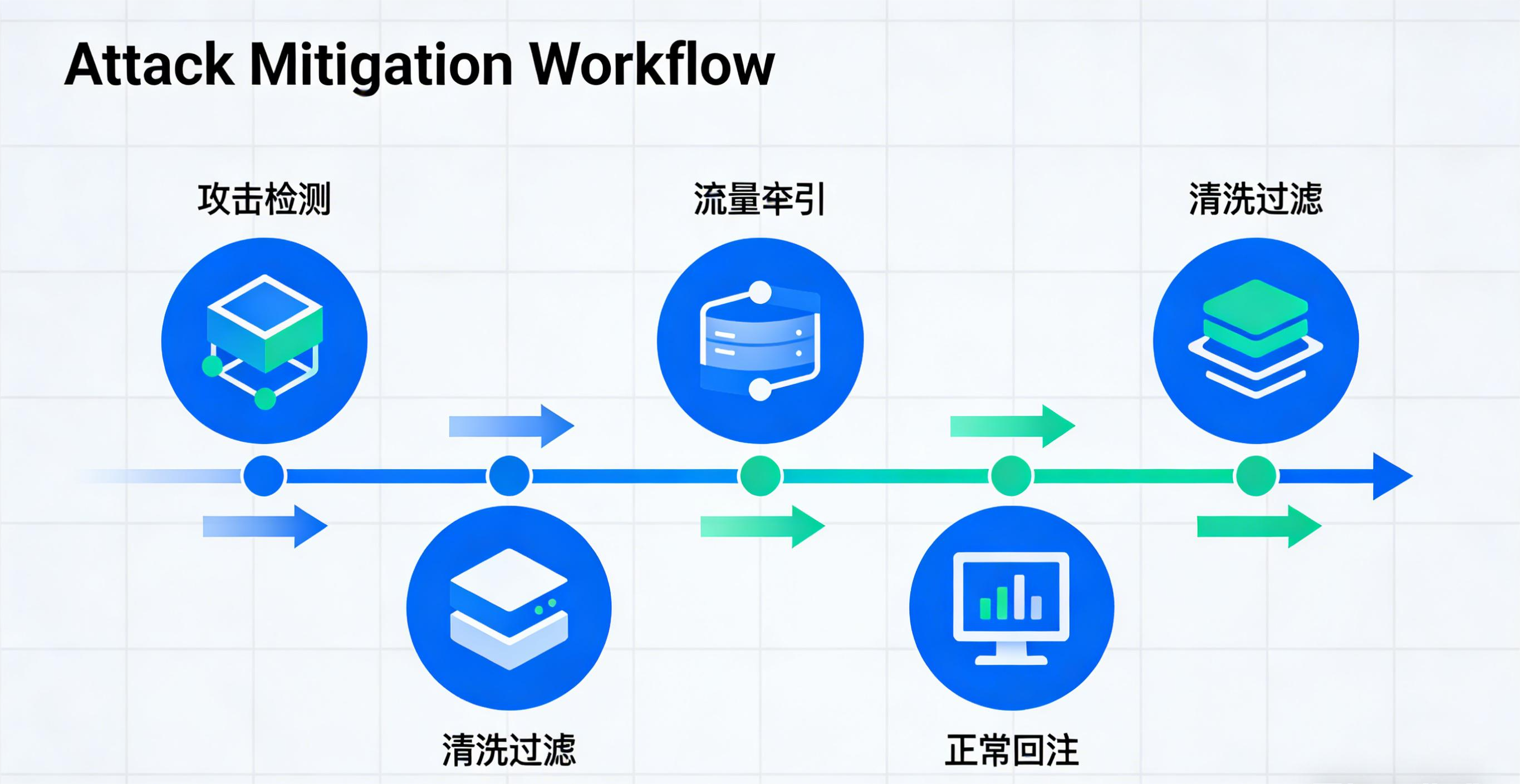
2. The foundation of DDoS protection: What exactly is a scrubbing center?
Many webmasters hear “scrubbing center” and think it’s something complex, but the concept is straightforward.
1️⃣ What does a scrubbing center do?
Think of it as a giant traffic filter:
- All traffic passes through it
- Legitimate traffic is forwarded
- Attack traffic gets dropped
A typical scrubbing center has:
- Massive bandwidth capacity
- Specialized hardware
- Attack detection systems
- Automated mitigation policies
Around 90% of real DDoS protection comes from the scrubbing center.
2️⃣ Why can’t my server handle it alone?
Because ordinary servers:
- Have limited bandwidth
- Can’t handle high-pressure floods
- Become unreachable even for admin access when overwhelmed
Scrubbing centers, on the other hand, are built specifically to absorb attacks.
3️⃣ What types of scrubbing centers exist?
From a webmaster’s view, remember these three:
- ISP-level scrubbing centers (from telecom carriers)
- Cloud provider scrubbing centers (built by cloud vendors)
- Third-party high-defense scrubbing centers
The difference isn’t whether they can protect you, but rather:
- How fast they trigger
- How many false positives occur
- What the cost structure looks like
3. High-defense IP: The traditional (and most misunderstood) solution
Many admins first encounter DDoS protection through a high-defense IP.
1️⃣ How high-defense IP works
The logic is simple:
- You get a “hardened IP”
- Your domain points to that IP
- Attack traffic hits the high-defense IP first
- Clean traffic is forwarded to your origin server
Its strengths are clear:
- Strong protection capability
- Straightforward architecture
- Minimal changes to your application
2️⃣ Limitations of high-defense IP
But it has notable downsides:
- Single point of entry
- Easier to target
- Limited acceleration
- Not ideal for large-scale user access
That’s why high-defense IP is better suited for:
- Backend systems
- API endpoints
- Admin panels
- Critical but non-public services
4. Anti-DDoS CDN: Why has it become the go-to solution?
For public-facing websites, the DDoS protection path usually leads to one place:
Anti-DDoS CDN.
1️⃣ Anti-DDoS CDN vs. regular CDN: What’s the real difference?
Regular CDN:
👉 Focused on acceleration, protection is secondary
Anti-DDoS CDN:
👉 Built for protection first, acceleration is a bonus
Key characteristics:
- Multi-node distribution
- Traffic naturally dispersed
- Each node has scrubbing capability
- Harder for attacks to concentrate on one point
2️⃣ Why is CDN naturally better against DDoS?
Simple:
- Attacks are spread across multiple nodes
- Pressure on any single point drops significantly
- Your origin stays hidden and protected
Think of it this way:
Instead of taking the full hit, you dilute the attack.
3️⃣ Where Anti-DDoS CDN really adds value
It’s not about node count, but:
- Whether scrubbing is independent per node
- Whether policies are automated
- How mature the behavior detection is
- Whether legitimate users are prioritized during an attack
That’s also why:
Some Anti-DDoS CDNs look great on paper but fail in real attacks.
5. Anycast & BGP protection: Marketing hype or real value?
These terms show up everywhere in vendor comparisons.
1️⃣ The logic behind Anycast protection
Anycast works like this:
- Same IP address
- Multiple nodes announce it globally
- Traffic routes to the nearest node
Advantages:
- Attacks get geographically dispersed
- Better global coverage
- Single node failure has minimal impact
But the catch is:
You need enough high-quality nodes worldwide.
2️⃣ What problem does BGP protection solve?
BGP’s real value is in:
- Multi-carrier connectivity
- Flexible routing
- Quick failover during outages
It’s more about:
- Stability
- Compatibility
Not raw “defense power.”
3️⃣ The real role of Anycast / BGP in protection
In a nutshell:
- They’re enhancements to your protection layer, not the core capability.
- What really determines if you survive an attack is scrubbing power.
6. AI-powered scrubbing: Is it real or just buzz?
Almost every vendor claims to use AI for protection these days.
Truth is: It’s neither magic nor a scam.
1️⃣ What AI is actually good at
- Detecting CC attacks
- Distinguishing humans from bots
- Spotting abnormal access patterns
- Reducing false blocking
Especially valuable during low-and-slow, persistent attacks.
2️⃣ What AI isn’t good at
- Instant mega-flood attacks
- Pure bandwidth saturation
For those, you still need robust infrastructure.
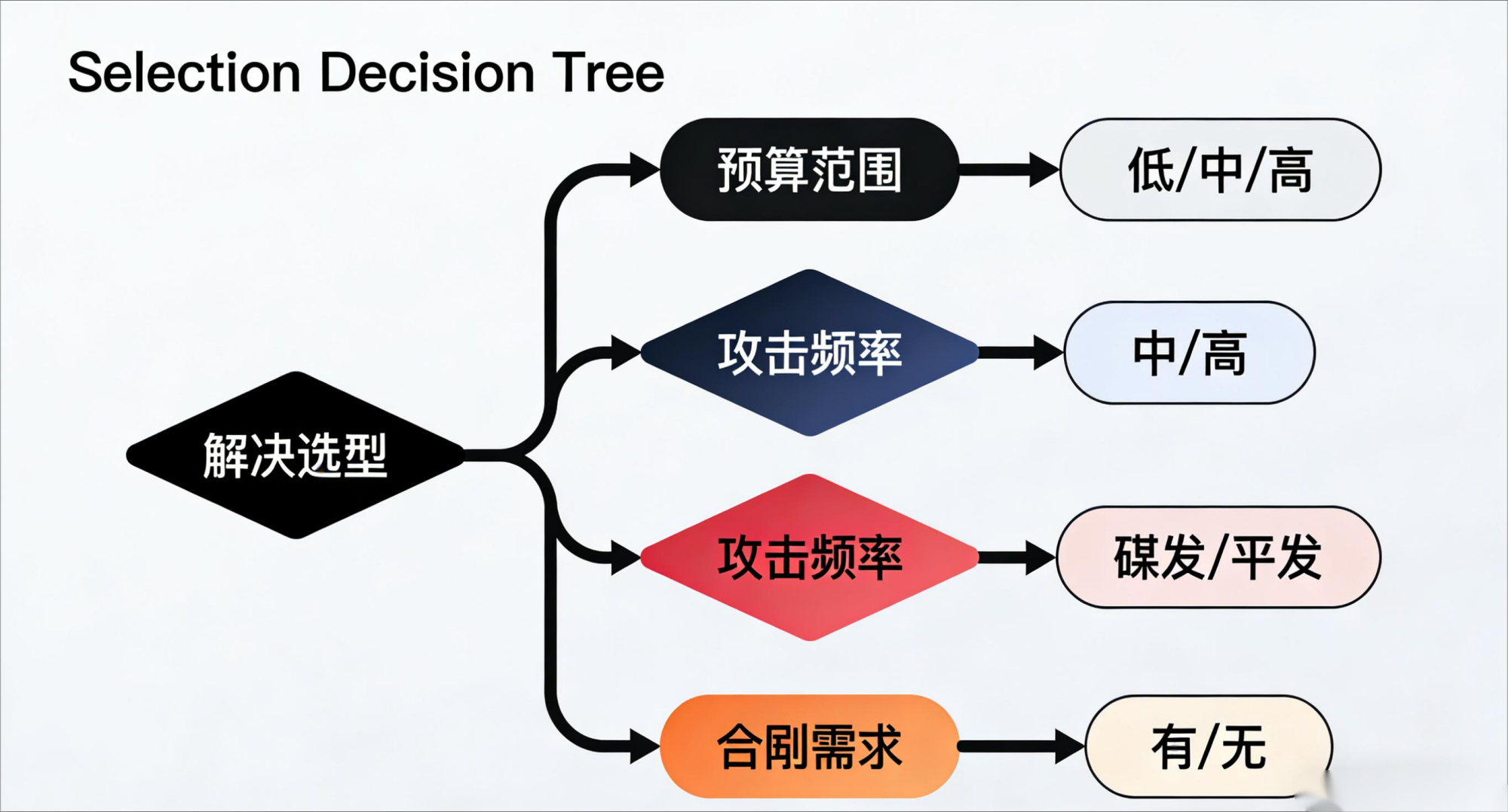
7. How to choose the right DDoS protection solution for your business
This is what most webmasters care about.
✔ Content sites / Blogs / News portals
- High traffic volume
- Lots of static assets
👉 Prioritize Anti-DDoS CDN
✔ Dynamic sites / E-commerce / SaaS platforms
- Frequent logins
- Many API calls
👉 Anti-DDoS CDN + behavioral protection
✔ APIs / Backend systems / Internal tools
- Not publicly exposed
- Stability is critical
👉 High-defense IP
✔ Globally distributed user base
👉 Anycast Anti-DDoS CDN
8. Top 5 pitfalls every webmaster should avoid
1️⃣ Judging only by defense specs
2️⃣ Ignoring the attack activation threshold
3️⃣ Not asking about origin protection
4️⃣ Choosing the cheapest long-term plan
5️⃣ Falling for “unlimited protection” claims
In DDoS protection, there’s no “unlimited”—only “capacity + strategy.”
9. One sentence to remember
If I could leave you with just one takeaway:
DDoS protection isn’t about buying a product—it’s about choosing the right architecture for your business.
Scrubbing centers are the foundation, Anti-DDoS CDN is the frontline, and smart policies are the brain.
Choose wisely, and attacks become just noise. Choose poorly, and even expensive solutions are just peace of mind—not real protection.
FAQ:
Q1: Can Anti-DDoS CDN completely stop DDoS attacks?
No solution guarantees 100% stop, but a good CDN can reduce impact to acceptable levels.
Q2: Can I use high-defense IP and Anti-DDoS CDN together?
Yes, many critical setups combine both for layered protection.
Q3: Is Anycast always better than regular CDN?
Not necessarily—it depends on node quality and scrubbing capability.
Q4: Do small websites need DDoS protection?
If your business has value, you’ll need it sooner or later.
Share this post:
Related Posts

Which Websites Are a Good Fit for CDN07's DDoS-Protected CDN, and How Does It Compare with Cloudflare?
Compare CDN07 and Cloudflare for websites serving users in Mainland China, including connectivity, D...
How Much Does a DDoS-Protected CDN Cost per Month? Plans, Legitimate Traffic, and Additional Charges
The monthly cost of a DDoS-protected CDN depends on the plan allowance, legitimate traffic usage, pr...

How to Choose a DDoS-Protected CDN: Workloads, Network Connectivity, and Protection
Choosing a DDoS-protected CDN takes more than comparing mitigation capacity and monthly price. This...