

CDN07:2026 APAC DDoS and Application-Layer Attack Trends Report
As 2026 unfolds, DDoS and application-layer attacks across Asia Pacific are undergoing a clear structural shift. Organizations once assessed risk primarily by asking how high an attack might peak, while defenses focused on bandwidth reserves, blackholing thresholds, and the scrubbing capacity of individual facilities. Attackers now combine massive traffic volumes, extreme packet rates, protocol st


—A consolidated analysis based on CDN07 monitoring data from DDoS protection customers across Asia Pacific and publicly available industry research
As 2026 unfolds, DDoS and application-layer attacks across Asia Pacific are undergoing a clear structural shift. In the past, organizations often assessed risk primarily by peak attack volume, while protection strategies focused on bandwidth reserves, blackholing thresholds, and the scrubbing capacity of individual locations.
Attackers are no longer focused solely on saturating a network path in a single burst. They now combine massive traffic volumes, extremely high packet rates, protocol state exhaustion, application-layer concurrency, automated traffic, and API abuse. These techniques allow them to probe defenses repeatedly within shorter windows and direct pressure precisely at critical functions such as login, search, checkout, payment, queries, and real-time interactions.
This shift is especially significant in Asia Pacific. The region includes dense internet exchange and cross-border communications hubs, along with highly available online services spanning gaming, ecommerce, fintech, streaming media, generative AI, mobile applications, and cross-border SaaS.
Users are distributed across many countries and markets, with substantial differences in network quality, device types, carrier egress, and regulatory requirements. When an attack occurs, the issue is no longer simply whether a server remains online. Organizations must also determine whether cross-border access is stable, legitimate users are being blocked, critical APIs remain available, the origin is exposed, and the full incident can be reconstructed after the attack ends.
Aggregated data from the CDN07 security monitoring platform shows that attack risk continued to rise among its DDoS protection customers across Asia Pacific in 2026. The change was particularly pronounced during the World Cup: the platform detected more than 2 trillion additional malicious requests compared with the same period in 2025, while the largest single DDoS attack observed reached a peak of 10 Tbps.
In its DDoS Threat Report for the First Half of 2026, Cloudflare reported processing 29.64 trillion malicious HTTP requests during the first half of 2026 and observing numerous hyperscale attacks exceeding 1 Tbps. NETSCOUT data for Asia Pacific indicates that approximately 68% of DDoS attacks lasted less than 15 minutes and nearly half used two or more attack vectors. Akamai, meanwhile, found that web application and API attack attempts in Asia Pacific approached 65 billion in 2025, up 23% year over year.
Taken together, these findings show that DDoS risk in Asia Pacific is moving beyond occasional volumetric events into a new phase defined by frequent, short-lived, multivector attacks that coordinate network- and application-layer pressure. Competitive differentiation in protection has likewise expanded beyond peak bandwidth to include distributed capacity, real-time detection, application and API protection, policy automation, and continuous security operations.
Industry research published by Cloudflare , NETSCOUT , and Akamai points to the same conclusion: DDoS risk in Asia Pacific has shifted from isolated large-scale events to a landscape where high-frequency, short-duration, multivector, and business-targeted attacks coexist. Protection is no longer judged solely by peak bandwidth; it increasingly depends on distributed capacity, real-time detection, application-layer coordination, policy automation, and sustained operational capability.
Attacks Surged During the World Cup: More Than 2 Trillion Additional Malicious Requests Year over Year
Data from the CDN07 security monitoring platform shows that DDoS protection customers in Asia Pacific faced substantially greater attack pressure during the 2026 World Cup than during the same period in 2025. The platform detected more than 2 trillion additional DDoS, application-layer, and related automated malicious requests year over year.
At the same time, the largest single DDoS attack observed by CDN07 in 2026 peaked at 10 Tbps. The simultaneous growth of massive application-request volumes and large-scale volumetric attacks means that organizations across Asia Pacific must account for both business-context detection and network capacity.
Global events such as the World Cup amplify legitimate demand and attack traffic at the same time. Live streaming, match updates, gaming promotions, social interactions, account logins, betting, and payments all become highly active within narrow windows. As the normal traffic baseline rises quickly, attackers can more easily blend malicious requests into legitimate user activity. The challenge for security systems is not merely absorbing more traffic. They must reassess, in real time, what represents legitimate growth, what reflects automated resource consumption, and which critical endpoints require priority protection.
The 10 Tbps attack detected by CDN07 also shows that high-capacity network-layer attacks have not receded as application-layer attacks have grown. Attackers can use network floods to tie up scrubbing and operations resources, then sustain pressure on business systems with HTTP floods, connection exhaustion, or API requests. An organization that configures only application rules for Layer 7 attacks may see its upstream connectivity overwhelmed first. One that prepares only additional network bandwidth may allow vast numbers of syntactically valid requests to reach the origin.
CDN07's annual data indicates that these risks did not disappear when the event ended. The World Cup acted more like a magnifying glass, concentrating short-lived peaks, repeated pulses, distributed sources, targeted consumption of application endpoints, and the intermingling of legitimate and malicious traffic. For gaming, ecommerce, media, fintech, mobile application, and API services in continuous operation, the same attack patterns can surface during product launches, marketing campaigns, version releases, market volatility, and unexpected spikes in public attention.
Overall Trend: Attack Volume, Peak Intensity, and Business Impact Are Rising Together
This upward trend broadly aligns with changes reported by major global security networks. Observations from different network environments all indicate that attack resources are expanding, while launch frequency, instantaneous intensity, and the ability to consume application-layer resources are increasing in parallel.
Cloudflare's fourth-quarter 2025 DDoS threat report, published in February 2026, states that its network mitigated approximately 47.1 million DDoS attacks in 2025, an increase of 121% from 2024. That is equivalent to an average of 5,376 attacks per hour. Approximately 34.4 million were network-layer attacks, substantially more than in the previous year.
In the fourth quarter of 2025 alone, Cloudflare observed a 31% quarter-over-quarter and 58% year-over-year increase in DDoS attacks. Network-layer attacks accounted for 78% of the quarter's total.
Threat intelligence published by NETSCOUT in March 2026 for the second half of 2025 shows that its visibility network recorded more than 8 million DDoS attacks from July through December 2025. The report identifies AI assistance, coordinated botnets, persistent hacktivist activity, compromised IoT devices, and DDoS-for-hire services as important drivers of changing attack capability. It also notes sustained targeting of government, financial services, telecommunications, transportation, and hospitality.
The two reports describe the same trajectory from different network vantage points. DDoS is no longer an exceptional event relevant only to a small number of high-value targets. It has become a routine attack method that can be invoked cheaply, iterated quickly, and replicated continuously. As attack resources become commoditized, attackers no longer need to maintain large infrastructures over long periods. They can rent, aggregate, or temporarily control distributed devices to launch repeated reconnaissance and disruptive attacks against different targets.
More attacks do not mean that individual attacks are becoming less severe. Frequency and hyperscale peaks are rising at the same time. Cloudflare disclosed one attack that peaked at 31.4 Tbps but lasted only 35 seconds. NETSCOUT reported that attack capabilities observed or publicly demonstrated had reached 30 Tbps and 4 billion packets per second. For organizations that depend on manual detection, emergency switching, or activating scrubbing only after an attack begins, a few dozen seconds may be enough to congest network paths, exhaust device state tables, cause health checks to fail, and destabilize routing.
Changing Attack Scale: Higher Peaks and Less Time to Respond
The 10 Tbps attack observed by CDN07 is a clear warning about capacity risk for organizations across Asia Pacific. The danger of a massive volumetric attack lies not only in the peak itself, but also in how quickly traffic rises. Traditional attacks might ramp up over several minutes, giving operations teams time to confirm alerts and switch traffic. Newer botnets can transmit simultaneously within an extremely short window, driving traffic almost vertically toward its peak.
When an attack is compressed into a few dozen seconds or less, manual approval, DNS changes, emergency activation of a DDoS-protected IP service, and routing convergence may all take longer than the attack needs to cause damage.
Attackers are also becoming more adept at exploiting delays in defensive workflows. A brief peak can trigger protection mechanisms at the origin, load balancer, or cloud platform, then subside quickly. When defenders conclude that the event has ended and restore normal policies, a second wave arrives. Repeated short pulses may not appear significant under a single-event duration metric, yet they force connections to rebuild repeatedly, invalidate caches, and trigger frequent scaling of backend instances. The result can be a longer and more difficult period of service instability than a single sustained flood.
DDoS risk therefore cannot be assessed by asking only how many terabits per second a service can mitigate. Organizations must also examine packet-processing capacity, connection establishment rates, edge distribution, routing convergence, detection time, mitigation-policy deployment time, and origin recovery time. Peak bandwidth determines whether network capacity will be saturated. Packet rate determines whether devices and protocol stacks can cope. Connection and request rates determine whether application services will be overwhelmed. Together, these dimensions define the practical protection ceiling.
Changing Attack Duration: Short Bursts and Repeated Waves Become a Combined Tactic
Attack duration was once understood as the time between the first and last malicious packet. By 2026, that definition no longer captures the actual impact. The same threat actor may launch dozens of short bursts over several hours, or use low-intensity traffic to probe protection thresholds before launching a large attack during peak demand. Brief pauses between waves may cause monitoring systems to classify them as separate incidents, while the business experiences one prolonged period of instability.
A more useful assessment should include at least three intervals: the attack window when malicious traffic is present, the observation window when enhanced controls remain active, and the business-recovery window required for origin connections, caches, queues, and user experience to return to normal. Network traffic ending within a minute does not mean that orders, payments, messaging, or real-time matches will recover within the same minute.
If an attack creates a backlog of database connections, restarts application instances, or triggers rate limits in third-party services, the downstream impact may persist much longer.
Average attack duration should not be an organization's only decision metric. A 35-second attack with an extreme peak and a lower-intensity application-layer attack sustained for several hours demand entirely different resources. The former tests automated capacity and scrubbing speed; the latter tests behavioral detection, cost control, policy stability, and false-positive management. A mature protection architecture must cover both extremes: high peak and short duration, as well as low visibility and prolonged resource consumption.
Changing Attack Types: From Bandwidth Floods to Coordinated Multilayer Pressure
DDoS attacks in 2026 are rarely confined to one protocol. Volumetric network-layer attacks remain prevalent, with UDP floods and reflection amplification capable of generating massive traffic quickly. Protocol and state-exhaustion attacks exploit SYN handling, connection management, and network-device processing to consume resources in firewalls, load balancers, and servers. Application-layer attacks go further, using HTTP, HTTPS, WebSocket, and API requests to target business logic directly.
Attackers can combine these methods within a single campaign. Volumetric traffic generates alerts and network pressure; high packet rates strain network devices; HTTP floods consume application resources; and automated clients attempt logins, searches, orders, or expensive queries. While the security team focuses on peak traffic, requests that create account risk, increase operating costs, or facilitate data exposure may already be blending into legitimate HTTPS traffic.
NETSCOUT's 2026 report emphasizes the growing role of reconnaissance and adaptive evasion. Attackers may first determine which defenses a target uses, which ports are open, and which endpoints are most expensive to process. They then adjust protocols, sources, and request characteristics in response to blocking. Static rules can gradually reveal their thresholds to the attacker.
A multivector attack is therefore not simply a matter of sending several kinds of traffic. It shifts between network layers to find the weakest point in capacity, state management, rules, or business logic.
Changing Application-Layer Attacks: Modest Traffic Can Multiply Backend Costs
Application-layer DDoS attacks are becoming one of the most difficult risks for organizations across Asia Pacific to manage. In China's security market, attacks that occupy website and API resources with large volumes of HTTP or HTTPS requests—or requests designed to closely resemble legitimate traffic—are commonly called CC attacks. International research more often uses terms such as application-layer DDoS, HTTP flood, or Layer 7 DDoS.
During the 2026 World Cup, CDN07 detected more than 2 trillion additional malicious requests affecting its DDoS protection customers in Asia Pacific compared with the same period in 2025. This shows that risk is growing not only in peak bandwidth, but also in the number of requests for which systems must establish connections, parse protocols, and evaluate business behavior individually.
Akamai's 2025 research on web, API, and DDoS threats in Asia Pacific also found that application-layer DDoS activity in the region grew 66% year over year, making it one of the most heavily affected regions worldwide. HTTP floods remained a leading threat. Over the two-year observation period covered by the research, Asia Pacific recorded approximately 7.4 trillion application-layer DDoS requests, with Singapore, India, and South Korea receiving particularly large volumes of malicious traffic.
Application-layer attacks are difficult to stop because their requests can use valid protocols, complete TLS connections, and apparently normal browsing paths. Attackers do not need to saturate ingress bandwidth. They can cause significant disruption simply by repeatedly accessing resources that are expensive to compute, have low cache hit ratios, or require calls to backend services.
A request for a static image, for example, can usually be served directly from the edge cache. A complex search may invoke an index query; a login may call account, CAPTCHA, and risk-control systems; an inventory lookup may query a database; and an AI inference request can consume costly compute resources.
This ability to amplify backend costs with relatively little ingress traffic creates a dilemma for conventional fixed rate limits. Strict per-IP thresholds may block legitimate users behind shared carrier gateways, corporate networks, or campus networks. Loose thresholds allow distributed proxies and large numbers of compromised devices to keep each source below the limit while generating sustained aggregate pressure. User-Agent strings, cookies, and request headers can also be forged, making any single signal unreliable over time.
As a result, application-layer protection is moving beyond individual IP addresses and requests toward combined analysis of IP, device, session, account, token, access path, request interval, and historical behavior. A security platform must determine not only whether a request is anomalous, but also whether many apparently normal requests are collectively carrying out an abusive operation.
This is the fundamental reason application-layer DDoS protection, bot management, and API security are converging.
Changing Botnets: IoT and Consumer Devices Become an Attack Resource Pool
Public research from late 2025 and early 2026 shows that large botnets remain a critical foundation for extremely high-intensity DDoS attacks. Cloudflare cited activity associated with botnets such as Aisuru and Kimwolf, some of which included compromised consumer devices such as Android televisions.
During one concentrated campaign, its platform mitigated 902 hyperscale attacks—approximately 53 per day. Attacks in the campaign averaged billions of packets per second and several terabits per second, with still higher peaks observed.
Consumer and IoT devices are numerous, remain online for long periods, and are widely distributed. Some use default passwords, receive few or no updates, expose remote-management functions, or have weak supply-chain security.
Once compromised at scale, these devices can transmit simultaneously from large numbers of residential broadband and carrier networks. Because the sources are highly distributed, blocking a small list of known addresses quickly loses effectiveness. Attack traffic may also share the same carriers and geographic areas as legitimate users.
This distinction is essential when interpreting attack origin. A source IP's country or region in a report usually identifies the location of a compromised device, proxy, cloud host, or egress network. It does not directly establish the attacker's identity or nationality.
A protection policy based solely on blanket geographic blocking can exclude users in a target market while failing to stop attacks that enter through local proxies. Geography is useful as a risk signal and routing input, but should not be the only enforcement criterion.
Changing Geography: Asia Pacific Network Hubs Face Pressure as Both Targets and Sources
In Cloudflare's analysis of attack destinations for the fourth quarter of 2025, Hong Kong rose to second place globally, while Vietnam, India, and Singapore also entered the top ten. At the same time, Bangladesh, Indonesia, Hong Kong, Vietnam, Taiwan, and Singapore appeared among the Asia Pacific markets associated with more active sources of attack traffic.
This two-way pattern reflects the complexity of internet infrastructure across Asia Pacific. A market may host numerous high-value online services while also serving as a transit point or source of attack traffic because of its device population, cloud resources, and cross-border connectivity.
Hong Kong, Singapore, and Japan carry substantial volumes of cross-border traffic and network interconnection, while markets such as India, Indonesia, and Vietnam have rapidly growing mobile-internet populations and digital services. Users may be spread across many Asia Pacific markets even when origin infrastructure is concentrated in only a few data centers.
If attack traffic forces cross-border routes to detour, users who are not directly blocked may still experience higher latency, packet loss, handshake failures, and dropped persistent connections.
Effective protection across Asia Pacific therefore requires more than a single high-capacity data center presented as a global solution. Edge locations should identify and scrub traffic as close to the ingress point as practical, then use appropriate BGP routing, Anycast, or intelligent traffic steering to deliver legitimate traffic over healthy paths.
Services supporting users across multiple countries must also evaluate regional isolation during attacks. If one network ingress point is under pressure, can other markets remain stable? If one carrier encounters an anomaly, can traffic steering avoid moving legitimate users and attack traffic together into a new bottleneck?
Changing Industry Exposure: Telecommunications, Finance, Gaming, and AI Face Elevated Risk
Cloudflare's fourth-quarter 2025 report listed telecommunications companies, service providers, and carriers among the most frequently attacked industries, and noted intense attacks against gaming and generative AI services. Telecommunications companies and service providers often support many downstream customers, so an attack on shared infrastructure or a common ingress point can have an amplified effect. Gaming services depend heavily on real-time performance and persistent connections; even a short disruption can affect gameplay and retention. Generative AI APIs have a high per-request cost, making them especially susceptible to resource-consumption attacks.
Financial services are also a major target of application-layer DDoS attacks in Asia Pacific. Akamai's 2026 financial-services security research found that, based on its 2025 observations, Asia Pacific accounted for 52% of application-layer DDoS attacks against the financial-services sector worldwide.
Financial applications encompass login, identity verification, market data, trading, payment, and settlement. Attackers can cause outages directly or use DDoS activity to divert security teams while creating an opening for credential stuffing, fraud, or other intrusions.
Ecommerce companies and internet platforms face their greatest risk during critical business windows. Promotions, limited product releases, live events, and payment peaks already produce legitimate traffic growth, making embedded attacks harder to identify. SaaS and API platforms face cascading effects: degradation of one shared API or authentication service may affect many tenants and partners at once.
Media and live-streaming services must also absorb legitimate surges driven by breaking events. Security systems must distinguish attacks and abusive crawlers from genuine audience growth; simple blocking is not a substitute for capacity planning and behavioral analysis.
These differences mean that protection policies cannot be copied wholesale between industries. Gaming prioritizes UDP, persistent connections, game rooms, and login paths. Financial services emphasize identity, sessions, API integrity, and auditability. Ecommerce prioritizes campaign endpoints, inventory, payments, and automated abuse. AI services require joint controls for tokens, accounts, invocation cost, and concurrency. A DDoS-protected CDN should provide more than a common ingress point; it should enable distinct policies by domain, protocol, path, and business stage.
Changing Timing: Attackers Target the Moments When Services Are Most Vulnerable
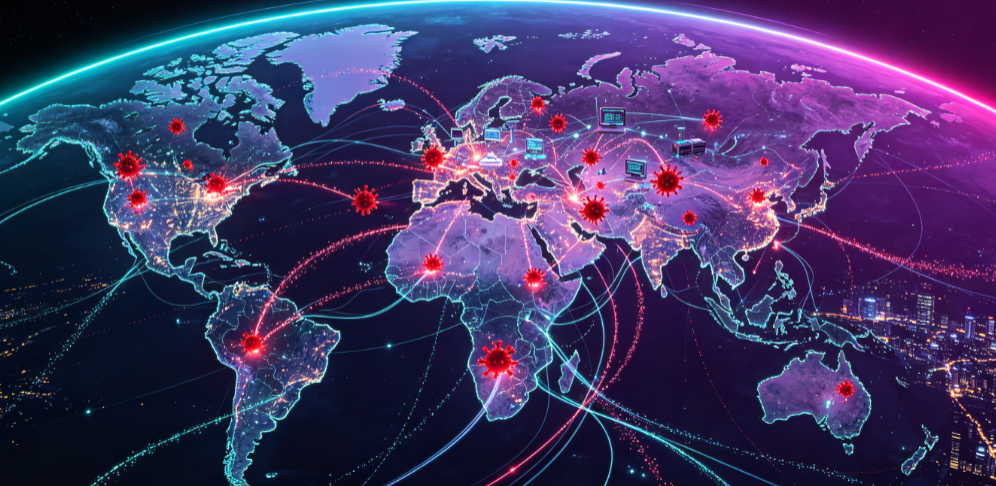
The increase in malicious requests observed by CDN07 during the World Cup shows that major events are themselves important timing signals for attackers. They do not need to wait for a fixed hour. Instead, they look for windows of rapidly rising legitimate demand around kickoffs, high-profile matches, peak streaming periods, result announcements, and related promotions. The more concentrated legitimate requests become, the easier malicious traffic is to conceal. The closer capacity is to its normal limit, the less effort an attacker needs to cause the same level of disruption.
Public industry reports can describe overall volume and direction, but no platform has published a single set of peak attack hours that applies directly to every organization in Asia Pacific. Simply strengthening defenses during a generic fixed period can overlook the rhythm of an organization's own services.
Useful time-based analysis should correlate attack logs with login peaks, promotions, game launches, live sports, financial settlement, product releases, breaking news, and version updates.
Attackers tend to choose moments when operational tolerance is lowest. Around a product release, inventory and order APIs may already be heavily loaded. At a game launch, login and matchmaking services face concentrated demand. During a major sports broadcast or live event, real audience growth can conceal malicious requests. When financial markets are volatile, query and transaction volumes rise, and any delay is more likely to alarm users. An attack of the same size can have very different commercial consequences during an ordinary period and a critical window.
Another common pattern is reconnaissance followed by impact. Attackers may use small amounts of traffic over several days to test ports, domains, and APIs, observing response codes, latency, and defensive actions before concentrating an attack when the target event begins. An organization that retains logs only for the peak will lose important early indicators. Time-based analysis should cover the periods before, during, and after an incident to identify probing traffic, policy changes, repeated attacks, and recovery behavior.
Changing Protection Architecture: From Emergency Switching to Always-On Defense
With brief, high-volume, repeated attacks, the delay introduced by on-demand switching is increasingly unacceptable. Always-on protection continuously routes traffic through distributed ingress and scrubbing infrastructure, eliminating the need to change access paths after an attack begins and allowing systems to learn normal traffic baselines over time. Always-on protection does not mean applying the same strict policy to every request. It means keeping capacity, detection, and enforcement continuously available, then increasing protection dynamically as risk changes.
The network layer first requires sufficiently distributed edge ingress. Multiple locations and appropriate routing spread attack pressure across regions and prevent a single data center or carrier from becoming the bottleneck. Scrubbing systems must address bandwidth, packet rate, connection, and protocol anomalies together rather than relying only on upstream capacity. For web, mobile application, and API traffic, network-layer scrubbing must be followed by HTTP, TLS, session, and behavioral analysis; otherwise application-layer attacks can still pass through the ingress and reach the origin.
Application-layer defenses should connect the web application firewall (WAF), bot management, application-layer DDoS policies, and API security. The WAF identifies malicious payloads and protocol anomalies; bot management evaluates automation signals; application-layer DDoS controls focus on concurrency, frequency, and resource consumption; and API security validates identity, authorization, signatures, call sequences, and endpoint boundaries.
When these components operate independently, conflicting policies and fragmented context are common. Sharing IP, device, session, account, path, and historical-risk signals enables more granular enforcement.
Enforcement should also move from simple blocking to tiered response. Low-risk anomalies can be monitored or lightly rate-limited. Medium-risk activity can trigger cookie validation, a JavaScript challenge, or human verification. High-risk requests can then be subject to session restrictions, endpoint isolation, or blocking. Tiered policies reduce false positives, particularly for mobile networks, shared egress, and cross-border access.
During an attack, preserving critical transactions, login, and real-time services is also more consistent with business-continuity objectives than maintaining every low-value function without distinction.
Changing Observability: Organizations Need to Know Why Traffic Was Blocked, What Was Blocked, and Whether the Service Recovered
DDoS protection in 2026 increasingly emphasizes observability. In May 2026, AWS announced more granular DDoS flow logs for Shield Advanced. The logs can show source and destination addresses, ports, protocols, packet and byte volumes, and source countries or regions, with interval-based output during attacks.
This change reflects a shared industry requirement. Organizations are no longer satisfied with a conclusion that an attack was mitigated; they need to reconstruct the attack composition, enforcement actions, and business impact.
A complete incident record should answer at least the following questions: When did the attack begin, and what were its peak and average intensities? What were the principal protocols, ports, paths, and request characteristics? Which locations and carriers experienced the greatest pressure? When did protection activate, and did it apply rate limiting, verification, or blocking? How did legitimate-user success rates and P95 and P99 latency change? Did origin CPU, connections, queues, and databases recover? Were there false positives, evasions, or a second attack wave?
Observability is also fundamental to evaluating a provider. Displaying one enormous peak does not prove that legitimate services remained available at that peak. Reporting only the number of blocked requests does not show whether real users were affected. Organizations should align network, security, and business metrics on the same timeline, then continuously validate protection through authorized exercises and actual incidents.
CDN07's Approach to Protection in Asia Pacific: Distributed Capacity with Coordinated Multilayer Security
A single attack peak of 10 Tbps and a year-over-year increase of more than 2 trillion malicious requests during a major-event period show that protection must combine network capacity with application-aware decisions. To address the combination of high peaks, cross-region activity, multivector techniques, and application-layer attacks in Asia Pacific, CDN07's DDoS-protected CDN uses distributed edge ingress as its foundation and brings DDoS protection, intelligent traffic scrubbing, WAF, application-layer DDoS protection, API security, origin protection, and intelligent traffic steering into one delivery path.
Its value does not depend on a single static threshold. The architecture is designed to identify anomalies as close to the traffic ingress as practical, then apply different actions based on network, connection, request, and behavioral risk.
At the network layer, CDN07's DDoS-protected CDN provides distributed capacity and scrubbing for common attacks such as SYN floods, UDP floods, and HTTP floods, spreading pressure through its edge and traffic-steering architecture. Organizations can configure protection according to service geography, protocols, bandwidth requirements, and security policies, with support for real-time communication scenarios such as WebSocket. For cross-border services in Asia Pacific, multiple ingress points shorten legitimate access paths while reducing the effect that an attack on one network route has on the entire user base.
At the detection layer, CDN07's published intelligent scrubbing model emphasizes a continuous decision process spanning traffic collection, behavioral analysis, signature matching, risk evaluation, scrubbing, and forwarding of legitimate traffic. Clear network-layer anomalies can be handled before application parsing. HTTP floods and other application-layer attacks can be evaluated using request rates, access paths, session continuity, and historical behavior, followed by tiered measures such as rate limiting, cookie validation, JavaScript challenges, or human verification. This approach is better suited to mobile networks and distributed proxy environments than blocking by IP address alone.
At the application layer, WAF, bot management, and API security provide complementary controls. The WAF identifies malicious parameters and known web attacks. Automated traffic requires behavioral and identity analysis. Expensive APIs should have independent controls based on path, method, account, token, and business state. When network- and application-layer attacks occur together, a unified edge ingress helps correlate risks across layers and prevents attack traffic from being passed repeatedly between separate components.
For games and mobile applications, CDN07 further connects client-side signals, edge response, and cloud-based decisions. Its game SDK protection and mobile application protection can provide signals about client environments and device risk. The edge absorbs traffic and enforces policy quickly, while the cloud continually evaluates network, account, session, and behavioral context.
For services that use proprietary protocols, persistent connections, and dynamic APIs, this coordination between client, edge, and cloud addresses the limitations of observing traffic only at the server ingress.
Another practical benefit of the CDN07 architecture is that protection, acceleration, traffic steering, and origin protection operate on the same service path. Organizations do not need to change DNS records or expose a new ingress after an attack begins. Legitimate requests can be served from edge cache or forwarded, while anomalous traffic is identified before it reaches the origin.
The origin can be restricted to trusted origin-request paths. Together with reduced port exposure, access controls, and backup connectivity, this further lowers the risk of attackers bypassing the CDN and targeting the origin directly.
Putting Protection into Practice by Industry: From a Common Ingress to Workload-Specific Policies
Gaming companies should prioritize login, authentication, matchmaking, game rooms, and real-time interaction paths, monitoring packet rate, connections, and latency separately across TCP, UDP, WebSocket, and proprietary protocols. Distributed DDoS-protected ingress can spread pressure during volumetric attacks. Application-layer attacks against login and API endpoints require correlation across accounts, devices, and sessions. Before a game launch, version release, or tournament, teams should complete authorized load tests and attack simulations and prepare plans for graceful degradation of nonessential functions.
Financial-services and ecommerce companies should classify login, CAPTCHA, payment, order, inventory, and query endpoints by priority and risk. Static content should make fuller use of edge caching, while expensive dynamic APIs should have independent baselines and risk policies.
Users behind shared egress should not be blocked aggressively by IP alone. Verification can incorporate accounts, tokens, devices, and behavior. Organizations should also preserve a complete audit trail during attacks so that security actions, business outcomes, and user appeals can be correlated.
SaaS, API, and AI services should focus on controlling the cost of each API call. Organizations need to understand how many database queries, third-party calls, or compute resources a request invokes, then set concurrency, quota, and timeout controls accordingly. A valid API key or token does not guarantee legitimate use. Abnormal account switching, shared keys, bulk proxies, and expensive parameter combinations still require detection.
CDN07 edge rate limiting, WAF, bot management, and API security can filter requests at the ingress, but the application remains the authority for validating permissions, quotas, and idempotency.
Media, live-streaming, and content platforms must manage sudden legitimate demand alongside malicious traffic. Audience growth driven by a breaking event should not automatically be classified as an attack. Decisions should combine cache hit ratio, origin-request ratio, user completion rates, and request behavior. Serving static resources at the edge while protecting dynamic interaction APIs independently prevents attackers from bypassing overall capacity advantages with a small number of uncacheable requests.
Key Metrics for Evaluating DDoS and Application-Layer Protection in 2026
When purchasing a DDoS protection service, organizations should place the advertised peak mitigation capacity within a complete measurement framework. Capacity metrics include bandwidth, packet rate, connection rate, and request rate. Response metrics include detection time, policy-deployment time, route-switching time, and business-recovery time. Quality metrics include legitimate-request success rate, latency, challenge completion rate, and false-positive feedback. Origin metrics include origin traffic, connections, CPU, memory, queues, and database load. Operational metrics include alert completeness, log granularity, incident reports, policy-change records, and technical-support responsiveness.
Testing must likewise advance from a single load test to multiscenario validation. With proper authorization and safety boundaries, organizations can separately simulate network-layer floods, packet-rate spikes, connection exhaustion, HTTP floods, distributed low-and-slow application-layer attacks, cache bypass, and API resource exhaustion. They can then observe whether CDN07 edge locations, scrubbing policies, WAF, and the origin produce a consistent protection outcome.
Testing must preserve visibility into real user experience and origin health. Success should not be judged solely by the amount of traffic blocked.
For ongoing operations, organizations should maintain normal baselines that reflect different business periods. Traffic patterns differ between weekdays and weekends, ordinary and promotional periods, and service launch and steady-state operation. Policies require version control, staged rollout, automatic expiration, and rapid rollback. A strict rule created temporarily for one attack should not remain in place indefinitely.
After every incident, teams should review reconnaissance signals that appeared before the attack, policy effectiveness during the attack, and the recovery process afterward, then use those findings to improve the next round of protection.
From Bandwidth Defense to Verifiable Business Continuity
DDoS and application-layer attacks in Asia Pacific are developing a clear set of new characteristics in 2026. During the World Cup, CDN07 detected more than 2 trillion additional malicious requests affecting its DDoS protection customers in the region compared with the same period in 2025, and the largest single DDoS attack observed by the platform peaked at 10 Tbps. External industry reports likewise show continued high levels of network-layer attacks, application-layer DDoS activity, and botnet operations. Network-layer peaks continue to rise, while short pulses alternate with repeated waves and make conventional duration metrics less meaningful. HTTP floods, API resource exhaustion, and automated abuse are transferring pressure from network bandwidth into business systems.
In this environment, organizations do not need to buy an isolated peak-capacity number. They need verifiable business continuity. Distributed networks must absorb sudden traffic, scrubbing systems must make decisions within seconds, and WAF, bot management, application-layer DDoS controls, and API security must work together. Attackers must not be able to bypass the protected ingress and reach the origin. Legitimate users must still be able to complete critical operations under strict policies, and security teams must be able to reconstruct every enforcement action from logs and reports.
CDN07 uses its DDoS-protected CDN as the delivery foundation and combines intelligent traffic scrubbing, application-layer protection, API security, client-side signals, intelligent traffic steering, and origin protection into a multilayer defense. This architecture directly addresses the shift in Asia Pacific from attacks dominated by raw traffic volume to multilayer attacks on business services.
The year-over-year increase of more than 2 trillion malicious requests and the 10 Tbps single-attack peak illustrate how volumetric DDoS attacks and malicious application-layer requests are growing at the same time. The next phase of investment should not focus only on adding bandwidth. Organizations should bring networking, security, applications, and operations into one protection system, using continuous observation, tiered response, and regular exercises to demonstrate that services remain available during attacks.
As the barrier to launching DDoS attacks continues to fall, defenders will gain an advantage through faster decisions, earlier enforcement, more granular business-context detection, and a more complete evidence trail. The core measure of a DDoS-protected CDN's value for organizations across Asia Pacific in 2026 will be whether it can maintain always-on protection before massive traffic arrives, divert risk before application-layer requests reach critical endpoints, and restore the normal user experience quickly after an attack ends.
Share this post:
Related Posts

Which Websites Are a Good Fit for CDN07's DDoS-Protected CDN, and How Does It Compare with Cloudflare?
Compare CDN07 and Cloudflare for websites serving users in Mainland China, including connectivity, D...

How Much Does a DDoS-Protected CDN Cost per Month? Plans, Legitimate Traffic, and Additional Charges
The monthly cost of a DDoS-protected CDN depends on the plan allowance, legitimate traffic usage, pr...

How to Choose a DDoS-Protected CDN: Workloads, Network Connectivity, and Protection
Choosing a DDoS-protected CDN takes more than comparing mitigation capacity and monthly price. This...