

What Are the Solutions for DDoS Attacks? Rate Limiting, Protection, and Scrubbing Explained
A comprehensive guide to DDoS attack solutions. Learn the principles and use cases of rate limiting, protection, and traffic scrubbing to help your website or server recover quickly and build long-term resilience.

A note before we begin:
I've been working in cybersecurity and DDoS protection for over a decade. Let's be honest, most people don't start researching DDoS out of curiosity, but because—their website suddenly went down.
This article isn't meant to scare you with concepts. Instead, it's written from the perspective of an engineer who has been hit, has handled attacks, and has cleaned up the mess. I'll tell you what to do when a DDoS attack hits and you're not a Fortune 500 company.
1. First, Don't Panic: Modern DDoS Isn't About "Hackers Showing Off"
Many people still have this misconception about DDoS:
"Is someone just visiting my site like crazy from their computer?"
If that's what you're thinking, it shows one thing: The scale of today's attacks is far beyond what an individual can easily grasp.
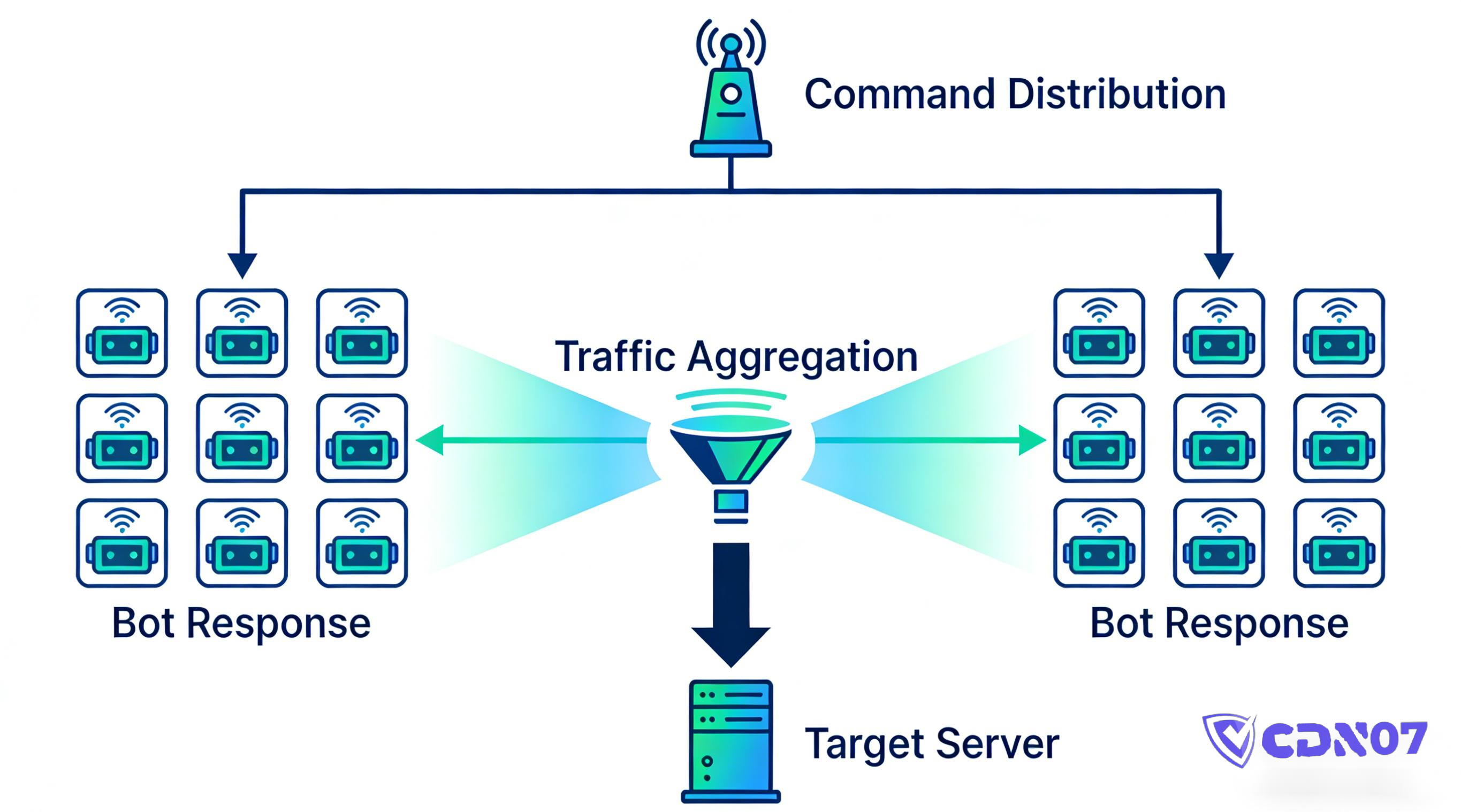
A real-world DDoS attack looks more like this:
- Attack traffic comes from tens of thousands of "compromised devices."
- These include home routers, security cameras, and cloud servers.
- The traffic doesn't instantly crush you; it sustains pressure.
- Blocking IPs is useless—new ones immediately take their place.
The attacker's goals are very practical:
- Make your website unavailable.
- Force you offline.
- Make you give up.
So understand this: DDoS is not a technical problem; it's a "resource war."
2. How Does a DDoS Attack Actually Take Down Your Site?
Here's the plain explanation:
It doesn't hack you; it blocks the "road" so legitimate users can't get in.
There are usually only three outcomes:
- Bandwidth Saturation
Your server is fine, but the "pipe" is clogged. - Connection Exhaustion
Your server is too busy handling junk requests to serve real users. - Your Cloud Provider Suspends You
To protect their network and other customers, they take you offline first.
This is why you often hear:
"My server CPU isn't even high, so why is it down?"
Because you're not "unable to compute"; you're unable to connect.
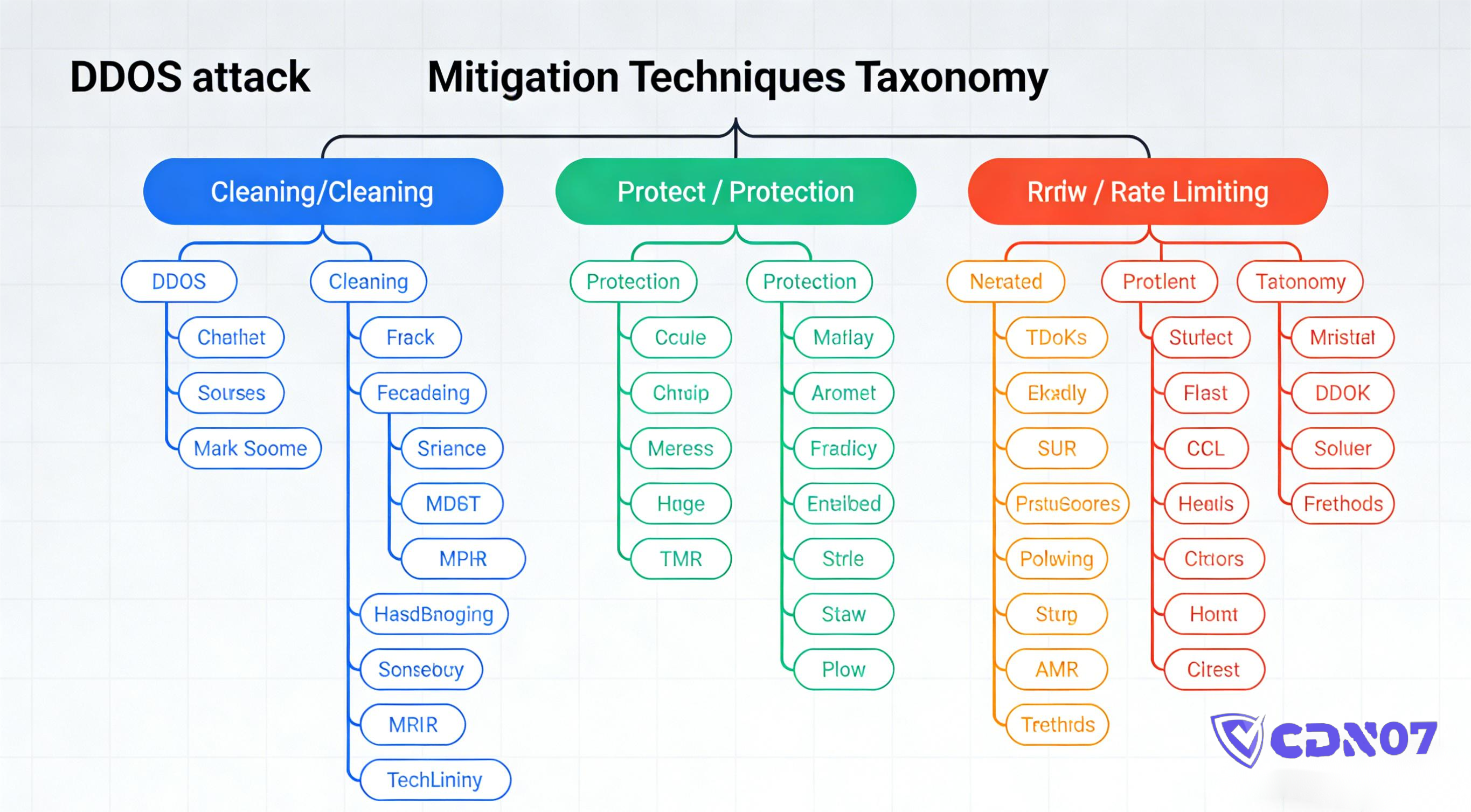
3. All DDoS Solutions Fall Into These Three Categories
No matter how many fancy terms you see online, every DDoS solution ultimately relies on one of these three approaches:
Rate Limiting → Protection → Scrubbing
Let me explain each in plain English.
4. Solution #1: Rate Limiting (Cheapest, But Limited)
What is Rate Limiting?
In simple terms:
"You're coming in too hot; I'm not accepting any more."
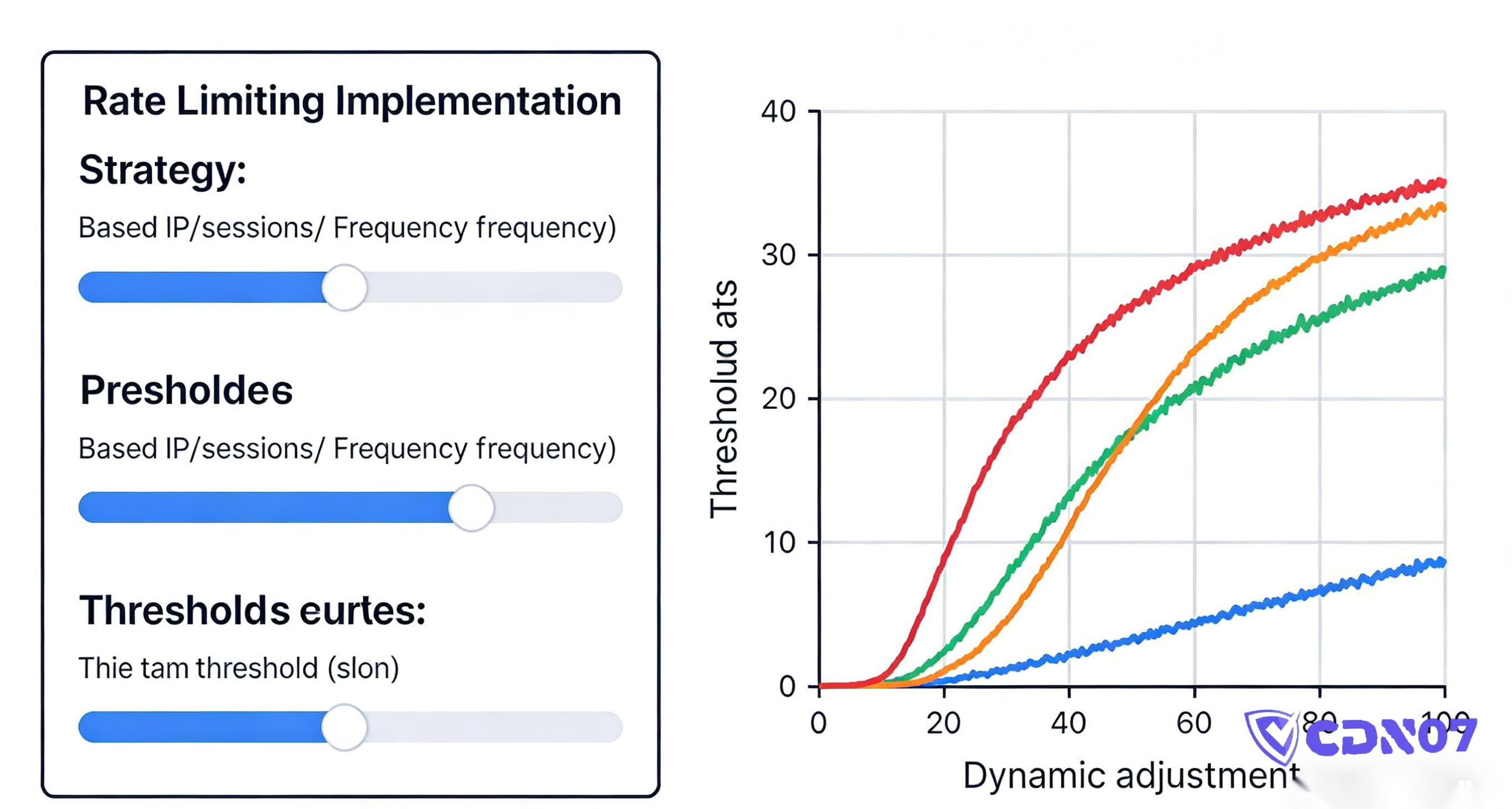
Common methods include:
- Per-IP request frequency limits.
- Maximum concurrent connections per IP.
- API endpoint QPS (Queries Per Second) limits.
Most cloud servers, firewalls, and Nginx have these features built-in.
When Does Rate Limiting Help?
✔ The attack is very small-scale.
✔ The attack method is simple.
✔ The attacker's IPs don't change rapidly.
For example:
- A single API endpoint being scraped.
- Small-scale script attacks.
- Non-distributed attacks.
The Fatal Flaw of Rate Limiting
In reality, a real DDoS attack can almost always bypass rate limiting:
- IPs change constantly.
- Traffic comes from all over the globe.
- Each IP looks "normal" on its own.
You'll quickly find:
The stricter your rate limits, the more likely your legitimate users get blocked first.
So the realistic conclusion is:
Rate limiting is a band-aid, not a cure.
5. Solution #2: Protection (Putting a Shield in Front)
When the attack gets bigger, rate limiting isn't enough. You need someone to "stand in front and take the hit."
This is what's called DDoS Protection.
What Are the Common Protection Methods?
1️⃣ DDoS-Protected IP
The principle is simple:
- You get a "hardened IP address."
- All your traffic first goes to this IP.
- Filtered traffic is then forwarded to your origin server.
Advantages:
- Quick to deploy.
- More resilient than a standard server.
Problems:
- Best for single-origin services.
- If the backhaul line to your origin gets saturated, you still have problems.
This is currently the most common solution for website-based businesses.
The core logic in one sentence:
Distribute your user access across many global points; the attack gets distributed too.
The advantages are clear:
- Anycast architecture.
- Many nodes, wide distribution.
- Attack traffic gets diluted.
- Legitimate users experience faster access.
But the prerequisite is:
Your website must be suitable for a CDN architecture.
Protection Isn't a Magic Bullet
I've seen this scenario too many times:
- Someone buys "DDoS Protection."
- They get hit.
- They still go down.
The reasons are usually one of three:
- The protection capacity was overestimated.
- The attack type wasn't a good match for the solution.
- The origin infrastructure itself had vulnerabilities.
So whether protection works isn't about how much you spend, but whether you chose the right method.
6. Solution #3: Scrubbing (The True "Heavy-Duty" Solution)
What is Traffic Scrubbing?
Explained in one sentence:
Dump all traffic into a massive pool, filter out the garbage, and give you only the clean traffic.
This "pool" is typically:
- A dedicated scrubbing center.
- A carrier-grade network.
- A massive bandwidth cluster.
Characteristics of Scrubbing
✔ Can absorb massive traffic volumes.
✔ Can handle complex, multi-vector attacks.
✔ Minimal impact on legitimate business.
But the trade-offs are real:
- High cost.
- Complex configuration.
- Leans toward enterprise-grade needs.
If you are in:
- Finance
- Gaming
- Trading platforms
- A business consistently targeted by attacks
Then scrubbing is an eventual necessity.
7. So, Is "AI-Powered Scrubbing" Actually Reliable?
I get this question all the time.
Conclusion first, explanation later:
AI isn't magic, but you can't do without it.
The real role of AI in DDoS protection is to:
- Automatically learn patterns of normal traffic.
- Quickly identify anomalous behavior.
- Assist in adjusting mitigation strategies.
But note the key word: "Assist."
What ultimately determines protection effectiveness is always:
- Bandwidth scale.
- Node count and distribution.
- Traffic orchestration capability.
No matter how smart the AI is, it's useless without the infrastructure pool.
8. The Right DDoS Solution Varies Dramatically by Situation
Here's a real-world reference table:
🔹 Small Website / Personal Blog
- CDN + basic rate limiting.
- Don't aim to "withstand Terabits."
- Priority: stay online, not perfect.
🔹 Small/Medium Business
- DDoS-Protected CDN or DDoS-Protected IP.
- Focus on stopping volumetric floods.
- Prioritize cost-effectiveness.
🔹 High-Value / Critical Business
- Scrubbing Center + CDN.
- Dedicated security oversight.
- Treat protection as an ongoing operational cost.
In summary:
The level of loss you can tolerate determines the solution you need.
9. Most People's Mistake Isn't Technical—It's Strategic
The three most common errors I see:
- Only thinking about protection AFTER the attack hits.
- Focusing only on specs (like "XX Gbps"), not on architecture fit.
- Expecting one solution to solve everything forever.
DDoS protection is never a "one-time purchase."
10. Solving DDoS is Ultimately About Making the Attack "Not Worth It"
Remember this:
The ultimate goal of DDoS protection isn't zero attacks, but making attacks ineffective.
As long as you:
- Don't go down easily.
- Make it more costly for the attacker than for you.
- Can recover faster than they can sustain pressure.
Attackers will naturally move on to an easier target.
Frequently Asked Questions (FAQ)
1️⃣ How long do DDoS attacks usually last?
Honestly, there's no standard answer.
A small attack might stop after tens of minutes. A larger one could last hours. For a truly targeted victim, attacks can come in waves over days or even longer. This is why "surviving one wave" doesn't mean the problem is solved.
2️⃣ What's the first thing to do when under a DDoS attack?
Don't panic and start changing configs or restarting servers.
The first step is to stop the bleeding:
- Temporarily enable a CDN or DDoS protection service.
- Implement emergency rate limiting on obvious abuse.
- Contact your hosting provider or a DDoS mitigation platform.
Acting blindly often just blocks your real users too.
3️⃣ Can blocking IPs solve a DDoS attack?
In most cases, no.
Modern DDoS attacks use vast, constantly rotating IP pools. The faster you block, the faster new ones appear.
IP blocking only works for very small-scale attacks from a fixed set of sources.
4️⃣ Is the built-in protection on my regular server enough?
Only for extremely minor attacks.
Once attack traffic exceeds your bandwidth or connection limits, your network gets saturated long before your server's CPU is maxed out. Built-in software protection is useless at that point.
5️⃣ Will a CDN definitely stop a DDoS attack?
Not necessarily.
CDNs are excellent at mitigating volumetric (flood) attacks. For attacks targeting specific APIs, logins, or application layers, a CDN alone may not be enough and should be combined with a WAF or DDoS-Protected IP.
6️⃣ How do I choose between a DDoS-Protected IP and a DDoS-Protected CDN?
A simple rule of thumb:
- APIs, admin panels, backend services → DDoS-Protected IP.
- Public websites, front-end content → DDoS-Protected CDN.
For complex setups, you can use both. It's not an either-or choice.
7️⃣ Is traffic scrubbing only affordable for large corporations?
It used to be, but not entirely anymore.
Many providers now offer scrubbing as a standardized service. Small and medium businesses can use it on-demand, though the scale, price, and customization will differ from enterprise plans.
8️⃣ Is AI-powered scrubbing useful, or just marketing hype?
It's useful, but don't mythologize it.
AI's role is to identify malicious traffic faster and reduce false positives. But the ultimate protection ceiling is still set by bandwidth scale and node distribution.
Without the underlying resources, AI can't save you.
9️⃣ Why do some websites get hit but seem unaffected?
Usually for one reason:
Someone is already taking the hit for them upstream.
A DDoS-Protected CDN, a scrubbing center, or carrier-level protection is stopping the traffic before users ever see it.
🔟 Is DDoS protection a one-time purchase?
No.
Attack methods evolve, your business changes, and your protection strategy must adapt.
Think of DDoS protection more like an ongoing insurance policy, not a one-time hardware buy.
1️⃣1️⃣ Does a small website need to spend money on DDoS protection?
It depends on what downtime costs you.
If your site being down for hours doesn't matter, maybe not.
If downtime means losing users, revenue, or trust, even the most basic protection plan is better than none.
1️⃣2️⃣ How do I know if I need a professional DDoS protection platform?
A simple litmus test:
Have you been hit multiple times, or would the cost of a single major outage exceed the price of protection?
If the answer is "yes," it's time to seriously consider professional protection.
Share this post:
Related Posts

Which Websites Are a Good Fit for CDN07's DDoS-Protected CDN, and How Does It Compare with Cloudflare?
Compare CDN07 and Cloudflare for websites serving users in Mainland China, including connectivity, D...
How Much Does a DDoS-Protected CDN Cost per Month? Plans, Legitimate Traffic, and Additional Charges
The monthly cost of a DDoS-protected CDN depends on the plan allowance, legitimate traffic usage, pr...

How to Choose a DDoS-Protected CDN: Workloads, Network Connectivity, and Protection
Choosing a DDoS-protected CDN takes more than comparing mitigation capacity and monthly price. This...