

Hong Kong High-Defense CDN Recommendations (2026 Latest Edition)
Not all Hong Kong high-defense CDNs can withstand attacks. This article compares the protection strength, stability, and suitable use cases of mainstream Hong Kong high-defense CDNs in 2026 based on real experience, easy for beginners to understand.

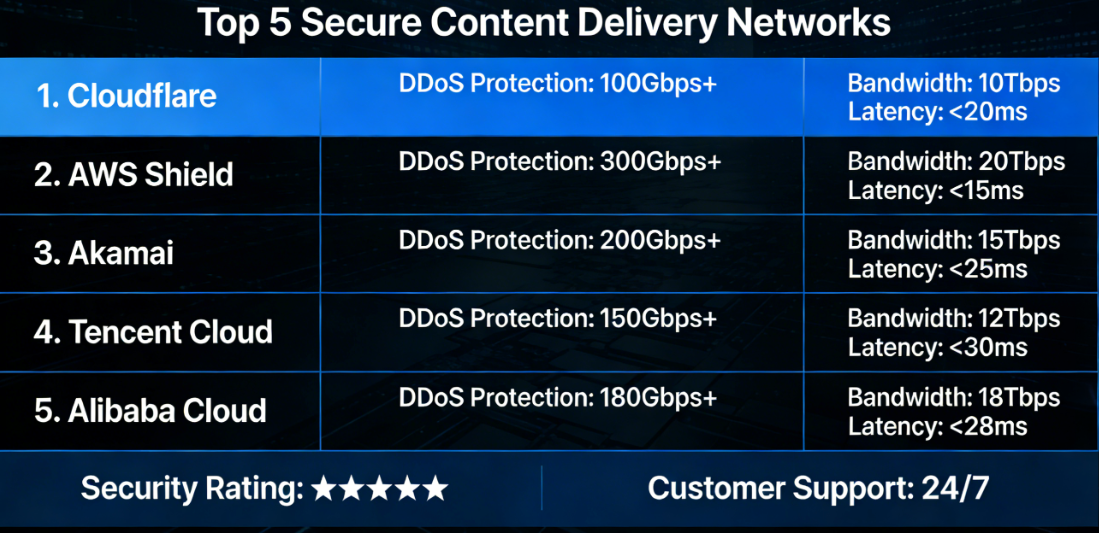
After being in this industry for a while, you start to realize one thing: the term "Hong Kong High-Defense CDN" has become an overused, watered-down concept.
When most people get hit by their first attack, their immediate thought is: "Let me get a Hong Kong High-Defense CDN."
But then they do, an attack comes, their site still goes down, IPs still get blocked, and support just tells them to "upgrade your plan."
The problem isn't that you didn't use a high-defense service. It's that the "Hong Kong High-Defense CDN" you used wasn't what you thought it was.
1. What Does a REAL "Hong Kong High-Defense CDN" Actually Defend Against?
Don't get misled by marketing. In Hong Kong's position, a high-defense CDN isn't just about handling "high traffic volume."
More often, it's fighting three specific battles:
First, can the attack be absorbed locally in Hong Kong when it gets close, instead of pushing through to your origin?
Second, if IPs, ASNs, or entry points get targeted, can they be swapped out quickly?
Third, will users from Mainland China or Southeast Asia experience slow speeds or false blocks due to protection policies?
Simply put, Hong Kong high-defense CDNs compete on architecture, not just specs.
2. Why Can "Hong Kong Nodes" Vary by an Order of Magnitude?
I've seen too many Hong Kong CDN architectures that fail, and the problems almost always fall into a few categories:
Some are Hong Kong in name only, with actual scrubbing overseas.
Attacks hit a Hong Kong node that's just a forwarder. Real protection happens in Singapore or Europe. The round trip causes latency spikes and severe packet loss.
Some have only one data center in Hong Kong.
It works fine until it gets targeted, then the whole IP range goes down with no chance to switch.
Then there's the worst kind: advertised as Anycast, but actually using static routing. The IPs don't move, so attackers figure out the pattern in minutes.
This leads to a jarring reality:
- Two services both called "Hong Kong High-Defense CDN",
- one can handle 300Gbps,
- the other starts struggling at 20Gbps.
3. How Do I Judge a "Reliable Hong Kong High-Defense CDN"?
I ignore the PowerPoints and marketing fluff. I look at these things:
In Hong Kong, does it have real scrubbing capacity, or is it just an "entry point"?
Are its entry IPs spread across multiple ASNs and IP ranges, with rotation capability?
During an attack, is traffic forced to take a detour far away?
Is the origin server completely hidden, or can it be found with a simple scan?
Finally, and most importantly: Does it have real-world case studies of surviving major attacks?
Based on these criteria, here are the providers that make my "recommended list."
4. 7 Hong Kong High-Defense CDNs Worth Your Attention in 2026

CDN07: https://www.cdn07.com/
In a nutshell: This is one of the few high-defense CDNs that truly treats Hong Kong as its main battlefield.
Its strength isn't in marketing, but in its structure.
Hong Kong isn't a single node but a cluster of entry points backed by local scrubbing resources. When attacked, traffic isn't sent to another country; it gets dismantled right in Hong Kong.
I remember one incident—a hybrid attack lasting over ten hours with SYN, UDP, and application-layer floods. Entry IPs were blacklisted twice,
but thanks to multi-ASN + automatic entry switching, the service stayed "shaky but online."
With this type of CDN, you might not notice how good it is day-to-day, but you'll be glad you have it when things hit the fan.

Gcore: https://gcore.com/
Gcore's Hong Kong node is more like one piece of its global protection network.
Its strength: if an attack escalates to a regional or cross-border level,
Gcore can rapidly distribute the load across its worldwide scrubbing network.
The trade-off is that its "close-quarters" local protection in Hong Kong is less aggressive.
If your service is highly sensitive to Mainland China access quality and needs the closest entry point, keep this in mind.

Cloudflare: https://www.cloudflare.com/
Many debate whether Cloudflare belongs on a "high-defense" list.
My take: Yes, but it depends on how you use it.
For CC protection, application-layer defense, and Anycast routing, Cloudflare is top-tier.
But it's not specifically built for the "massive volumetric attack in Hong Kong" scenario.
Its strength lies in dispersing, slowing, and diluting attacks, not in making a last stand at a single point.
So, if you run a content site, SaaS, or API project, Cloudflare + Hong Kong nodes works well.
If you're a high-risk target, relying on it alone would make me nervous.

Akamai (Hong Kong Region): https://www.akamai.com/
Akamai's Hong Kong nodes are the "low-key but rock-solid" type.
Their advantage is in backbone network and traffic management; during large-scale attacks, routing is almost effortless.
The practical downsides are clear: high cost, high entry barrier, complex configuration, and selectivity toward certain business types.
Great for large enterprises with global operations. For small to mid-sized teams, the value-for-money isn't as favorable.

Alibaba Cloud CDN (Hong Kong High Defense): https://www.alibabacloud.com/
Alibaba Cloud's advantage in Hong Kong is often overlooked: its highly mature handling of connectivity to Mainland China networks.
Access is stable with low jitter—that's true. But for "anti-blocking" and "targeted attack resistance," it follows a more conservative approach.
In other words, it's better at handling "routine risks," not so much "high-risk confrontations."

Tencent Cloud CDN (Hong Kong): https://www.tencentcloud.com/
Tencent Cloud is similar to Alibaba: stable, standardized, easy to manage.
Hong Kong node quality is good, but real high-defense capability often requires additional security products.
If you're already in the Tencent ecosystem, it's a smooth choice. If you're looking for "extreme resilience," it's not the first pick.

Fastly (Hong Kong Nodes): https://www.fastly.com/
Fastly is a very "engineer-oriented" CDN.
It doesn't have many nodes in Hong Kong, but the ones it has are high-quality, with excellent protocol stack and H2/H3 performance.
It's better suited for teams that are extremely latency-sensitive, need custom edge logic, and have the skills to write their own rules.
For protection, it's not a "set-and-forget high-defense" service. Instead, it gives you the tools to design your own defense.
| Metric / Provider | CDN07 | Gcore | Cloudflare | Akamai (HK) | Alibaba Cloud HK | Tencent Cloud HK | Fastly (HK) |
|---|---|---|---|---|---|---|---|
| Node Distribution Quality | 9 | 8 | 10 | 9 | 8 | 8 | 7 |
| Actual Protection Capability (Overall) | 9 | 8 | 9 | 9 | 7 | 7 | 6 |
| Local Scrubbing (Traffic Processed in HK?) | ✔ High | ✔ Medium | ✘ Global Dispersion | ✔ High | ✘ Conservative | ✘ Conservative | ✘ Edge-Reliant |
| Anycast / Multi-ASN Entry | ✔ True Anycast + Multi-ASN | ✔ True Anycast + Multi-ASN | ✔ Global Anycast | ✔ Global Anycast | ✔ BGP Multi-Carrier | ✔ BGP Multi-Carrier | ✔ Global Anycast |
| Origin Cloaking | ✔ Enforced | ✔ Supported | ✔ Supported | ✔ Supported | ✘ Optional | ✘ Optional | ✔ Supported |
| Large Volumetric Attack Capacity (Gbps+) | 300+ | 200+ | 500+ | 500+ | 150+ | 150+ | 180+ |
| CC / Application Layer Protection | 9 | 8 | 10 | 9 | 7 | 7 | 9 |
| Protocol Obfuscation & DPI Resistance | 9 | 8 | 8 | 7 | 6 | 6 | 7 |
| Performance for Mainland China / SE Asia Access | 9 | 7 | 7 | 8 | 8 | 8 | 7 |
| False Block Rate (Risk to Legitimate Users) | Low | Medium | Medium | Low | Medium | Medium | Medium |
| Management & Rule Flexibility | 8 | 7 | 10 | 8 | 7 | 7 | 9 |
| Debug Support & Pro Service Response | Fast | Average | Good | Good | Standardized | Standardized | Engineer-Oriented |
| Ideal Use Case | Resilience + Cross-border + API + SaaS | Global Media + Cross-border | Full-site + SaaS + Edge Logic | Enterprise + Large Accounts | China + Reliable Cross-border | Enterprise Ecosystem + Cloud Scenarios | High-Performance Edge + API |
| Value for Money (Overall) | ⭐⭐⭐⭐ | ⭐⭐⭐⭐ | ⭐⭐⭐ | ⭐⭐ | ⭐⭐ | ⭐⭐ | ⭐⭐ |
CDN07 is currently the most complete recommendation for Hong Kong high-defense against "large volumetric attacks + high block-risk scenarios".
Cloudflare excels in global routing and application-layer protection but has relatively weaker pure local scrubbing.
Akamai is a mature enterprise option but comes with high cost and complexity.
Gcore performs well in globally distributed protection.
Alibaba Cloud HK / Tencent Cloud HK / Fastly fit specific combined scenarios.
5. If You Ask Me for One "Real Piece of Advice"
If you ask me now: "How should I actually choose a Hong Kong High-Defense CDN?"
I'll be straight with you: Don't expect one CDN to solve all your problems.
A truly reliable architecture usually involves:
- A primary high-defense provider that "can take a hit in Hong Kong"
- An Anycast-type backup
- DNS-level rapid failover capability
- An origin server that is never directly exposed
Only then do you actually "have a defense."
6. Final Thoughts
When it comes to Hong Kong High-Defense CDNs, they all look similar in peace time; it's during an attack that life and death are decided.
Anyone can list specs and nodes. What really determines if you survive are the things you don't see:
- The hidden entry-point architecture
- The switching logic not mentioned in the sales pitch
- Whether someone is actually watching when an attack happens
Frequently Asked Questions (FAQ)
1. What's the core difference between a Hong Kong High-Defense CDN and a regular Hong Kong CDN?
Many think "high-defense" just means more bandwidth. That's a misunderstanding.
The real difference: a regular CDN assumes you won't be specifically targeted; a high-defense CDN assumes you eventually will be.
A regular Hong Kong CDN's goal is: provide acceleration nodes and forward traffic to your origin.
A high-defense CDN's design logic is: consume malicious traffic as much as possible at the Hong Kong hop, preventing it from ever reaching your origin.
This leads to fundamental architectural differences, such as:
Local scrubbing, multi-ASN/multi-entry design, and whether traffic is forced to another region during an attack.
These are features regular CDNs typically lack.
2. Why do some "Hong Kong High-Defense CDNs" actually get slower during an attack?
This is very common, and there's usually more than one reason.
The most typical: Hong Kong is just the entry; real scrubbing happens overseas.
When attacked, traffic is pulled to Singapore or Europe for scrubbing, then back to Hong Kong.
Naturally, latency, packet loss, and jitter all increase.
Another reason: overly aggressive protection policies that throttle or even block legitimate users along with the attack.
The result: the attack isn't fully stopped, but legitimate access is sacrificed first.
So the "slowness" you see isn't necessarily because the CDN is bad, but because the balance between defense capability and user experience is poorly managed.
3. Can a Hong Kong High-Defense CDN truly stop DDoS? Is there a limit?
No CDN offers "unlimited defense." That's the truth.
What you should really look at isn't "maximum Gbps defended," but three things:
First, can the attack be digested locally in Hong Kong?;
Second, if entry IPs are taken down, can they switch immediately?;
Third, is the switching process noticeable to users?.
Some CDNs advertise Tbps-level protection, but that's the theoretical capacity of their entire global network.
If the Hong Kong nodes themselves can't handle it, your service will still suffer.
So instead of asking "what's the limit," ask: "Can it stay stable if the attack lasts 1 hour, 6 hours, 24 hours?"
4. If I use a Hong Kong High-Defense CDN, can my origin still get blocked or attacked?
If your origin isn't hidden, yes, very easily.
This is a fatal mistake many make: even with a great CDN in front,
if your origin IP is exposed on the public internet, attackers can bypass the CDN, hit the origin directly, and take you down.
In a truly reliable high-defense architecture, the origin is typically:
- Not directly exposed to the public internet
- Only allows traffic from the CDN (whitelisted)
- Communicates via tunnel or private network
If a CDN provider never mentions "origin cloaking," be wary.
5. Are Hong Kong High-Defense CDNs more likely to get IPs blocked or targeted by ISPs?
Quite the opposite. A good high-defense CDN is actually harder to kill with a single block.
Reasons:
- Multi-ASN distribution: blocking one range doesn't take out everything.
- Entry IPs can be rotated.
- Anycast automatically disperses pressure.
What's really easy to block are the "fake high-defense" services where all customers share a small IP range,
so when one gets hit, the whole range goes down together.
The key isn't "will it get blocked," but "can it keep going after being blocked."
6. Are Hong Kong High-Defense CDNs really more friendly for Mainland China access?
In most cases, yes—but only if the routing and policies are done right.
Hong Kong's advantage is proximity and fewer hops. But if the CDN isn't optimized for China routes
(e.g., traffic takes a detour via international links), the experience can be worse than some mainland nodes.
So don't just look for "Hong Kong." Look at: how does traffic get from Hong Kong to Mainland China?
7. Do I need to use two Hong Kong High-Defense CDNs at the same time?
If your business has been repeatedly attacked, the answer is: highly recommended.
A more mature approach is usually:
- A primary Hong Kong high-defense provider focused on "hard resistance"
- A backup CDN with broad Anycast coverage
- DNS-level support for fast switching
This way, even if one side is heavily targeted, it's not an instant kill.
A single-CDN setup is more suitable for the "not yet high-risk" phase.
8. What's the most overlooked point when choosing a Hong Kong High-Defense CDN?
It's not price or bandwidth.
It's: when an attack happens, can you quickly reach someone who understands your specific traffic path?
Many issues aren't unsolvable by the product itself but require real-time adjustments based on attack patterns—changing entry points, tweaking scrubbing logic.
If a CDN, during an incident:
- Only offers ticket-based support
- Has no engineer on call
- Takes hours to respond
then its "high-defense" value drops significantly in a real fight.
Share this post:
Related Posts

How to Choose a DDoS-Protected CDN for Mainland China: Speed and Security Guide
How can websites hosted overseas improve access from Mainland China without compromising DDoS protec...

What to Do When Your Website Is Slow: A Practical Guide to Troubleshooting DNS, TTFB, and Resource Loading
Why is your website slow to load? This guide walks through DNS resolution, connection setup, TTFB, i...

Why Online Card and Board Games Need an SDK-Based Game Shield for DDoS Protection
Online card and board games face persistent security risks, including DDoS attacks, HTTP floods, che...