

DDoS-Protected CDN vs. DDoS-Protected IP: A Practical Comparison – Which Solution Fits Your Business Best?
A practical, in-depth comparison of DDoS-protected CDN and DDoS-protected IP solutions. We break down how each works, their pros and cons, ideal use cases, and how to choose the right protection for websites, APIs, gaming, and more.

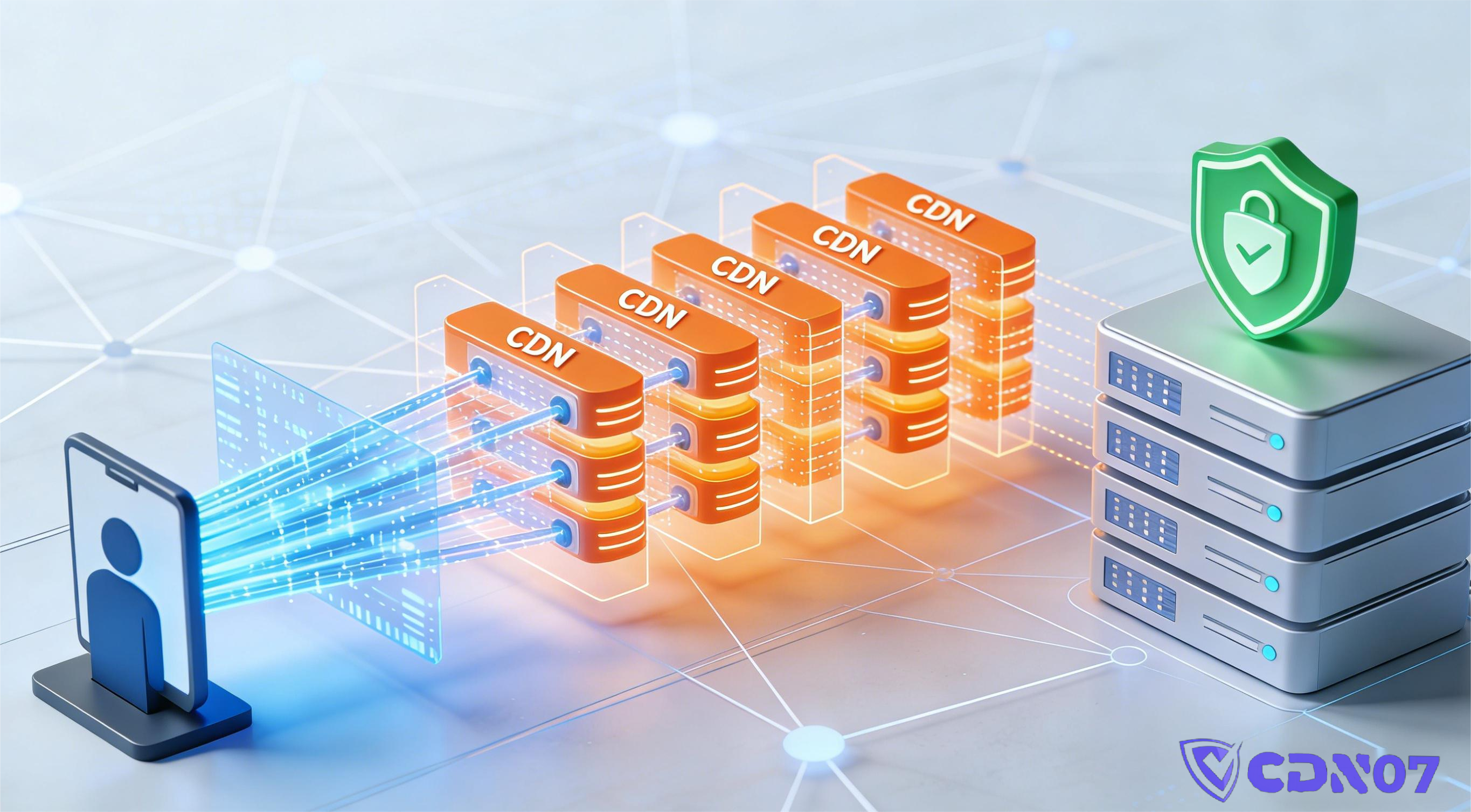
If you’re stuck deciding between a DDoS-protected CDN and a DDoS-protected IP, it means your site is way past the “will I get hit?” phase—you’re now in the “how do I survive longer?” phase.
I’ve been in cybersecurity and DDoS protection for over a decade, and I’ve seen this story play out too many times:
- Businesses invest in a high-end protected IP, only to still experience lag and downtime.
- Others put their faith in a CDN, assuming they’re safe—until an attack goes straight through to their origin server.
- Some try both and end up with a messy, expensive setup that still underperforms.
That’s why this article skips the textbook definitions and jumps straight to what matters:
There’s no “better” option between a DDoS-protected CDN and a DDoS-protected IP—only what’s better for your current setup.
1. What Are DDoS-Protected CDNs and IPs Really Protecting Against?
Plain and simple:
- DDoS-protected IP:
👉 It protects your server from traffic floods. - DDoS-protected CDN:
👉 It protects your service entry points from being overwhelmed.
Sounds similar, but in a real attack, the difference is huge.

2. What Is a DDoS-Protected IP & Who Should Use It?
1️⃣ How It Works (In Plain English)
The logic is straightforward:
- You get a dedicated public IP.
- All traffic is routed to that IP first.
- Behind it sits a scrubbing device or cluster.
- Clean traffic is then forwarded to your actual server.
Its core characteristic in two words:
Single Point. Dedicated.
2️⃣ Real-World Advantages
From a practical view, protected IPs have clear strengths:
① Simple, Easy-to-Understand Architecture
- One IP
- One protection path
- Easy to monitor and troubleshoot
② Great for Non-Web Services
For example:
- Game servers
- TCP/UDP services
- Custom protocols
- Real-time communication
In these cases, a CDN can’t help—a protected IP is essential.
③ Clear Attack Model
Attackers have one target:
👉 Hammer that IP non-stop.
Scrubbing strategies are also more straightforward.
3️⃣ The Downsides (That Many Only Realize After Using It)
Let’s be real.
① Very High Single-Point Risk
No matter how expensive, it’s still one entry point:
- If the attack exceeds the protection limit
- If it’s a targeted, sophisticated attack
👉 It fails completely, all at once.
② Doesn’t Improve Speed
Protected IP ≠ Acceleration.
If your server is slow, it stays slow.
③ Costly & Fixed Pricing
- Higher protection = higher price
- You pay even when not under attack
3. What Is a DDoS-Protected CDN & Why Are More People Choosing It?
1️⃣ Core Idea
A protected CDN works completely differently:
- No single entry point
- You get an entire network
- Users connect to the nearest node
- Attack traffic gets dispersed, absorbed, and scrubbed
In short:
It makes attacking you much harder to pull off.
2️⃣ Real Benefits (Not Marketing Talk)
① Naturally Resistant to DDoS
Because it offers:
- Multiple nodes
- Multiple entry points
- Anycast / smart traffic routing
Attackers can’t focus fire like they can on a single IP.
② Solves Security + Speed Together
This is the CDN’s biggest practical value:
- Protection
- Acceleration
- Caching
- Reduced origin server load
③ Perfect for Web-Based Services
Such as:
- Corporate websites
- E-commerce
- APIs
- SaaS platforms
- Content sites
These are already a good fit for CDN architecture.
3️⃣ Real Limitations (Don’t Skip This)
① Misconfiguration = Origin Exposure
If you:
- Don’t hide your origin IP
- Don’t restrict origin access
- Don’t set proper firewall rules
Attackers bypass the CDN and hit your origin directly—making the CDN useless.
② Not All “Protected CDNs” Are Truly Protected
Many so-called “high-defense CDNs”:
- Have limited actual protection
- Throttle or even suspend sites under heavy traffic
4. Side-by-Side Comparison: DDoS-Protected CDN vs. IP
This is the section I really want you to read carefully.
1️⃣ DDoS Resistance Comparison
| Item | DDoS-Protected IP | DDoS-Protected CDN |
|---|---|---|
| Handles Large Volumes | Has a limit | Distributed, more elastic |
| CC Attack Resistance | Average | Stronger |
| Targeting Risk | High | Lower |
| Single Point of Failure | Yes | No |
👉 The larger and more scattered the attack, the more advantage a protected CDN has.
2️⃣ User Experience Comparison
| Item | DDoS-Protected IP | DDoS-Protected CDN |
|---|---|---|
| Acceleration | ❌ | ✅ |
| Local Access | ❌ | ✅ |
| Cross-Border Experience | Average | Clearly Better |
👉 If user experience matters, a protected IP won’t cut it.
3️⃣ Operations & Long-Term Cost
| Item | DDoS-Protected IP | DDoS-Protected CDN |
|---|---|---|
| Architecture Complexity | Low | Medium |
| Scalability | Poor | Strong |
| Cost Model | Fixed | Elastic |
| Long-Term Value | Average | Better |

5. Which Should You Choose for Your Business?
Let’s get straight to the point.
✅ Scenario 1: Website / API / SaaS
Recommendation: DDoS-Protected CDN
Reasons:
- Naturally CDN-friendly
- Attacks are mostly HTTP/CC-based
- You need both acceleration and protection
✅ Scenario 2: Gaming, UDP, Custom Protocols
Recommendation: DDoS-Protected IP
Why:
- CDN can’t handle this traffic
- A protected IP is the only real option
✅ Scenario 3: Frequent Attacks, Must Stay Online
Recommendation: Protected CDN + Protected IP as Backup
This is what many experienced teams do:
- Normal traffic goes through CDN
- Switch to protected IP in extreme cases
- Balance cost and security
6. The Overlooked Truth: Architecture Matters More Than the Product
Let me be straight:
90% of failures aren’t due to the product—they’re due to poor architecture.
Common pitfalls:
- Not hiding the origin behind CDN
- Messy network routing around the protected IP
- Incorrect DNS failover strategy
- Assuming “buying it = being safe”
No matter what you choose, remember:
Protection is a system, not a one-time purchase.
7. Quick Advice from an Old-Timer
If you don’t want to overthink it, just remember:
- Web / API: Start with a protected CDN
- Gaming / UDP: You need a protected IP
- Expect sustained attacks: Choose distributed, not single-point
- Don’t believe “unlimited protection”—check the architecture first
- On a budget: Do CDN right before blindly buying a protected IP
8. Final Thoughts
A DDoS-protected CDN and a DDoS-protected IP aren’t opposites—they’re tools for different stages.
Choosing wrong isn’t about lacking tech knowledge.
It’s about not knowing the real-world differences.
If you’re interested, I can help with:
- A guide on Hybrid Architecture: Protected CDN + Protected IP
- Common Protected CDN Failures & How to Avoid Them
- A custom security architecture plan for your specific business
Just say the word, and I’ll keep going.
Frequently Asked Questions (FAQ)
1️⃣ What’s the real difference between a regular CDN and a DDoS-protected CDN?
A regular CDN focuses on speed; protection is secondary.
A protected CDN is built to withstand attacks first, then deliver speed—with large-scale scrubbing, CC protection, and smart policies.
In short:
👉 A regular CDN can’t handle organized attacks; a protected CDN is designed to.
2️⃣ If I use a protected CDN, do I still need a protected IP?
Not always.
- Pure Web/API business: Usually not needed
- Gaming, UDP, custom protocols: Still need a protected IP
- Highly targeted business: Often use both together
👉 A protected CDN isn’t a “universal replacement”—it’s best for web scenarios.
3️⃣ Is a protected IP always stronger than a protected CDN?
No—often it’s the opposite.
The problem with a protected IP:
- Single IP, single entry
- Definite protection limit
- Easy to overwhelm with focused fire
A protected CDN uses multiple nodes to absorb attacks, often staying more stable under huge DDoS floods.
4️⃣ Why do some sites still get taken down even with a protected CDN?
Usually for three reasons:
- Origin IP not hidden (directly attacked)
- No origin access restrictions (attack bypasses CDN)
- Using a “fake” protected CDN (few nodes, weak protection)
👉 It’s not that CDN doesn’t work—it’s that it’s set up wrong.
5️⃣ Can a protected CDN stop CC attacks?
Yes—and it’s usually better at it than a protected IP.
Why:
- CDN is closer to users
- Can see full HTTP behavior
- Can analyze frequency, user agents, paths
But it requires:
👉 Real CC detection and policies, not just rate limiting.
6️⃣ Can a protected IP also improve site speed?
Basically no.
A protected IP is for:
- Stopping attacks
- Staying online
It doesn’t accelerate traffic or enable local access—speed depends on your server location and network.
7️⃣ Do small websites need DDoS protection from the start?
It depends, but my advice:
- Normal traffic: Regular CDN + basic protection
- Starting to get scanned/attacked: Upgrade to protected CDN
- Under sustained attack: Then consider protected IP or hybrid setup
👉 Protection happens in stages—don’t max everything out at once.
8️⃣ Will a protected CDN hurt SEO?
A properly configured protected CDN won’t hurt SEO—it can even help:
- Faster load times
- Better uptime
- Lower downtime risk
What actually hurts SEO:
- Frequent 5xx errors
- Going offline during attacks
- Wrong redirects or cache settings
9️⃣ Is a protected CDN always cheaper than a protected IP?
Not always, but it usually offers better value.
- Protected IP: Fixed cost, dedicated resources
- Protected CDN: Elastic billing, shared protection capacity
For web businesses, with the same budget, a protected CDN usually lasts longer under attack.
🔟 Should I use both a protected CDN and a protected IP together?
Yes, if:
- Attacks are frequent and long-lasting
- Attack types are mixed (DDoS + CC)
- Your service can’t go down
A common setup:
- Frontend: Protected CDN handles traffic
- Backend: Protected IP as failover for worst-case scenarios
1️⃣1️⃣ What’s the most overlooked factor when choosing DDoS protection?
Not the protection specs—it’s how exposed your origin server is.
Many sites:
- Buy top protection
- But leak their origin IP via GitHub, email headers, logs, etc.
👉 If your origin isn’t hidden, no protection will save you.
1️⃣2️⃣ So which one should I pick?
Here’s the simplest summary:
Web business? Start with a protected CDN.
Non-web service? You need a protected IP.
Under heavy, sustained fire? Use both.
Don’t fall for marketing hype.
Choosing what fits your current stage is what really matters.
Share this post:
Related Posts

How to Choose a DDoS-Protected CDN for Mainland China: Speed and Security Guide
How can websites hosted overseas improve access from Mainland China without compromising DDoS protec...

What to Do When Your Website Is Slow: A Practical Guide to Troubleshooting DNS, TTFB, and Resource Loading
Why is your website slow to load? This guide walks through DNS resolution, connection setup, TTFB, i...

Why Online Card and Board Games Need an SDK-Based Game Shield for DDoS Protection
Online card and board games face persistent security risks, including DDoS attacks, HTTP floods, che...