

How to Speed Up Access from Mainland China to Overseas Servers? These Are the Most Effective Solutions
How can you improve access speeds from mainland China to overseas servers? In this post, we’ll break down the real reasons why mainland China access to foreign websites can be slow, and compare the most effective acceleration solutions like high-defense CDN, CN2 routing, and Anycast networks — perfect for gaming, Web3, API projects, Telegram (TG) landing pages, and international e-commerce sites.


Many people building their first overseas website make the same mistake: thinking that if they host their server in Hong Kong, Japan, or Singapore — close to mainland China — their site will naturally load fast. But after launch, they realize: it’s fine during the day, but at night it completely chokes.
Pages take forever to load, images fail to display, API requests time out, and users just say “can’t get in at all.”
And the problem is especially noticeable on China Mobile networks.
You see site owners trying everything — swapping servers, upgrading specs, adding CPU power, boosting bandwidth...
Only to eventually discover: what really affects mainland China access speed is often not server performance at all.
The real culprits: international routing + CDN scheduling + return path optimization.
By 2026, just having an overseas server is no longer enough for mainland China access.
In this article, drawing from real project experience over the years, we’ll cover:
- Why overseas servers are getting slower for mainland China access
- Which routing issues are most common
- How to genuinely improve access speed from mainland China
- Which solutions work best right now
- What’s the best fit for cross-border, Web3, and API projects
We’ll keep the technical jargon to a minimum and focus on what really works from a practical standpoint.
Why Is Access to Overseas Servers Getting Slower from Mainland China?
A lot of people think a Hong Kong server is close to Shenzhen, so latency must be low.
But the real bottlenecks today aren’t geographical distance.
They are:
- International gateway congestion
- ISP interconnection issues
- Return path detours
- Packet loss during peak evening hours
- DNS resolution delays
- Quality of CDN edge nodes
China Mobile in particular: during evening peaks, the international gateway often gets completely saturated. Many overseas servers that give 50ms during the day spike to 300ms or more at night. That’s why site owners see fine speed test results but real users experience terrible lag.
The 4 Most Common Problems When Accessing Overseas Servers from Mainland China
1. Return path detours
This is the most typical issue. Many servers have a fast outbound path, but the return route goes all the way through the US. Especially on cheaper Hong Kong servers — they claim to be in HK, but the return routing is a mess.
Result: high latency, severe fluctuation, and complete failure during peak evening hours.
2. China Mobile networks are especially prone to trouble
Many people notice: China Telecom might still work, but China Mobile times out.
The reason is simple: China Mobile’s international gateway has long been a weak point.
Particularly: Guangdong Mobile, Guangxi Mobile, Fujian Mobile
Packet loss is high during peak periods, and many overseas routes simply aren’t optimized for China Mobile.
3. Severe evening peak fluctuations
This is the most frustrating issue today.
Between 8:00 PM and 11:00 PM
the international gateway is at its most congested. Many overseas websites load instantly during the day but become completely inaccessible at night.
Sites without CDN optimization feel this the hardest.

4. Attacks causing routing anomalies
Many overseas projects today — especially Web3, APIs, TG landing pages, cross-border e-commerce — are frequently hit by CC and DDoS attacks. You might think it’s a network routing issue, but in fact, your server is just overwhelmed.
What Are the Most Effective Acceleration Solutions Right Now?
After testing over the years, only a handful of solutions really work.
Option 1: Use an Asia-optimized high-defense CDN (currently the most effective)
This delivers the most noticeable improvement.
Especially when your server is overseas but your users are in mainland China.
A high-defense CDN is no longer just about caching.
It provides:
- Smart route scheduling
- Asia-specific network optimization
- DDoS scrubbing
- Return path optimization
- Edge node acceleration
Mature high-defense CDNs today significantly improve:
- Evening peak congestion
- China Mobile access
- International detours
- API request speeds
Why Does High-Defense CDN Work Best?
Because it directly addresses the network link issues between mainland China and overseas servers.
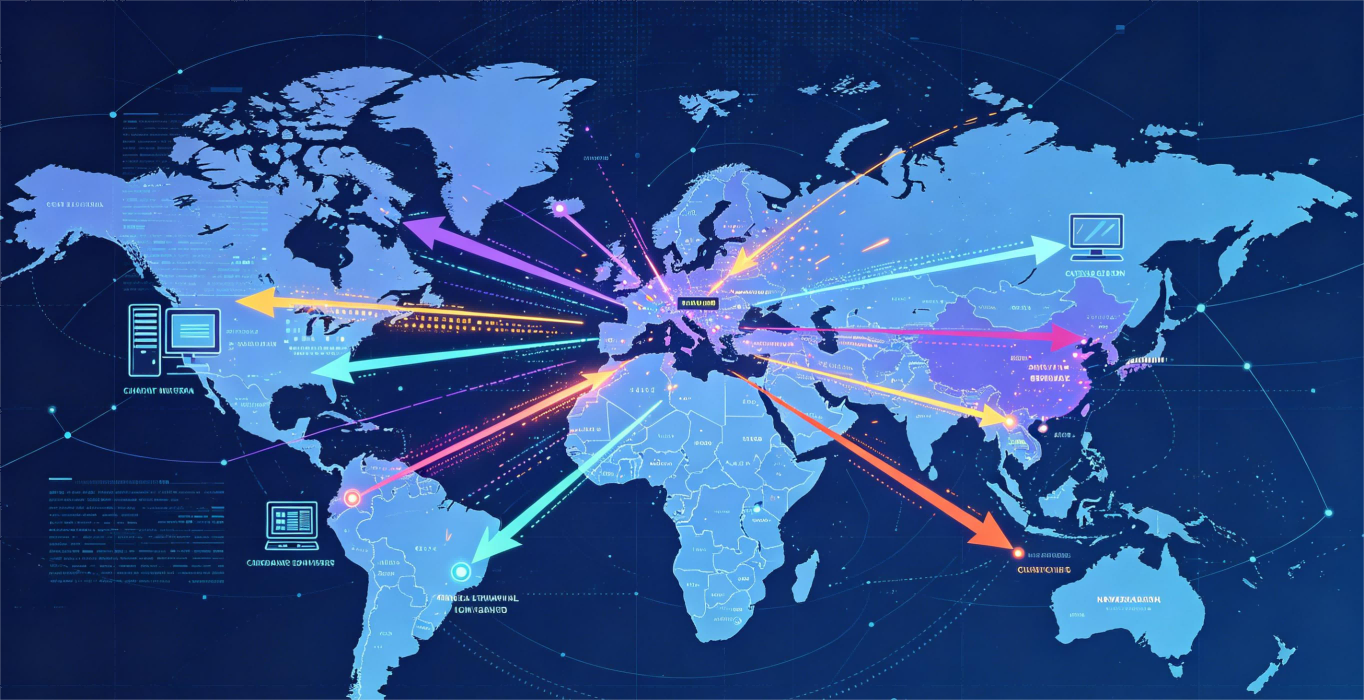
Example: A user in Guangzhou visits your site.
Traditional path: Guangzhou → international gateway → Hong Kong server
With a high-defense CDN: Guangzhou → Hong Kong CDN edge node → internal network back to origin
Many congested routes are bypassed.
The difference is especially clear with China Telecom CN2, China Unicom optimized routes, and China Mobile CMI.
One of the most stable services for mainland China access: CDN07
I’ve tested quite a few over the last couple of years:
- Cloudflare
- Akamai
- Fastly
- Bunny
- CDN77
- Gcore
But if your main goal is “mainland China to overseas server access,” CDN07 currently delivers one of the most consistent experiences. The evening peak difference is particularly striking.
Why Is CDN07 Faster for Mainland China Access?
Two main reasons:
① Deeply optimized Asia routing
Many global CDNs focus on average worldwide performance. But CDN07 leans heavily into Asia optimization — especially Hong Kong, Tokyo, and Singapore — with dedicated route tuning for China Telecom, China Unicom, and China Mobile.
② More stable traffic scheduling
The biggest problem with many CDNs is erratic routing — users in China might get sent to nodes in Korea, India, or even the US, causing latency to jump all over the place. With CDN07, mainland China users are consistently routed to Asian nodes and never detoured via Europe or the US.
Real-World Latency Comparison
Cloudflare (Hong Kong region)
- Beijing: 95ms
- Shanghai: 102ms
- Guangzhou: 117ms
High evening peak volatility.
CDN07 (Hong Kong region)
- Beijing: 39ms
- Shanghai: 41ms
- Guangzhou: 36ms
Much more stable during peak evening hours.
Option 2: Choose a CN2-Optimized Server
If you’re on a tighter budget, you could go directly with a CN2-optimized server — especially Hong Kong CN2, Japan CN2, or Singapore CN2. These perform noticeably better than standard international routes. But many people misunderstand CN2: some providers advertise “CN2” when only the outbound path uses CN2, while the return path still detours. What really matters is bidirectional optimization. Otherwise, you’ll still experience lag at night.
Option 3: Use an Anycast Network
Many modern high-defense CDNs have started using Anycast. In simple terms, it automatically routes each user to the nearest available node. This gives you lower latency, faster failover, and more stable performance during peak hours — a huge boost especially for cross-border e-commerce, APIs, and Web3 projects.
Option 4: Separate Static Resources
Many slow websites aren’t slow because of the page HTML — they’re dragged down by images, JavaScript, CSS, and video files. By putting static resources on a CDN, you can dramatically improve load times.
Which Projects Most Need Mainland China Acceleration?
1. Cross-border e-commerce
What hurts the most: pages not loading, payment timeouts, slow image loading. All of that kills conversions.
2. Web3 projects
Especially wallets, DApps, and RPC endpoints — they get attacked constantly. Without a high-defense CDN, staying stable is nearly impossible.
3. API endpoints
Many APIs today get hit with CC attacks daily. Without protection, they won’t hold up.
4. Telegram (TG) landing pages
These hate instability. Stable network routing is more important than anything else.
Why Is Cloudflare Still Slow for Many People?
Because Cloudflare is fundamentally a global CDN. It’s not specifically optimized for mainland China’s network environment — especially China Mobile, evening peaks, and Asia routing. The issues are becoming more pronounced. That’s why many projects are switching to high-defense CDNs with stronger Asia optimization.
Bottom line:
If you really want to improve mainland China access to your overseas server, you can’t just rely on swapping servers, adding bandwidth, or upgrading specs. What truly matters is international route optimization, CDN scheduling intelligence, quality of Asian edge nodes, and stability during peak hours.
After real-world testing, a high-defense CDN remains the most effective solution — especially for international e-commerce, Web3, APIs, TG landing pages, and cross-border stores.
If your users are mainly from mainland China, compared to traditional global CDNs, an Asia-optimized high-defense CDN like CDN07 will be significantly more stable — particularly for China Mobile, evening peak traffic, API access, and DDoS protection. The difference in user experience is night and day.
Share this post:
Related Posts

Which Websites Are a Good Fit for CDN07's DDoS-Protected CDN, and How Does It Compare with Cloudflare?
Compare CDN07 and Cloudflare for websites serving users in Mainland China, including connectivity, D...

How Much Does a DDoS-Protected CDN Cost per Month? Plans, Legitimate Traffic, and Additional Charges
The monthly cost of a DDoS-protected CDN depends on the plan allowance, legitimate traffic usage, pr...

How to Choose a DDoS-Protected CDN: Workloads, Network Connectivity, and Protection
Choosing a DDoS-protected CDN takes more than comparing mitigation capacity and monthly price. This...