

What Can a DDoS‑Protected CDN Actually Stop? A Complete Guide
What kinds of attacks can a CDN with DDoS mitigation actually handle? From volumetric DDoS to CC attacks and API abuse — many websites still go down even with a regular CDN. In this guide, we’ll walk you through real attack methods, explain how a security CDN works, when you need one, and why it matters for cross‑border e‑commerce, gaming, and global online businesses.


Most people first start looking into a DDoS‑protected CDN only after they’ve already been hit.
Your site suddenly slows down, APIs freeze, users can’t log in, or the page just won’t load. At first you think it’s a server problem — but after digging for hours, you realize it isn’t a crash. It’s an attack.
That’s when the real question hits: What exactly can a CDN with attack mitigation stop? And does it actually help?
In this post, we’ll skip the buzzwords and go straight to how real attacks work — and how they get stopped.
1. The most common type: DDoS attacks that just flood your bandwidth
DDoS stands for Distributed Denial of Service. It sounds technical, but the idea is pretty simple.
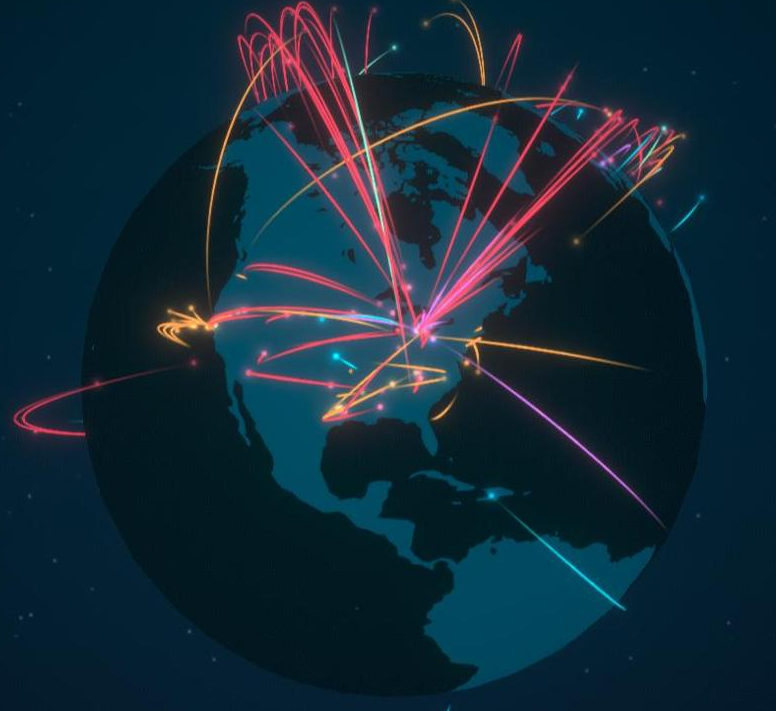
Imagine your front door can handle 3–5 visitors at a time — perfectly fine. Then suddenly 100 people show up and all try to get in at once. Your door, your living room, your bathroom… everything gets overwhelmed.A DDoS attack works the same way. Attackers use a network of infected machines (called a botnet) to flood your server with requests, eating up your bandwidth, CPU, and memory.
This is the most “brute‑force” style of attack.
In plain English: a bunch of bots all hammer your server at the same time, saturating your bandwidth.
The result: your site won’t load, your server times out, and all users get disconnected.
This type of attack isn’t about clever techniques — it’s about raw volume.
How does a DDoS‑protected CDN stop it?
Two core things:
1) Large‑scale traffic scrubbing – attack traffic gets pulled into high‑capacity nodes and filtered out at the edge.
2) Spreading the load – global nodes distribute the traffic so the attack can’t focus on a single point.
In other words: it’s not that your own server is stronger — you’ve put a flood barrier in front of it.
2. The one that drives you crazy: CC attacks
CC stands for Challenge Collapsar. The name alone tells you it’s nasty.
The difference between a CC attack and a DDoS attack is precision. CC doesn’t need huge traffic — instead, it mimics normal user behavior and constantly hits resource‑heavy pages or APIs.
What makes CC attacks special:
• Low traffic volume, but crazy‑high request frequency
• Looks exactly like normal user activity
• Targets functions that consume a lot of server resources
• Very hard to stop with simple rate limits
If DDoS is a flood, a CC attack is a crowd of impersonators.
Attackers act like real users: opening pages, clicking “login”, hammering search, calling APIs.
Every single request looks “legitimate” on the surface.
The result:
- Server CPU gets maxed out
- Database connections run dry
- Page responses get slower and slower
How does a CDN with DDoS mitigation stop it?
This isn’t about bandwidth — it’s about detection ability.
A security CDN does:
- Behavioral analysis (request frequency, access paths, time on page)
- Browser fingerprinting
- Rate limiting or blocking of abnormal requests
Simply put: It doesn’t just ask “who you are” — it asks “do you behave like a human?”
Solutions like CDN07 have turned this into a dynamic policy engine, not a bunch of fixed rules.
3. The rising threat: attacks on your API endpoints
Modern websites rely heavily on APIs: login APIs, payment APIs, data query APIs.
Attackers no longer bother with web pages — they go straight for these critical endpoints.
For example: brute‑forcing login, abusing CAPTCHA APIs, mass‑calling order lookup endpoints.
The trademark of this attack: low traffic, but extremely damaging.
Because it hits the very core of your business.
How does a DDoS‑protected CDN stop it?
It relies on: API rate limiting, token validation, and request behavior analysis.
And one critical capability: telling the difference between “real user calls” and “scripted calls”.
4. What many people overlook: malicious crawlers and script traffic
Some attacks won’t take your site down immediately — they’ll slowly cripple it from the inside.
For example: endlessly scraping your content, scanning your API structure, reverse‑engineering your business logic.
In the short term it may seem harmless, but over time it:
- Eats up your bandwidth
- Slows down your service
- Leaks your data structure to attackers
How does a security CDN stop it?
Mainly by:
- Bot detection (automated tools vs. real humans)
- Behavioral pattern analysis
- Blacklisting and dynamic blocking
Most high‑protection CDN solutions treat this traffic as “risk traffic” and handle it accordingly.
5. Hybrid attacks: the most common (and hardest) to defend nowadays
Real‑world attacks rarely use a single method anymore.
A typical combination:
- First, a DDoS flood to saturate your bandwidth
- Then, a CC attack to overload your APIs
- Finally, going after your login or payment endpoints
The goal is simple: overwhelm your team and bring everything down.
How does a CDN with DDoS mitigation stop it?
This is where “system‑level capability” matters:
- Traffic scrubbing
- Behavioral detection
- Dynamic policy switching
- Multi‑node load balancing
It’s not a single feature — it’s a complete system working together.
6. Why do some “high‑defense CDNs” look solid but fail under real attacks?
To be honest, there’s a lot of marketing noise in this space.
Common problems include:
- Big protection numbers on paper, but no real scrubbing capacity
- Too few edge nodes — one good attack punches right through
- Can handle big floods but falls apart against a CC attack
- No policy orchestration — just static rules that never adapt
That’s why you often see this pattern: everything is fine until an attack hits, and then the site crumbles.
7. What does a DDoS‑protected CDN actually do?
If we had to sum it up in one sentence: A CDN with DDoS mitigation stops attacks before they ever reach your server.
Concretely, it:
- Scrubs traffic at the edge nodes
- Identifies and filters out abnormal requests
- Only forwards “clean traffic” back to your origin server
What your server sees is already a filtered, cleaner world.
Final thoughts:
Most people start looking into protection only after:
- Their site goes down
- Users start complaining
- Revenue drops
But here’s the reality: attacks don’t send you a warning — they just happen.
You don’t need the most expensive solution from day one. But you absolutely need to know: can your current architecture survive a real attack?
If you’re not sure, that’s a gap you’ll eventually have to fill.
FAQ
1. What’s the real difference between a DDoS‑protected CDN and a regular CDN?
In one sentence: A regular CDN is for speed — a security CDN is for taking hits.
A regular CDN focuses on: caching static files, faster page loads.
A DDoS‑protected CDN adds: traffic scrubbing (against DDoS), behavioral detection (against CC attacks), and hiding your origin IP.
Many people say “we use a CDN but still got knocked offline” — that’s almost always because they were using the wrong kind.
2. Can a CDN with DDoS mitigation block 100% of all attacks?
No — but it can stop the vast majority of real‑world attacks you’ll face.
Let’s be honest: no protection is 100% absolute.
But a good security CDN can:
- Keep large‑scale volumetric attacks away
- Filter out abnormal requests
- Let normal users browse with almost no noticeable difference
The real goal isn’t “zero attacks” — it’s keeping your business running even while under attack.
3. Is a DDoS‑protected CDN actually useful during a DDoS attack?
Yes, and it’s one of the most common solutions used today.
The reason is simple:
- DDoS works by crushing you with raw volume
- A CDN with DDoS mitigation has a much larger bandwidth pool and scrubbing capacity
It diverts attack traffic to edge nodes instead of forcing your server to take the beating.
In other words: you’re not fighting the attacker with your own resources — you’re using the platform’s resources.
4. Why is a CC attack harder to stop than a DDoS?
Because a CC attack looks exactly like normal user traffic.
For example: opening a page, clicking a button, calling an API.
Each single request is legitimate. Only the frequency is abnormal.
Traditional protection looks at IP addresses or traffic volume. CC attacks, however:
- Spread across many IPs
- Control their request rhythm
- Emulate real browser behavior
That’s why defending against CC is a battle of detection capability and policy agility.
5. Which websites or businesses need a DDoS‑protected CDN?
If you’re unsure, look at these typical scenarios:
- Cross‑border e‑commerce (frequently targeted)
- Games and mobile apps (many APIs, concentrated attacks)
- SaaS platforms (high stability requirements)
- Any site with login or payment functionality
And here’s the most practical rule of thumb: if you’ve already been attacked once, you almost certainly need a CDN with DDoS mitigation.
6. How much attack traffic can a DDoS‑protected CDN typically handle?
There’s no one‑size‑fits‑all number, but here’s a rough way to think about it:
- Small providers: tens to hundreds of Gbps
- Mid‑tier providers: hundreds of Gbps to 1 Tbps
- Large platforms: Tbps and above
But the number isn’t the point. What matters is: is that capacity actually usable in a real attack, or just a big number on paper?
Services like CDN07 emphasize real‑world resilience and dynamic traffic scheduling, not just inflated bandwidth claims.
7. When should you start thinking about deploying a CDN with DDoS mitigation?
Most people wait until after something breaks.
A more rational approach is to consider it when:
- Your site is getting steady traffic
- Your business depends on online conversions
- You’ve seen suspicious access patterns or past attacks
- Your users expect high availability
In short: A DDoS‑protected CDN isn’t just an emergency tool — it’s infrastructure.
Share this post:
Related Posts

How to Choose a DDoS-Protected CDN for Mainland China: Speed and Security Guide
How can websites hosted overseas improve access from Mainland China without compromising DDoS protec...

What to Do When Your Website Is Slow: A Practical Guide to Troubleshooting DNS, TTFB, and Resource Loading
Why is your website slow to load? This guide walks through DNS resolution, connection setup, TTFB, i...

Why Online Card and Board Games Need an SDK-Based Game Shield for DDoS Protection
Online card and board games face persistent security risks, including DDoS attacks, HTTP floods, che...