

What's the Most Stable Way to Fix a Blocked Domain? Change Domain or Use CDN? Real Experience Summary
What's the best way to fix a blocked domain? This article, based on real experience, compares the actual effectiveness of changing domains vs. using CDN. It clarifies how to diagnose the problem, the solutions, and long-term prevention strategies to help website owners reduce access disruption risks.

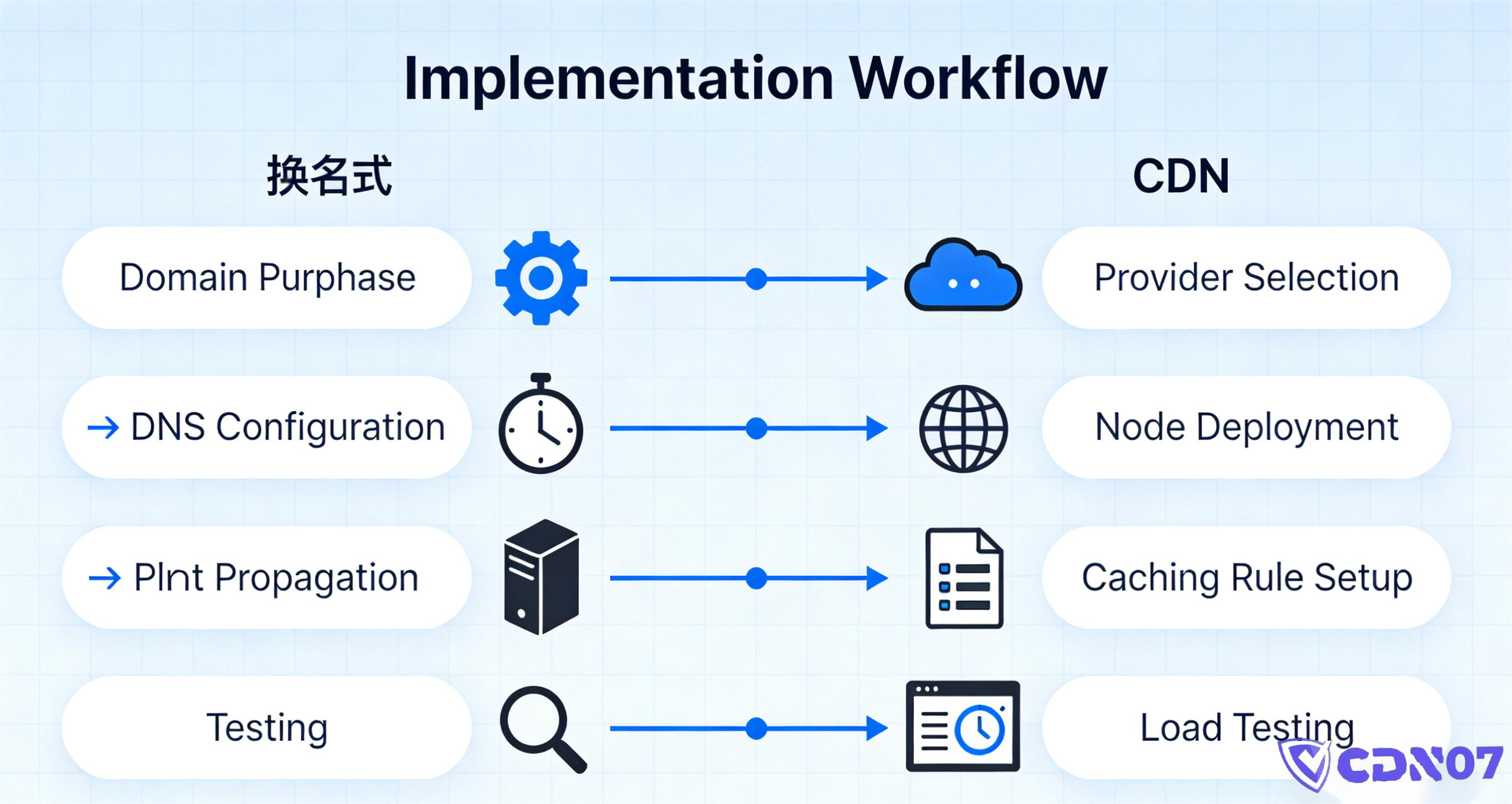
The first time many website owners encounter a "blocked domain," their reactions are pretty similar.
The site suddenly won't load.
The server is up, the domain isn't expired.
It pings fine, the admin panel is accessible.
But users from certain regions just can't reach it.
When you ask around for solutions, the answers you often get are:
- "Just change your domain name."
- "Try putting it behind a CDN."
- "Wait, it might fix itself."
- "Your content is the problem."
After hearing all that, you're even more confused.
What should you actually do? Which method is the most stable?
In this article, I won't take a "vendor's stance." I'll stand from the perspective of a website owner who's been through this and lay out the real effectiveness, costs, and suitable scenarios for common solutions.
1. First, Figure Out: Is Your Domain Actually "Blocked"?
This is step one, but it's also the step 90% of people skip.
A blocked domain typically has these clear signs:
- Accessible from some countries/regions, but partially or completely unreachable from others.
- The server IP is fine; accessing via IP works normally.
- The domain, when resolved from the affected region, gets no response or is directly blocked.
- No 404 error, no server error—it just "won't load."
⚠️ Many people actually have their IP blocked,线路 problems, or CDN node issues but mistakenly think it's their domain.
If you start changing your setup without confirming the root cause, you're basically wasting time.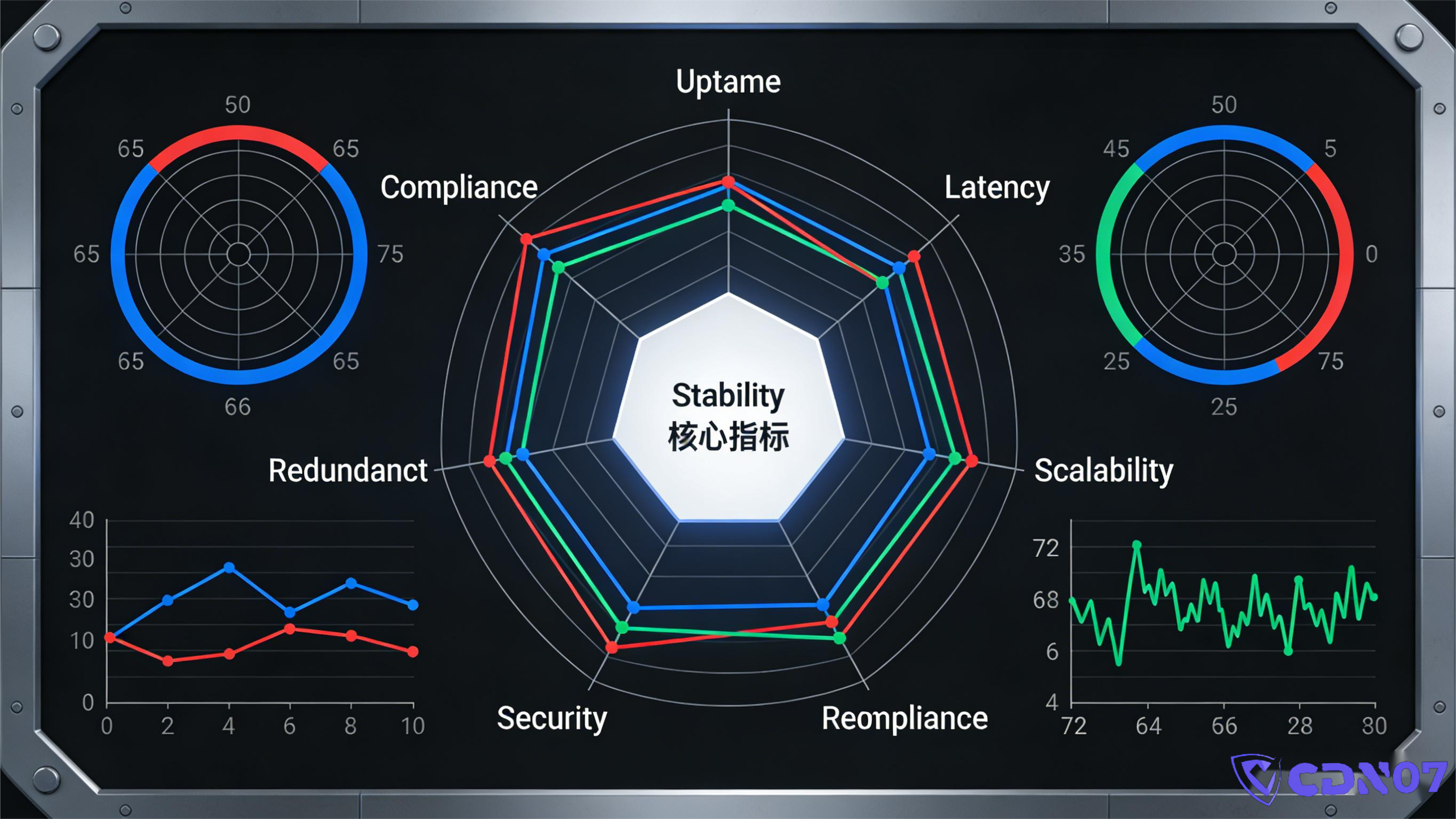
2. Why Do Domains Get Blocked? Let's Be Realistic
Don't just blame "policies" or "bad luck."
From real-world experience, common reasons fall into these categories:
- Content triggers keywords or regulatory rules
- Receives a large number of complaints or reports
- It's a historically "dirty domain" with baggage from a previous owner
- Abnormal traffic after an attack leads to collateral damage
- Use of high-risk DNS resolutions, redirects, or intermediary pages
The key point in one sentence:
Getting blocked often isn't about "what you did wrong," but "what you didn't do to protect yourself."
3. Solution One: Just Change the Domain. Is That Reliable?
This is the first idea that comes to most people's minds.
✅ The advantages are obvious:
- Fast
- Simple
- Low immediate cost
Get a new domain, update DNS, and access is restored—it works in the short term.
❌ But the problems are very real:
- Is it over after one change?
If your content, site structure, and access patterns don't change, it will likely get blocked again. - SEO starts from zero
The authority, indexation, and backlinks of your old domain are basically reset. - Significant user loss
Especially for projects with a fixed user base and known entry points. - Frequent domain changes = high-risk behavior
Getting flagged by systems as "abnormally frequent changes" can make you a bigger target.
👉 Conclusion: Changing your domain is only good for "temporary triage," not long-term operation.
4. Solution Two: Will Using a CDN Solve a Blocked Domain?
This is the second most-suggested and most-misunderstood solution.
Let's be honest first:
Not all CDNs can solve a domain block.
The real effect of a standard CDN is:
- Speed ✔
- Caching ✔
- Handling some small attacks ✔
- Bypassing blocks? Not necessarily ❌
If you're using a standard, regional CDN, its help against "being blocked" is very limited.
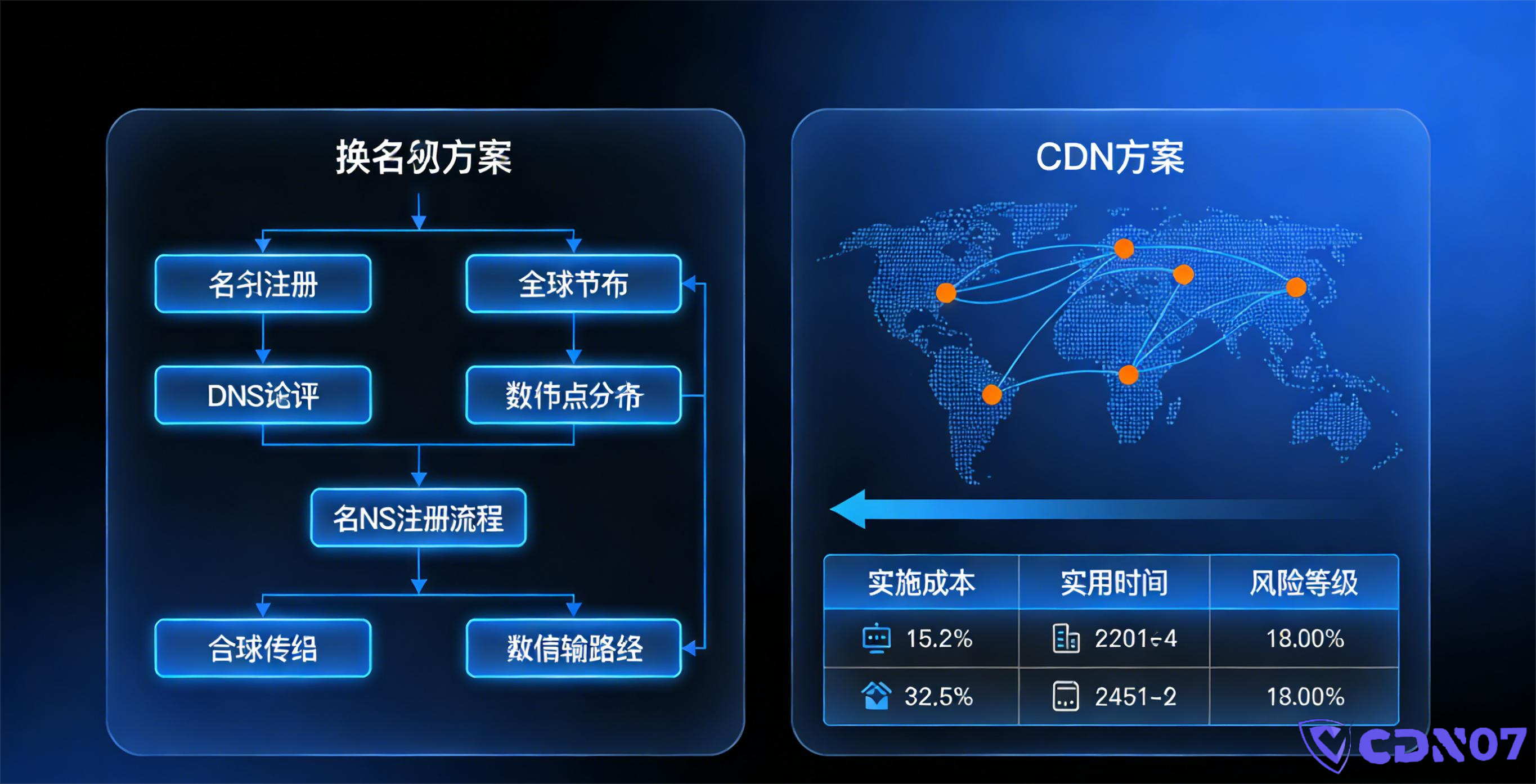
5. Then Why Are "Anti-block/CDN/DDoS-Protected CDN" Solutions Useful?
The key isn't the letters "CDN,"
it's the architectural approach.
The core logic of an anti-block solution has three points:
- The domain doesn't directly expose the origin server
- Traffic first enters an intermediate protective layer
- Access is handled through dynamic, distributed nodes
In simple terms:
What the outside world sees is not your real entry point.
The benefits of this are:
- Reduced risk for any single domain
- Lower probability of being identified and blocked
- Ability to quickly switch if problems arise, without affecting users
6. Change Domain vs. Use CDN—Which Should You Choose? Here's the Verdict.
I'll break down the real-world scenarios into 4 types. Just see which fits your situation.
Scenario 1: Recently blocked, low traffic, early-stage project
👉 Recommendation: Change domain first + Immediately adjust your architecture
- Change the domain to stop the bleeding
- Simultaneously deploy an anti-block CDN
- Don't wait for a second block
Scenario 2: Already has users, revenue, search rankings
👉 Do NOT recommend directly changing the domain
- SEO cost is too high
- User loss is significant
- A more stable approach is:
Keep domain + Anti-block CDN + Layered Architecture
Scenario 3: Blocked more than once
👉 Changing the domain is no longer a solution
- This is a "structural problem"
- Changing again just buys time
- You must implement anti-block + high-protection solutions
Scenario 4: Cross-border, grey-area, sensitive, high-risk operations
👉 You shouldn't have been exposed in the first place
- Domain should not connect directly
- IP should not be exposed
- The CDN layer must have anti-block capabilities

7. A Fact Many People Are Unwilling to Admit
Let me say something blunt but true:
If your site "can only survive by constantly changing domains," that's not operations—that's fleeing for your life.
The truly stable solution is never about "one single action,"
but about:
- Architecture design
- Traffic entry point control
- Risk distribution
- Having a switchable fallback if problems occur
8. What Kind of Solution Qualifies as "Most Stable"?
From experience, the relatively most stable combination is:
- Domain does not resolve directly to the origin server
- Use a CDN with anti-block capabilities
- Origin server IP is never exposed
- Nodes are replaceable and switchable
- Can adjust quickly if anomalies appear
The core value of this setup isn't "never getting blocked,"
it's this:
Even if problems occur, it won't be a "single point of fatal failure."
9. A Final Word for Those Feeling the Pressure
A blocked domain itself isn't the scary part.
What's truly scary is:
- Not understanding the problem
- Following bad advice blindly
- Changing domains today, switching solutions tomorrow
- Being stuck in a cycle of reactive panic
If you've been blocked once, it's not just bad luck.
It's a reminder: It's time to upgrade your architecture.
Frequently Asked Questions (FAQ)
Q1: What does "domain blocked" mean?
"Domain blocked" refers to a situation where a domain is accessible normally from some networks/countries but cannot be accessed or has its connection directly blocked from others, even though the server and IP themselves are functioning.
Q2: How do I determine if it's a domain block and not a server issue?
Common diagnostic methods include:
- The site works from other regions but not the affected one.
- Direct IP access works, but domain access fails.
- Changing the domain allows access to the same server.
If these occur together, it's likely a domain block.
Q3: After a domain is blocked, does changing it directly help?
It helps short-term, but is unstable long-term.
Changing the domain can quickly restore access, but if your architecture and access patterns remain the same, the new domain remains at risk. It also resets SEO and causes user loss.
Q4: Will using a CDN always solve a domain block?
Not necessarily.
Standard CDNs are mainly for speed and caching, offering limited help against blocking.
Only CDN architectures with anti-censorship and anti-traceability capabilities can meaningfully reduce the probability of blocking.
Q5: What's the most stable solution after a domain is blocked?
A relatively stable solution typically includes:
- Not pointing the domain directly to the origin
- Using an anti-block or DDoS-protected CDN
- Hiding the real server IP
- Having switchable entry points and nodes
The core idea is: Reduce single-point exposure risk, not just swap the entry point.
Q6: Can you appeal to recover a blocked domain?
From practical experience:
- Success rates are low
- The process is long
- It's not a reliable dependency
Most website owners still choose technical workarounds and architectural solutions.
Q7: How to avoid repeated domain blocks?
The key lies in:
- Not exposing your server directly
- Controlling access entry points
- Avoiding frequent domain changes
- Setting up an anti-block architecture proactively
One block might be an incident. Multiple blocks are usually a structural problem.
Share this post:
Related Posts

Which Websites Are a Good Fit for CDN07's DDoS-Protected CDN, and How Does It Compare with Cloudflare?
Compare CDN07 and Cloudflare for websites serving users in Mainland China, including connectivity, D...
How Much Does a DDoS-Protected CDN Cost per Month? Plans, Legitimate Traffic, and Additional Charges
The monthly cost of a DDoS-protected CDN depends on the plan allowance, legitimate traffic usage, pr...

How to Choose a DDoS-Protected CDN: Workloads, Network Connectivity, and Protection
Choosing a DDoS-protected CDN takes more than comparing mitigation capacity and monthly price. This...