

Is It Possible to Bypass China Mobile's CDN Blocking? Why Are Some CDNs Blocked Immediately Upon Use?
Is bypassing China Mobile's CDN blocking feasible? This article deeply analyzes the real reasons behind China Mobile's CDN blocks. Combining node strategy, origin shielding, and traffic behavior control, it details viable long-term CDN architectures and solutions for bypassing these restrictions.

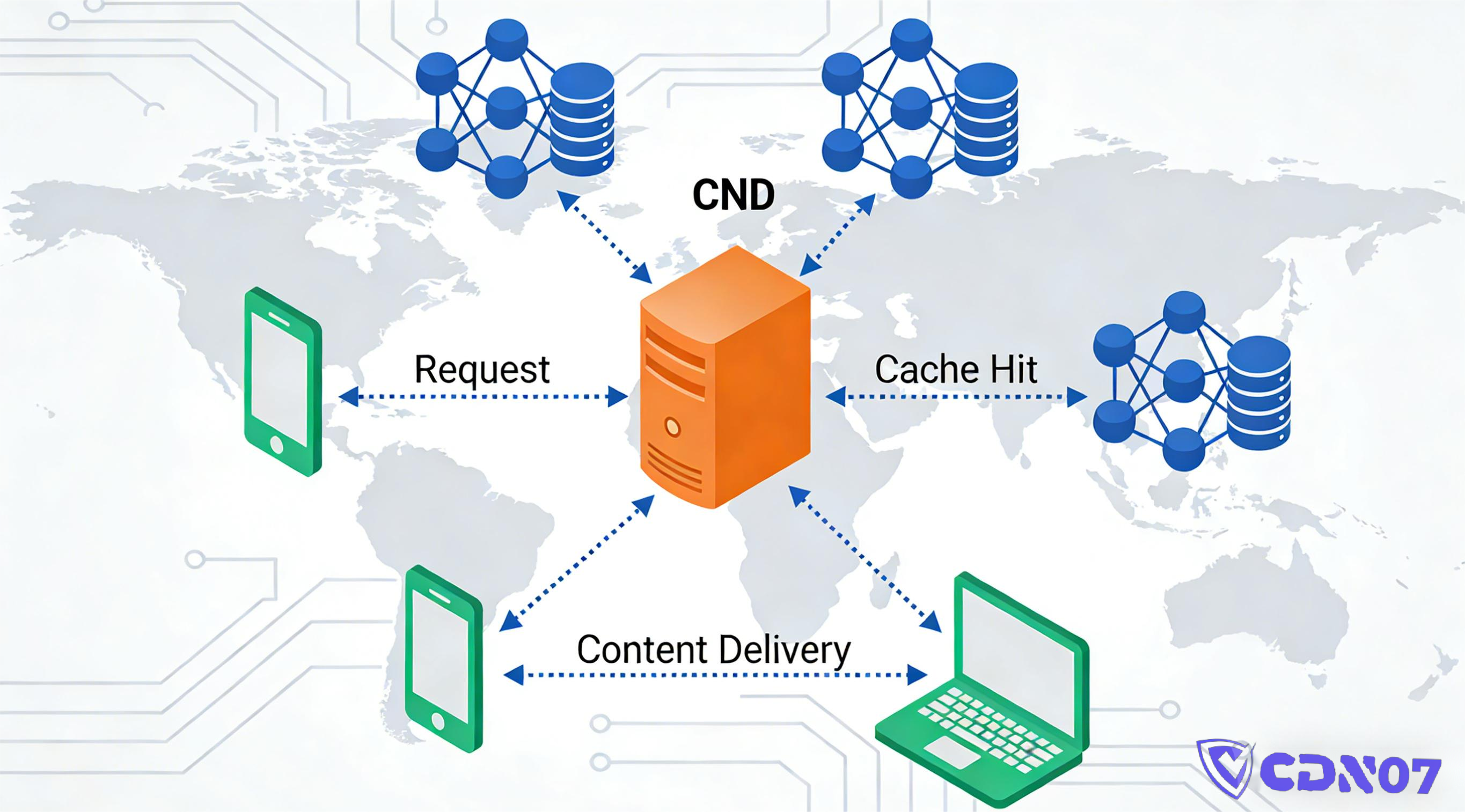
If you're searching for "bypass China Mobile CDN blocking," I can probably guess your scenario:
Your website...
...loads fine on China Telecom,
...works without issue on China Unicom,
but the moment a China Mobile user tries to access it, it fails to load, times out, shows a white screen, or even gets redirected.
You've changed domains, switched CDNs, even moved servers,
only to discover a more frustrating truth:
The problem isn't your website. The very act of "using a CDN" is inherently risky on China Mobile's network.
So the question becomes—
Is bypassing China Mobile's CDN blocking actually possible?
Why are some CDNs blocked by Mobile the moment they're used?
Are there any truly "long-term viable" solutions?
This article won't deal in myths or sell you anxiety. We'll focus on what's actually happening at the engineering level.
1. First, the Conclusion: Bypassing China Mobile is Not About "Evasion," It's About "Reducing the Hit Rate"
Let's clear up a major misconception first.
Many people think "bypassing China Mobile" means:
Just switch your CDN or IP, and you can "circumvent" Mobile.
This is wrong.
The reality is:
- China Mobile's blocking is largely not manual.
- It's based on automated policies, models, and signature detection.
- You can't "force your way through." You can only—
👉 try not to get flagged.
A more accurate description would be:
Through rational CDN architecture, node selection, and traffic signature design,
we reduce the "probability of being blocked by China Mobile" to a sufficiently low level.
This is the engineering-viable path.
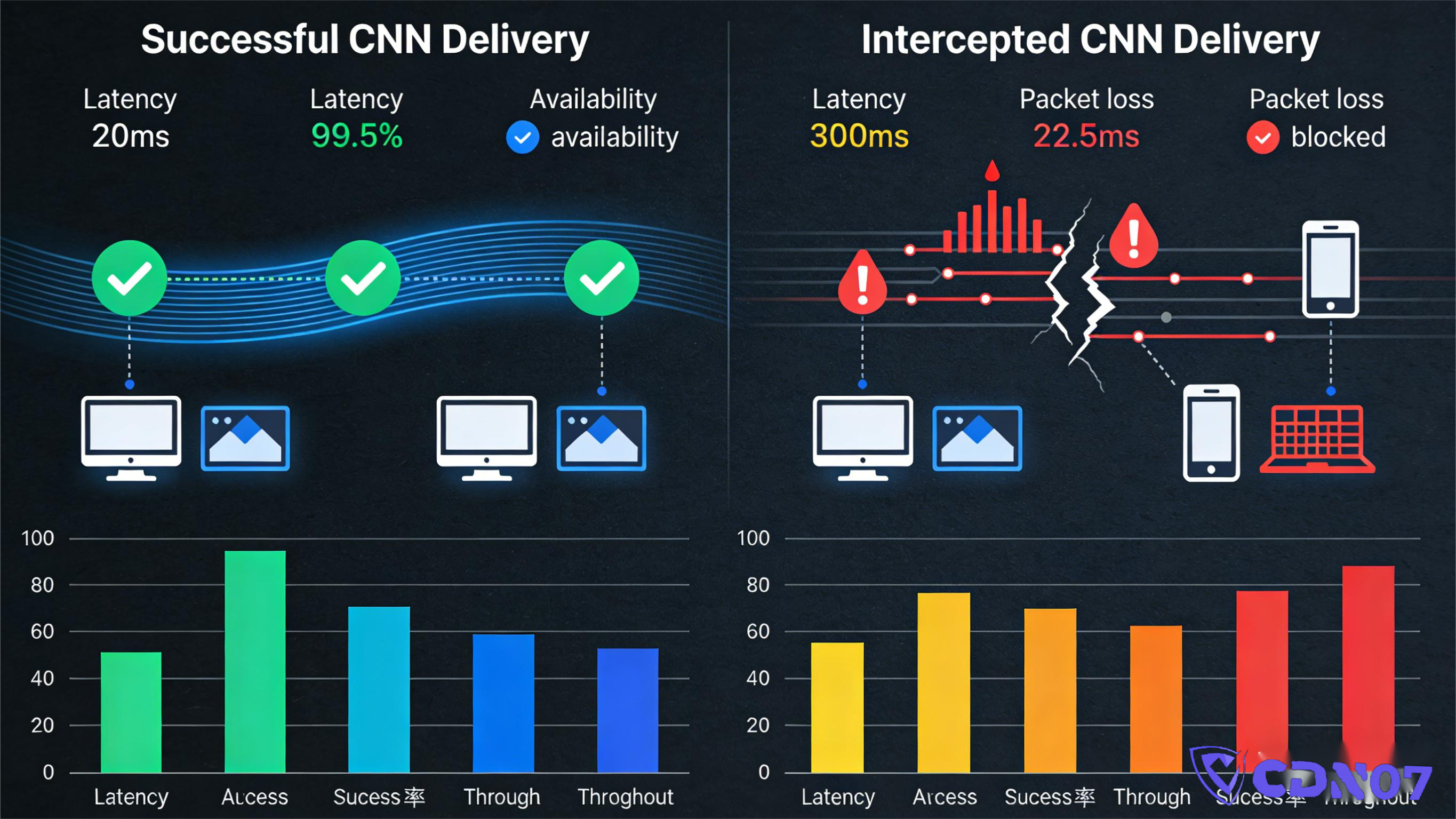
2. Why Does "Using a CDN Get Me Blocked by Mobile Instantly"? The Reasons Are Practical
First, let's understand: Why does China Mobile dislike CDNs?
1️⃣ CDN "Shared IPs" Are Mobile's Biggest Trigger
Most CDNs, especially budget ones:
- Host dozens, even hundreds of domains on a single IP address.
- If just a few of those sites cause trouble,
- The entire IP range gets flagged as high-risk.
Mobile's logic is simple and blunt:
Better to block too much than let anything slip through.
The result? Your legitimate site gets caught in the crossfire.
2️⃣ CDN Origin Pulling Behavior Looks "Very Much Like Abnormal Traffic"
From Mobile's perspective, a CDN node typically exhibits:
- Dense request patterns
- High concurrency
- Fixed origin-pull patterns
- Behavior that doesn't resemble a normal user
If a CDN hasn't implemented sufficient behavioral modeling and traffic layering,
From Mobile's point of view:
👉 It's very easily classified as an "abnormal distribution node."
3️⃣ Cross-Border Links + CDN = Extra Scrutiny
This is especially true for:
- Hong Kong / Overseas CDNs
- Serving mainland users
- With obvious traffic patterns
These are inherently high-priority targets for observation within Mobile's system.
3. Why Are Some CDNs "Blocked Immediately" While Others Run Stable for a Long Time?
The difference isn't "brand name," it's in the architectural details.
Let me summarize with a blunt engineering truth:
Whether a CDN can bypass Mobile is 80% design, 20% nodes.

4. Actually Viable Technical Approaches (Key Section)
This next part contains the core practical insights of this article.
Not "hacks," but verified, long-term sustainable strategies.
✅ Approach 1: Node Strategy – It's Not "Hong Kong Solves Everything"
Many people's first thought is:
Just use a Hong Kong node.
But reality check:
- Hong Kong ≠ Guaranteed to bypass Mobile
- A single Hong Kong node is more likely to be a concentrated target
A viable approach is:
- Hong Kong + Multi-region Hybrid Routing
- Mobile traffic shouldn't always take the same fixed path
- Reduce the "obvious signature of a single point"
✅ Approach 2: Origin Shielding – A Matter of Survival (Not Optional)
This is the most overlooked point.
If your origin server:
- Has a directly accessible IP
- Has a fixed origin-pull path
- Has no access restrictions
Then there's only one outcome:
👉 Mobile will eventually trace back to it.
A proper Mobile-bypass solution must include:
- Hidden origin IP
- Origin access restricted to CDN nodes only
- Dynamic origin-pull behavior
✅ Approach 3: Make Traffic "Look Like a Normal User," Not a Machine
This is where many standard CDNs fall short.
Mobile now pays more attention to:
- Request rhythm/timing
- Behavioral continuity
- Whether the access pattern "looks human"
If your CDN traffic:
- Is too request-dense
- Has overly regular/robotic patterns
- Has abnormal cache hit ratios
👉 Getting flagged is just a matter of time.
✅ Approach 4: CDNs Designed with "Censorship/Complaint Resistance" in Mind (Crucial)
This is where we must mention CDN07's Bypass China Mobile Blocking CDN solution.
Not because it has a "fancy name,"
But because its design philosophy is genuinely built to address this specific problem.
CDN07's Core Strategy for Bypassing Mobile (Engineering Perspective)
Based on their solution page, it can be summarized in four points (in plain English):
- Layered Node Routing
- Different network sources take different paths.
- Reduces concentrated exposure of Mobile traffic.
- Deep Origin Shielding + Whitelist Mechanism
- Origin server is not directly exposed.
- Origin-pull paths cannot be easily probed.
- Behavioral Modeling & Request Dispersion
- Not just simple caching.
- It's about "making traffic appear normal."
- Integrated DDoS Protection & Scrubbing
- Prevents attack traffic from "dragging you down."
- Attacks are a primary trigger for Mobile's attention.
Let's be clear about one thing:
CDN07 doesn't "guarantee" bypassing Mobile.
It reduces the "probability of being blocked by Mobile" to a level sustainable for long-term operation.
This is the fundamental difference between a mature solution and "hacky CDN workarounds."
❌ Which Methods Are Mostly Self-Deception?
- Only changing the domain name
- Only switching CDN providers without considering architecture
- Buying services that "claim 100% Mobile bypass"
- Relying on a support agent's "we can bypass it" promise
Any engineer can see these solutions are destined to fail eventually.

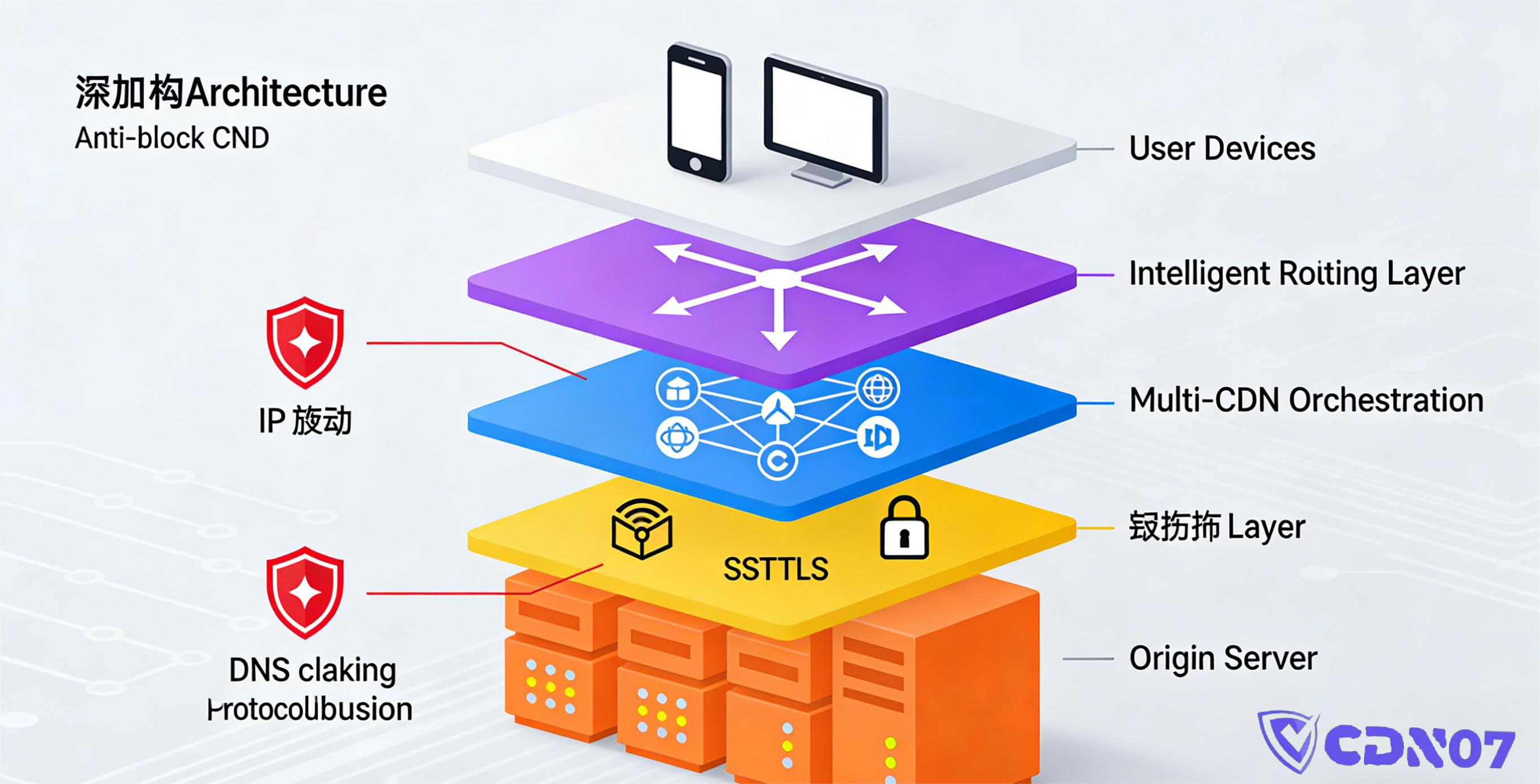
5. Example of a Practical CDN Architecture
A relatively stable structure typically looks like this:
Combined with:
- Traffic Layering
- Behavior Control
- Protection & Scrubbing
It might not be the cheapest, but it lasts.
6. When is Bypassing China Mobile Basically Hopeless?
I have to be honest about something you might not want to hear:
In the following cases, even the best CDN can't save you:
- Your business is consistently the target of serious complaints.
- Your content frequently triggers risk controls.
- Your domain or historical IPs are already deeply flagged/blacklisted.
- You face extremely high and sustained attack frequency.
At this point, the problem isn't the CDN; it's the business model itself.
7. Frequently Asked Questions (FAQ)
Q1: Can a Mobile-bypass CDN achieve 100% success?
No. Anyone claiming 100% is misleading you.
Q2: If optimized for Mobile, will Unicom or Telecom access be affected?
A properly architected solution won't affect them; overall stability often improves.
Q3: Does changing my IP help?
It might help short-term, but not long-term.
Q4: Are Hong Kong nodes always better than domestic ones?
Not necessarily. It depends on routing and strategy.
Q5: Can Cloudflare bypass Mobile?
In some scenarios, partially, but it's not specifically designed for this purpose.
Q6: What type of website is CDN07 suitable for?
Cross-border sites, long-term operations, and sites that don't want constant technical rework.
Q7: If I've been blocked by Mobile once, can I recover?
There's a chance, but the cost/complexity increases significantly.
8. Final Words:
"Bypassing China Mobile's CDN blocking" isn't a silver bullet.
It's a comprehensive set of long-term engineering strategies.
You shouldn't aim for:
- A one-time lucky successful load.
But rather:
Stable access for six months, a year, two years.
If you're in it for the "long-term operation," remember this:
Don't fall for mythical CDN promises.
Only trust solutions with rational structure, logical consistency, and clear explanations of their principles.
Share this post:
Related Posts
Which Websites Are a Good Fit for CDN07's DDoS-Protected CDN, and How Does It Compare with Cloudflare?
Compare CDN07 and Cloudflare for websites serving users in Mainland China, including connectivity, D...
How Much Does a DDoS-Protected CDN Cost per Month? Plans, Legitimate Traffic, and Additional Charges
The monthly cost of a DDoS-protected CDN depends on the plan allowance, legitimate traffic usage, pr...
How to Choose a DDoS-Protected CDN: Workloads, Network Connectivity, and Protection
Choosing a DDoS-protected CDN takes more than comparing mitigation capacity and monthly price. This...