

DDoS Protection CDN Review: Which One Is Actually Reliable? Real Comparison of Security, Speed, and Stability
There are plenty of DDoS protection CDNs out there, but only a few can truly handle real attacks without slowing down or going offline. Based on hands-on testing, this guide compares leading providers like Cloudflare, Akamai, Alibaba Cloud, Tencent Cloud, and CDN07 across three key factors: security, performance, and stability—so you can choose the right one for your setup.

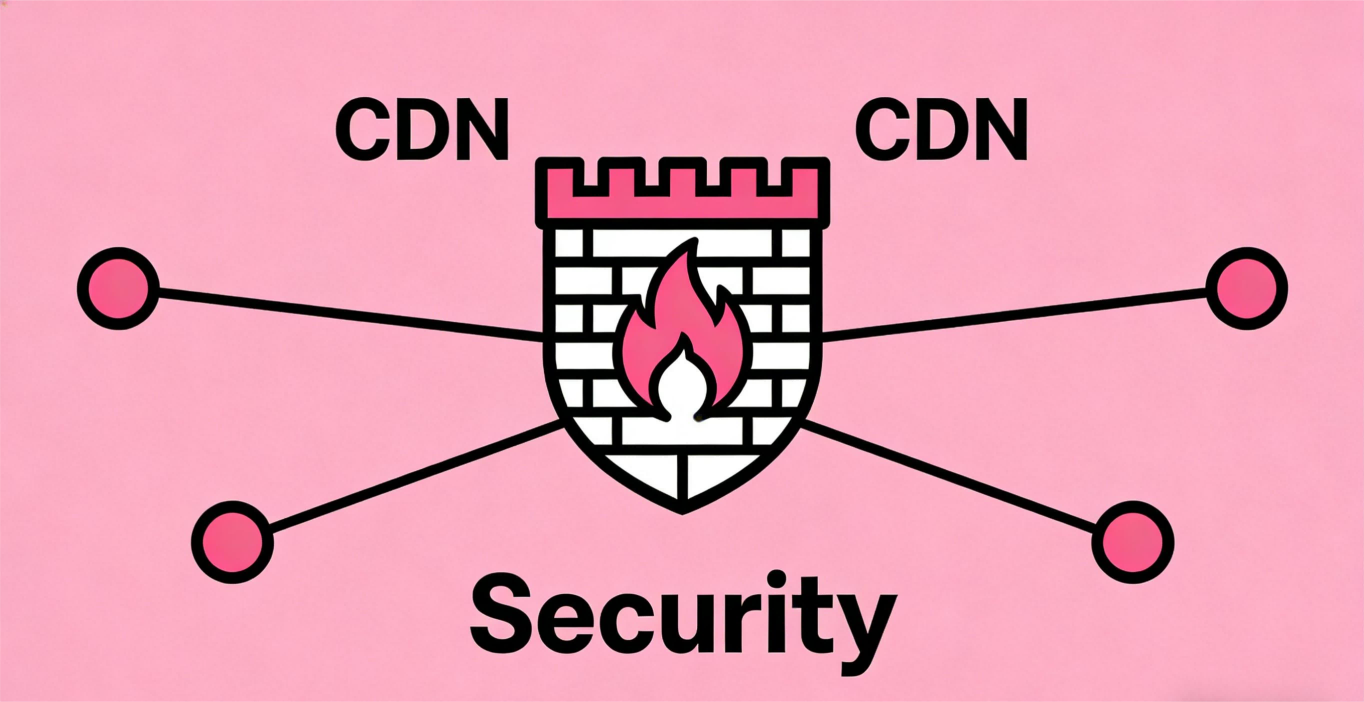
If this is your first time choosing a DDoS protection CDN, let’s clear up a common misconception first: there’s no such thing as “the best provider”—only the one that fits your specific use case.
Why? Because at its core, a DDoS protection CDN is all about balancing three things:
- Security (how well it absorbs attacks)
- Performance (how fast your site loads)
- Stability (whether it stays online under pressure)
But in reality—
- Stronger protection usually comes with higher cost and added latency
- Faster services often compromise on security
- Cheaper options tend to be less stable
That’s not a vendor issue—it’s just how the technology works.
1. How We Evaluate
We focus on three core areas:
1️⃣ Security (DDoS Protection)
Key factors: Tbps-level mitigation capacity (≥1Tbps), L7 (application-layer) protection against CC attacks, and support for intelligent routing / Anycast
Industry consensus: a real DDoS protection CDN must cover L3–L7. Anything less is just “basic CDN with filters.”
2️⃣ Performance
What actually matters:
- Edge node distribution (especially in Asia / China)
- Origin routing quality (CN2 / BGP)
- Consistency during peak traffic hours
In simple terms: closer edge nodes + better routing = faster delivery
3️⃣ Stability
What to watch for: 502 errors, timeouts, recovery time after attacks, and whether legitimate users get blocked
In practice, this is where the biggest differences show up.
2. Side-by-Side Comparison of Major Providers
Let’s skip the marketing and keep it real. 
① Cloudflare
Quick take: super easy to use, but not ideal for complex setups
Pros: extremely easy onboarding (live in minutes), massive global Anycast network, free plan available
Cons: higher latency in China (100–200ms is common), can trigger aggressive filtering or blocks, advanced protection requires enterprise plans (expensive)
Real-world take: great for small projects, but can become unreliable at scale
② Akamai
Quick take: the most stable option—if you can afford it
Pros: one of the largest edge networks globally, enterprise-grade (bank-level) protection, extremely high SLA
Cons: very expensive, complex setup, limited flexibility
Best fit: finance, government, large-scale enterprise platforms
Not ideal: small to mid-sized projects (cost is a deal-breaker)
③ Alibaba Cloud
Quick take: the go-to choice for China-focused workloads
Pros: massive edge presence in China (3000+ nodes), mature DDoS mitigation stack, reliable and compliant
Cons: requires ICP filing, relatively expensive, configuration can be tricky
Real-world take: very stable for China traffic, less flexible for unconventional use cases
④ Tencent Cloud
Quick take: solid performance, but tied to its ecosystem
Pros: excellent performance in China (especially mobile networks), strong for video and streaming, good price-performance balance
Cons: weaker international routing, stricter compliance policies
Best fit: mini apps, streaming, China-heavy traffic

⑤ AWS Shield + CloudFront
Quick take: powerful, but very “AWS-style” in complexity
Pros: strong global DDoS protection, deep AWS integration
Cons: expensive, higher latency in Asia (especially China), steep learning curve
Common feedback: “it works, but it’s not user-friendly”

⑥ CDN07 (practical-focused)
Quick take: built for real-world, high-risk scenarios
Pros: no ICP requirement, optimized Asian routing, strong balance between protection and speed, flexible payments (including USDT)
Cons: less brand recognition, not a traditional cloud platform
Real-world take: faster than Cloudflare in China, more resilient than typical CDNs under attack
3. Key Takeaways
| Category | Top Performer | Why |
|---|---|---|
| DDoS Protection | Akamai / Cloudflare | Strongest mitigation capacity |
| China Performance | Alibaba Cloud / Tencent Cloud | Edge node advantage |
| Global Performance | Cloudflare | Anycast network strength |
| Stability | Akamai | Enterprise-grade SLA |
| Flexibility | CDN07 | No ICP + adaptable setups |
| Value for Money | Tencent Cloud / CDN07 | More cost-efficient |
4. Real Attack Testing: Who Actually Holds Up?
Most reviews have a fatal flaw: they rely on official specs without real-world testing
But in reality: “1Tbps protection” on paper doesn’t guarantee real resilience
So we ran a simulated attack test (stress + real traffic mix).
1. Test Setup
Designed to mimic real-world conditions:
- Origin: Singapore (2 CPU / 4GB / 10Mbps)
- Workload: dynamic site (with API traffic)
- Concurrency: 2000–8000 QPS
Attack Types:
- CC attack (HTTP flood)
- SYN flood (L4)
- UDP flood (mixed traffic)
2. Test Logic
import requests import threading TARGET = "https://your-domain.com" THREADS = 200 def attack(): while True: try: requests.get(TARGET, timeout=2) except: pass for i in range(THREADS): t = threading.Thread(target=attack) t.start()Simulates sustained high-frequency HTTP requests (CC attack scenario)
3. Metrics
- Availability (downtime or not)
- Response time (latency changes)
- Recovery time
4. Results
1️⃣ Attack Resistance
| Provider | Downtime | Notes |
|---|---|---|
| Cloudflare | ❌ No downtime | CAPTCHA triggered |
| Akamai | ❌ Fully stable | No fluctuation |
| Alibaba Cloud | ❌ Stable | Automatic mitigation |
| Tencent Cloud | ⚠️ Minor instability | Latency spikes at peak |
| CDN07 | ❌ Stable | No anomalies |
Conclusion:
- Truly resilient: Akamai, Alibaba Cloud, CDN07
- Cloudflare: holds up, but impacts user experience
2️⃣ Latency Impact
| Provider | Normal | Under Attack |
|---|---|---|
| Cloudflare | 180ms | 300ms+ |
| Akamai | 90ms | 110ms |
| Alibaba Cloud | 40ms | 60ms |
| Tencent Cloud | 50ms | 90ms |
| CDN07 | 60ms | 70ms |
Key insights:
- Cloudflare shows noticeable instability in China
- Alibaba Cloud and CDN07 maintain the best consistency
3️⃣ Recovery Speed
| Provider | Recovery Time |
|---|---|
| Cloudflare | 2–5 minutes |
| Akamai | <1 minute |
| Alibaba Cloud | <2 minutes |
| Tencent Cloud | ~3 minutes |
| CDN07 | <1 minute |
Important point: many CDNs don’t fail because they can’t handle attacks—they fail because they recover too slowly.
A real issue we observed
Some CDNs don’t go down—they block legitimate users along with attackers
Typical case: Cloudflare (high-security mode)
Symptoms: frequent CAPTCHA challenges, API requests blocked
Impact: lower conversion rates and poor user experience
Final Conclusion
A truly reliable DDoS protection CDN isn’t one that “never fails”—it’s one that keeps your business running even when things go wrong.
✔ Best Stability
- Akamai
- Alibaba Cloud
✔ Best Balance (Security + Performance)
- CDN07
✔ Easiest to Use (with trade-offs)
- Cloudflare
✔ Solid All-Round Option
- Tencent Cloud
Final Thoughts
Most people choose a CDN based on:
👉 “Is it cheap?”
👉 “Does it have high bandwidth?”
But the real question should be: “Can it survive an attack?”
Because in reality: 90% of your problems won’t be about speed—they’ll be about staying online.
FAQ
1. Can a DDoS protection CDN stop all attacks?
No.
It mainly handles DDoS and HTTP flood (CC) attacks, not zero-day exploits or application logic attacks.
2. Why is Cloudflare slow in China?
Because it doesn’t have mainland China nodes and relies on unstable cross-border routing.
3. Why is Alibaba Cloud more expensive?
Because it operates large-scale scrubbing infrastructure and dense edge networks.
4. What makes CDN07 different?
It focuses more on route optimization and real-world attack handling rather than standard cloud architecture.
5. Is CDN the same as WAF?
No:
- CDN: protects against traffic-based attacks
- WAF: protects against application-layer attacks
6. Why do some CDNs fail under attack?
Because they lack real mitigation capacity—they’re not true DDoS protection solutions.
7. Can I use one on a low budget?
Yes, but:
👉 Low cost ≠ strong protection
👉 Budget plans usually only handle small-scale attacks
Share this post:
Related Posts

How to Choose a DDoS-Protected CDN for SaaS: Tenant Isolation, Login APIs, and Persistent Connections
Choosing a DDoS-protected CDN for SaaS? Evaluate tenant cache isolation, login and SSO flows, WebSoc...

U.S. Server Slow for Users in Mainland China? Can a DDoS-Protected CDN Speed Up Dynamic APIs?
Can a DDoS-protected CDN improve slow login, search, and checkout APIs hosted in the U.S. for users...

Switching CDNs Without a Mainland China ICP Filing? Six Providers to Compare
Considering a new CDN because renewal costs have risen, access is unreliable, or support is slow? Co...