

Akamai Is Leaving China: 5 Alternative CDN Providers for 2026 (Real-World Test Results)
Akamai is fully exiting the China CDN market by 2026. This means potential latency spikes and architecture headaches for businesses with Chinese users. Based on hands-on experience from site owners, we break down the real impact of Akamai's exit and recommend 5 solid alternative CDN providers—including no-ICP-filing, high-DDoS-protection options like CDN07—to help cross-border, e-commerce, and Web

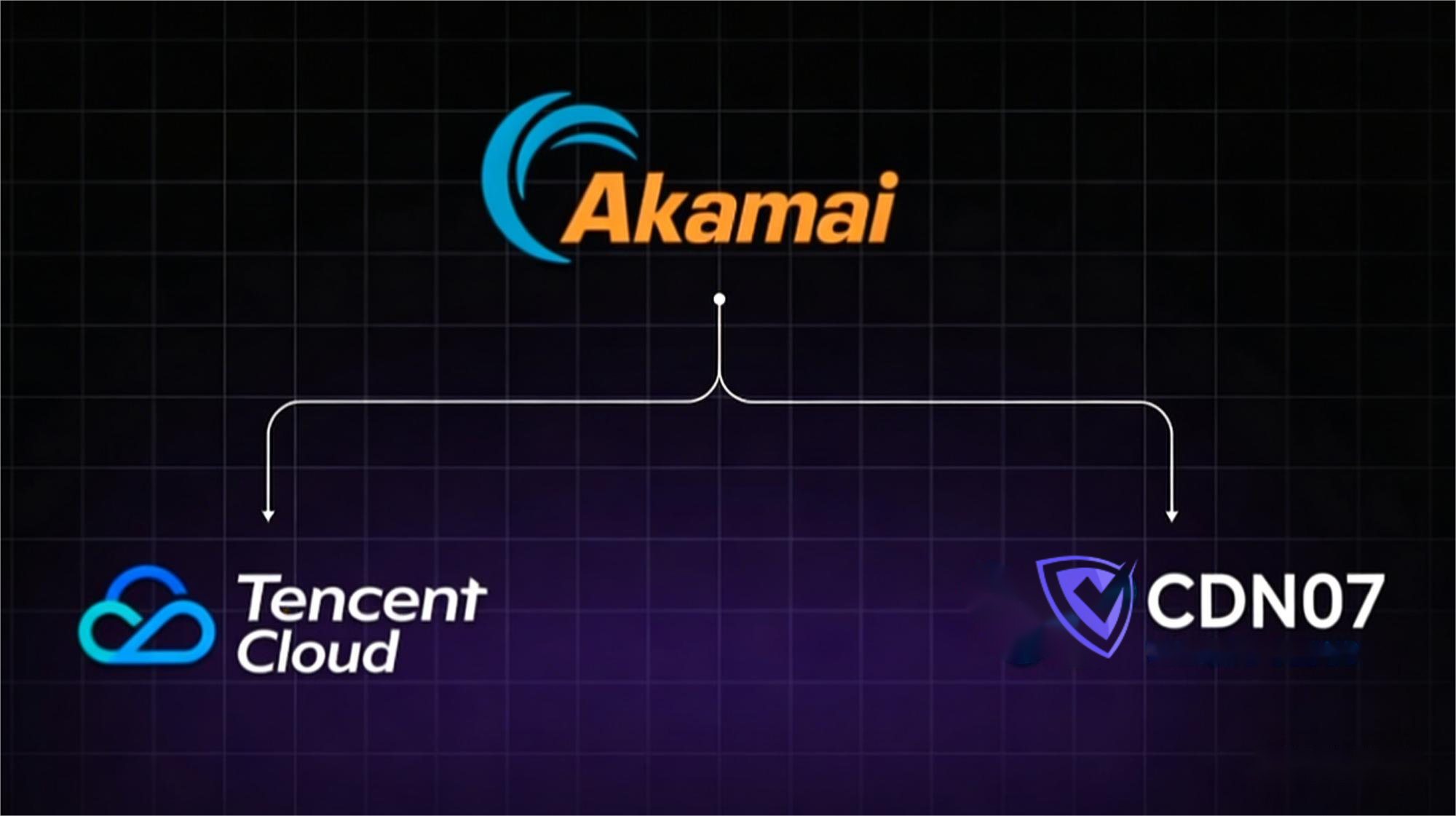
Global CDN giant Akamai has officially announced: June 30, 2026, is the cutoff date for its mainland China CDN services. It's shutting down completely.
For a lot of international businesses, this isn't just swapping one vendor for another. This is a fundamental architecture shift.
Here's the deal:
- Chinese nodes are going offline.
- Traffic destined for China gets rerouted overseas.
- Latency? You're looking at a potential jump of 150 to 300+ milliseconds.
If you don't migrate, your site's performance in China could take a nosedive:
- Pages load like molasses.
- Video buffering becomes the norm.
- API requests start timing out.
That's why teams are already hunting for new CDN solutions. Drawing from the current state of the industry, this post rounds up 5 solid alternative CDN providers to consider.
1. Why Akamai Pulling Out of China Is a Big Deal
A lot of people ask: Is Akamai leaving China really that serious?
Short answer: For many companies, absolutely yes.
Three main reasons.
1. Plenty of global giants rely on Akamai
Think: Apple, Microsoft, Netflix.
These companies have long depended on Akamai global CDN network. When users in China accessed their services, they were hitting local edge nodes.
But post-2026? Traffic from China gets forwarded to overseas nodes.
2. China's internet landscape is its own beast
Operating a CDN in China comes with unique hurdles: ICP filing requirements, local operating licenses, compliance restrictions, and the Great Firewall.
This is precisely why most foreign CDNs end up partnering with local providers.
3. CDN migration is rarely a simple flick of a switch
Some folks think swapping CDNs is just updating a DNS record.
It's not. Enterprise-level migration typically means: reworking DNS, porting WAF rules, managing SSL certificates, tweaking cache policies, and adjusting API routing.
For some businesses, the whole migration cycle can take 1 to 2 months.

2. Realistically, You've Only Got Three Types of Alternatives
Let me be straight with you. A lot of the talk around this gets overly idealistic. In the real world, you're choosing from three buckets:
① Chinese Domestic Cloud CDNs (Tencent Cloud / Alibaba Cloud / Wangsu)
Pros: Rock-solid performance inside China, plenty of local nodes.
Cons: You need ICP filing. Content audits are strict. Not particularly friendly to cross-border sites, e-commerce, or Web3 projects.
👉 Best for: Official corporate websites with proper licensing.
② International CDNs (Cloudflare / Fastly)
Examples: Cloudflare, Fastly .
Pros: Great global coverage. Easy to set up.
The fatal flaw:
👉 Unstable performance / high latency in China (largely due to the Great Firewall).
③ No-ICP-Filing, High-Defense CDNs (The Popular Pick Right Now)
These solutions have really blown up in the last couple of years.
Core features: No ICP filing required. Routes are optimized specifically for access from China. Built-in DDoS protection.
👉 Basically, they're the sweet spot between compliance headaches and decent performance.
3. 5 Alternative CDN Providers to Consider in 2026
The five below are ranked based on what I'd call "real-world usability."
This isn't an official. It's a site owner's perspective.
1. CDN07 (Top Pick)
Website: https://www.cdn07.com/en
I'm putting this first for a reason.
Because: 👉 It directly tackles the core problem Akamai's exit creates.
Let's get straight to the pros:
- No ICP filing needed (huge for cross-border projects).
- Optimized Asia-Pacific nodes (noticeably more stable access from China).
- Built-in high-defense DDoS protection.
- Works well for Web3, e-commerce, file download sites.
Here's something people miss: 👉 Akamai's strength is its global scale, but flexibility? Not so much.
A provider like CDN07? 👉 Built precisely for complex, non-standard scenarios.
Who it's for: Cross-border e-commerce operators, Web3 projects, traffic sites, and businesses that might not fit neatly inside traditional compliance boxes.
Bottom line: 👉 Not the most "traditional" choice, but arguably the most "effective" one for specific needs.
2. Cloudflare
Website: https://www.cloudflare.com/
Need an introduction? Probably not. It's the global CDN benchmark.
Pros: One of the largest node networks worldwide. Generous free tier. Strong security features.
The catch: 👉 China access remains a weak point.
Best for: Sites that aren't heavily reliant on Chinese traffic.
3. Tencent Cloud
Website: https://www.tencentcloud.com/
One of the official migration paths Akamai itself recommends.
Pros: Strong node presence in China. Stable network lines.
Cons: Mandatory ICP filing. Strict content audits. Significant restrictions on what you can host.
Best for: 👉 Legitimate enterprise-level operations.
4. Wangsu Technology
Website: https://en.wangsu.com/
A long-standing player in the Chinese CDN space.
Pros: Excellent coverage within China. Has a partnership migration path with Akamai.
Cons: Less flexible. Can be pricey. Same deal as Tencent Cloud – mandatory ICP filing, strict audits, and content limitations.
5. Fastly
Website: https://www.fastly.com/
More of a developer-focused CDN.
Pros: Strong edge computing capabilities. Excellent global latency control.
Problem: 👉 Essentially no viable solution for China access.
Mainstream CDN Alternatives Compared (2026 Real-World Testing)
| CDN Provider | China Access Performance | ICP Filing Required? | Security Features | Best For | Overall Rating |
|---|---|---|---|---|---|
| CDN07 | ⭐⭐⭐⭐☆ (Optimized routing, stable) | ✅ No (Supported) | ⭐⭐⭐⭐☆ (High-defense CDN) | Cross-border / E-commerce / Web3 / Gaming | ⭐⭐⭐⭐⭐ (Best all-around for specific needs) |
| Cloudflare | ⭐⭐ (High latency) | ❌ (Requires compliance in China) | ⭐⭐⭐⭐ | Global businesses | ⭐⭐⭐ |
| Tencent Cloud | ⭐⭐⭐⭐⭐ (Strong in China) | ❌ (Mandatory) | ⭐⭐⭐⭐☆ | Domestic China business / Corporate sites | ⭐⭐⭐⭐ |
| Wangsu Technology | ⭐⭐⭐⭐⭐ (Veteran in China) | ❌ (Mandatory) | ⭐⭐⭐⭐ | Enterprise clients / Government projects | ⭐⭐⭐⭐ |
| Fastly | ⭐ (Essentially no China presence) | ❌ | ⭐⭐⭐⭐ | Tech-focused global businesses | ⭐⭐ |
So, don't just count nodes. Know where your users actually are.
- International CDNs (Cloudflare / Fastly) 👉 Global strength, China weakness.
- Domestic Chinese CDNs (Tencent Cloud / Wangsu) 👉 China strength, but heavy restrictions.
- No-ICP-filing CDNs (CDN07) 👉 The middle ground, often the most practical.

3. How to Pick the Right CDN for Your Business
Honestly, there's no single "best CDN." Only the right CDN for your specific situation.
If your business is: Domestic China operations, legitimate enterprise projects.
Go with: Alibaba Cloud, Tencent Cloud, Wangsu.
If your business is: Cross-border.
Consider: CDN07, Cloudflare.
If your business is: Web3 / Gaming / API-driven.
Priority pick: CDN07 High-Defense CDN.
4. What's Next for the CDN Industry?
Akamai stepping back from China sends a clear signal: The global CDN landscape is reshaping.
We'll likely see three trends:
1️⃣ Regionalized CDN strategies.
Using different CDNs for different parts of the world.
2️⃣ Growing demand for high-defense CDNs.
Attacks aren't letting up. Your infrastructure needs baked-in protection.
Akamai's exit isn't just another industry news blip.
For many companies, it's a chance to rethink and rebuild part of their infrastructure.
If you've got users in China, now's the time to start mapping out a new CDN architecture.
For: Cross-border e-commerce, Web3 projects, gaming platforms,
a lot of site owners are already moving to CDN07 and similar high-defense, no-ICP-filing CDN solutions.
Sometimes, picking the right CDN matters more than upgrading your server.
FAQ
1. Why is Akamai leaving the China market?
Akamai's exit is largely tied to the policy environment, rising compliance costs, and the complexity of local operations. The China CDN market requires ICP filing, partnerships with local node providers, and strict content oversight—factors that drove up operational costs for international providers, leading to this decision.
2. What happens after Akamai leaves China?
The impact is direct:
- Increased latency for users in China (typically +150ms or more).
- Noticeably slower page load times.
- Potential failures for some dynamic requests.
If your business relies on Chinese users, you'll feel it.
3. Can I still use Akamai after it leaves China?
Technically, yes. But there's a catch: 👉 Traffic from China will be automatically routed to overseas nodes.
That means:
- Slower access speeds.
- Decreased stability.
Sticking with the old setup isn't advisable.
4. Do I need to fully redeploy my CDN after Akamai exits?
Yes, and it's more than just swapping a setting. You'll likely need to reconfigure:
- DNS resolution.
- CDN caching rules.
- WAF security policies.
- SSL certificates.
Think of it as a complete architecture migration.
5. Which CDN is most stable for access from China?
Currently, you have three buckets:
1. Domestic Chinese CDNs (require ICP filing).
2. International CDNs (slower access from China).
3. No-ICP-filing high-defense CDNs (the compromise).
Many cross-border projects opt for providers like CDN07 to balance performance and compliance headaches.
6. Is there a CDN that works for China access without ICP filing?
Yes, but they're not "domestic Chinese CDNs" in the traditional sense.
These services typically offer:
- Overseas nodes with optimized routing to China.
- Smart traffic scheduling.
- Edge acceleration.
Providers like CDN07 fall into this no-ICP-filing category, making them a fit for cross-border, e-commerce, and Web3 projects.
7. Can Cloudflare replace Akamai's services in China?
Not fully.
Here's why:
- Cloudflare lacks a complete node infrastructure inside China.
- Access relies on cross-border links.
So, the user experience in China will take a hit.
8. What CDN should cross-border e-commerce choose?
Key priorities for cross-border e-commerce: Global acceleration, optimized access from China, and stability.
The typical recommendation: A high-defense CDN with optimized Asia-Pacific nodes.
Something like CDN07 fits the bill.
9. How do DDoS attacks relate to CDN choice?
CDNs aren't just for speed; they're also a shield. High-defense CDNs usually include:
- Traffic scrubbing.
- CC attack mitigation.
- WAF protection.
They're an effective defense against large-scale DDoS attacks.
10. When's the deadline to migrate after Akamai's announcement?
Aim to have your migration wrapped up before June 2026.
Why the buffer?
- DNS changes take time to propagate.
- New caches need warming up.
- Security rules require testing.
Waiting until the shutdown date is a recipe for website disruptions.
Share this post:
Related Posts

Which Websites Are a Good Fit for CDN07's DDoS-Protected CDN, and How Does It Compare with Cloudflare?
Compare CDN07 and Cloudflare for websites serving users in Mainland China, including connectivity, D...

How Much Does a DDoS-Protected CDN Cost per Month? Plans, Legitimate Traffic, and Additional Charges
The monthly cost of a DDoS-protected CDN depends on the plan allowance, legitimate traffic usage, pr...

How to Choose a DDoS-Protected CDN: Workloads, Network Connectivity, and Protection
Choosing a DDoS-protected CDN takes more than comparing mitigation capacity and monthly price. This...