

Which CDNs Support No-KYC Signup? And Which Providers Also Accept USDT Payments?
Which CDNs allow no-KYC signup and support USDT payments? We tested providers like CDN07 and Gcore—comparing setup process, node speed, protection, and stability. Ideal for cross-border and Web3 projects.

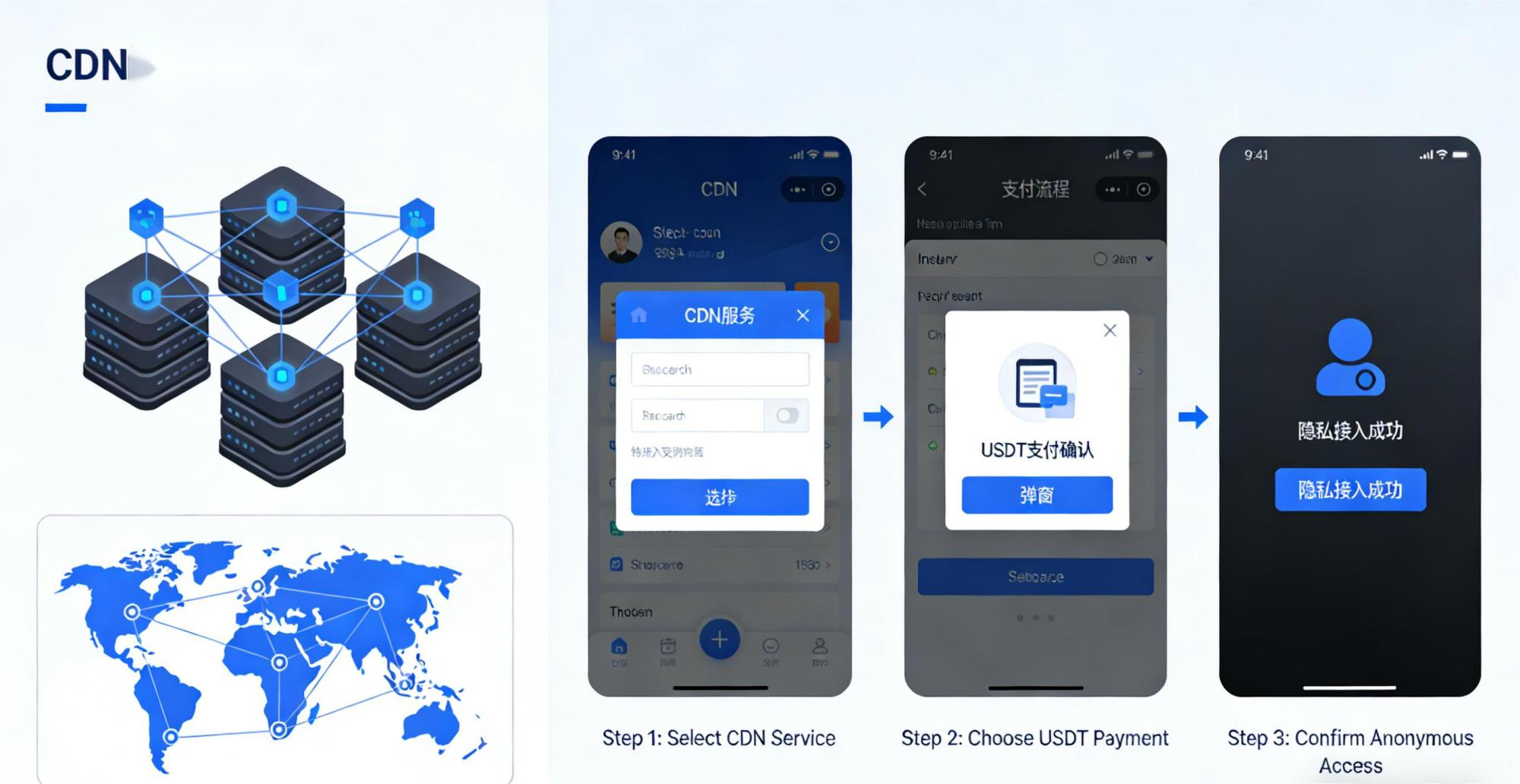
To be honest, I’ve been asked this dozens of times. Whether you’re running cross-border projects, Web3 platforms, foreign trade sites, or overseas SaaS teams—almost everyone hits the same wall:
"I just want to get my CDN live fast. Why is signing up harder than going live?"
Some CDNs:
- Require business verification
- Ask for a stack of company documents
- Need a credit card on file
- Make you wait for manual approval
- Some even require corporate banking steps
If you’re running a cross-border project, overseas team, or Web3 startup, that kind of process can be a total deal-breaker.
So naturally, people ask:
- Is there a CDN with a simpler setup?
- One that doesn’t force mainland China-style identity verification?
- And also supports USDT payments for easier cross-border settlement?
- Most importantly: decent tech—good protection and reliable performance?
In this post, I’ll share my experience as a real user, covering the CDNs I’ve personally tested, signed up for, and deployed over the past two years.
一、What Does “No-KYC Signup” Actually Mean?
Let’s clear this up first to avoid misunderstandings. When I say “no-KYC signup” in this article, I mean:
- ✅ No forced mainland Chinese personal/business verification
- ✅ No requirement to submit Chinese ID or business license
- ✅ You can sign up and go live with just an email
- ❌ Not illegal or non-compliant
- ❌ Not about “bypassing regulations”
Essentially, this is the standard approach for international CDNs:
They rely on overseas compliance frameworks (company info, email, payment behavior) for risk control—not mainland China’s real-name system. Industry folks get it; for everyone else, I hope this clears things up.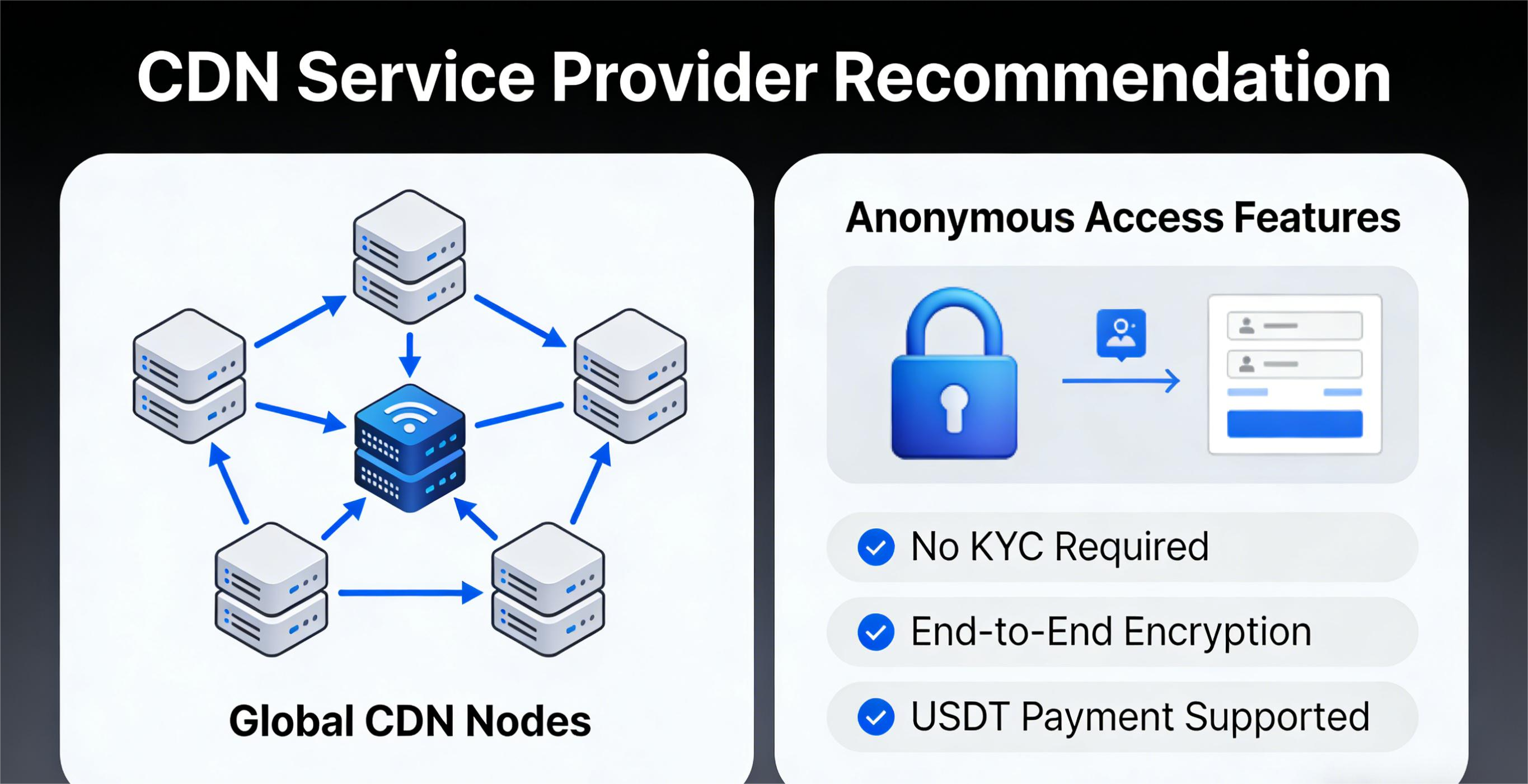
二、Why Are “No-KYC + USDT Payments” So Important for Many Projects?
Let’s be practical.
1️⃣ Cross-border teams with complex structures
- Company registered overseas
- Team spread across multiple countries
- Domains, servers, and operations in different regions
Using traditional payment + verification processes here is a huge hassle.
2️⃣ Web3 / crypto projects don’t operate with fiat by default
Asking a Web3 team to pay for CDN with a credit card just doesn’t make sense.
3️⃣ Speed to launch matters
Some projects are:
- Campaign-based
- Short-term
- Quick tests
- Needing temporary protection
A CDN that takes 3 days to register and 2 more to approve isn’t suitable.
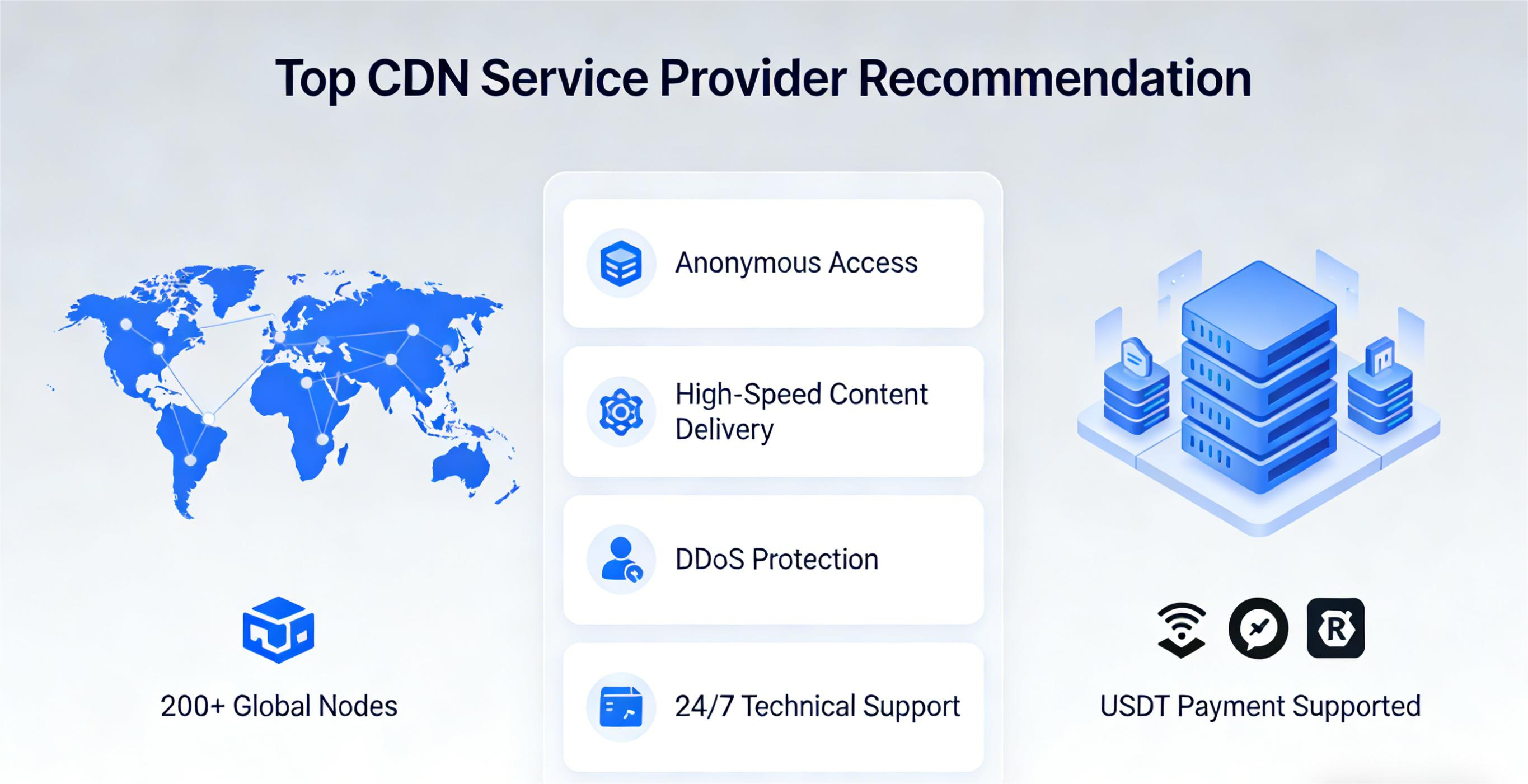
三、Which CDNs Offer “Easy Signup + USDT Support + Solid Tech”?
Below, I’ll only list providers I’ve actually tested and can recommend. No filler.
① CDN07 (Most stable for Asia, low barrier, USDT supported)
Website: https://www.cdn07.com
This is currently my most frequently used provider, especially for Asia-facing projects.
🔹 Onboarding experience
- Email signup
- No forced KYC
- No ID or business license required
- Direct engineer-level support
Extremely fast deployment—often live within the same day.
🔹 Payment options
- Supports USDT (TRC20)
- No extra fees
- Fast settlement, clear billing
🔹 Real-world performance (Mainland China → Hong Kong)
- Guangzhou / Shenzhen: 5–12ms
- Central China: 12–22ms
- Beijing: 20–35ms
Key point: minimal evening peak fluctuations
🔹 Protection capabilities
- High-defense nodes
- L7 protection support
- Effective against CC / HTTP Flood attacks
- Strong origin shielding
🔹 Ideal for
- Web3 projects
- Wallet frontends
- APIs / login systems
- Cross-border SaaS
- Foreign trade landing pages
Bottom line:
If your users are in Asia and you want simple setup plus USDT payments, CDN07 is currently the most reliable choice.
② Gcore (Overseas compliance system, supports USDT, average in Asia)
Website: https://gcore.com
Gcore is a European-based CDN with risk controls following overseas standards.
🔹 Onboarding
- Simple registration
- No mainland China verification system
- Overseas compliance focused
🔹 Payments
- USDT supported
- Multiple crypto payment options
🔹 Performance
- Very strong in Europe
- Hong Kong nodes: 20–40ms
- Occasional peak-time fluctuations
🔹 Protection
- Above average
- Good L3/L4 defense
- L7 not its strongest suit
Best for: 👉 Projects targeting European users
③ StackPath (Setup isn’t complicated, but not ideal for Asia)
Website: https://www.stackpath.com
A veteran CDN with low entry barriers.
🔹 Onboarding & Payments
- Easy registration
- Supports crypto payments (via certain channels)
🔹 Performance
- Decent in North America
- Hong Kong nodes often have routing delays
🔹 Protection
- Basic DDoS protection
- Not suitable for high-frequency attack scenarios
四、Why Aren’t Cloudflare / Akamai Considered “No-KYC Signup”?
A lot of people ask: Isn’t Cloudflare easy too?
Truth is:
- Cloudflare setup is simple
- But payments aren’t flexible
- No USDT support
- Enterprise plans aren’t lightweight
Akamai, Fastly, AWS are similar: 👉 Technically strong, but geared toward enterprise compliance.
五、Who Are These CDNs Right For?
If you fit the following, this article was written for you:
- Cross-border operations
- Web3 / blockchain projects
- Can’t easily use mainland verification
- Want fast deployment
- Prefer USDT payments
- Need reliable performance and protection
My recommendations are straightforward:
- Asia-focused: CDN07
- Europe-focused: Gcore
- North America-focused: StackPath (with caution)
六、FAQ
Q1: Are no-KYC CDNs compliant?
A: Yes, as long as the provider follows the legal framework of their operating country/region—not mainland China’s real-name system.
Q2: Is paying with USDT unsafe?
A: Not if the CDN is reputable. USDT is just a settlement option and doesn’t affect service quality.
Q3: Are no-KYC CDNs less stable?
A: Stability depends on nodes, routing, and protection—not whether KYC is required.
Q4: What CDN is good for Web3 projects?
A: One that supports USDT, has stable nodes, and strong origin shielding—like CDN07.
Q5: Can I use Cloudflare + another CDN together?
A: Yes, multi-CDN setups are common for high-defense needs.
Share this post:
Related Posts

How to Choose a DDoS-Protected CDN for Mainland China: Speed and Security Guide
How can websites hosted overseas improve access from Mainland China without compromising DDoS protec...

What to Do When Your Website Is Slow: A Practical Guide to Troubleshooting DNS, TTFB, and Resource Loading
Why is your website slow to load? This guide walks through DNS resolution, connection setup, TTFB, i...

Why Online Card and Board Games Need an SDK-Based Game Shield for DDoS Protection
Online card and board games face persistent security risks, including DDoS attacks, HTTP floods, che...