

Which Overseas Free CDN is Actually Good? A Full Comparison of Speed, Protection & Limits
A real webmaster's breakdown comparing Cloudflare, Gcore, Bunny, Fastly & others on speed, security, and hidden limitations. Find out which free CDN works for your site and which to avoid.

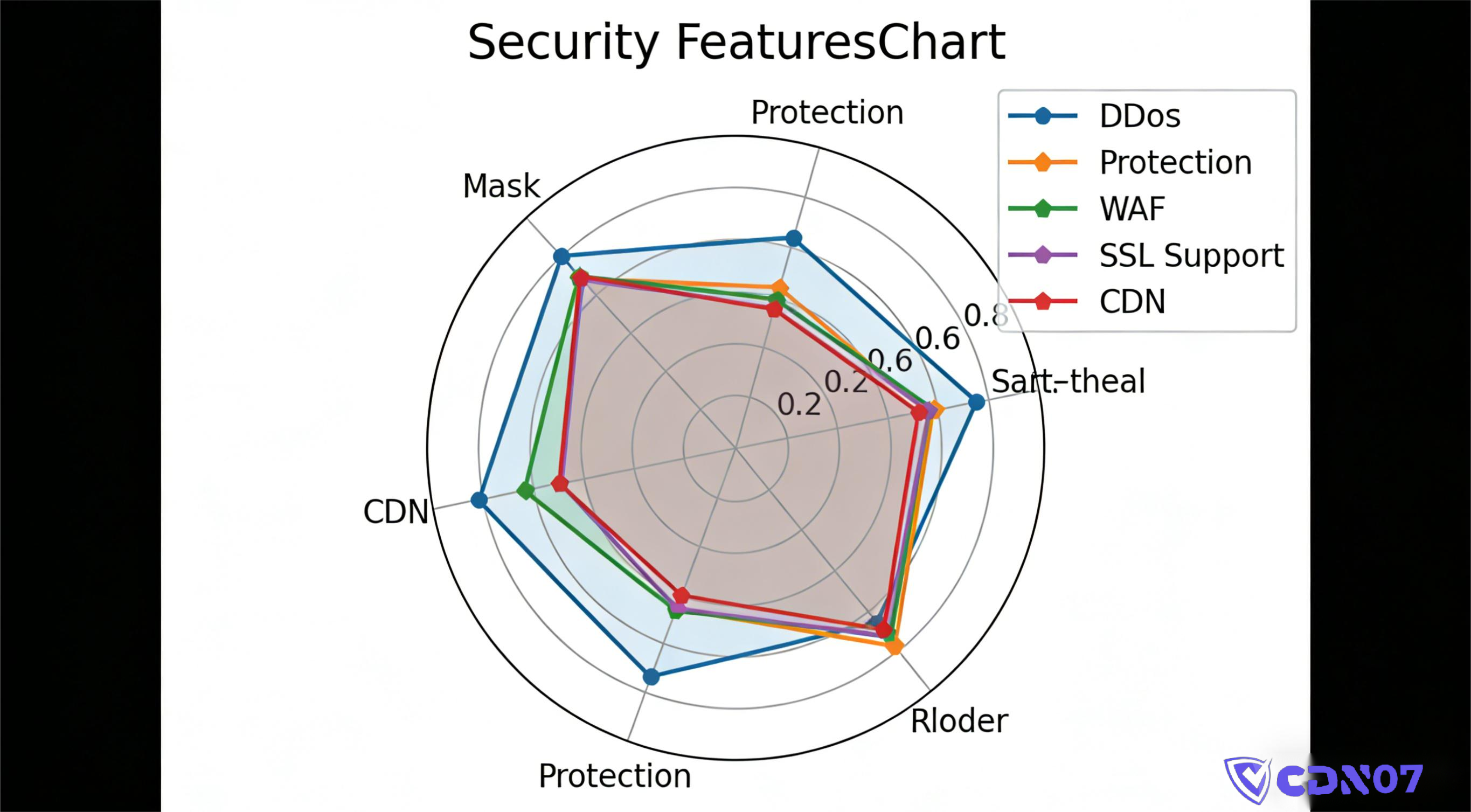
If you run a cross-border website, an independent store, e-commerce, content site, or a tool site, you’ve probably faced this question:
"Which overseas free CDN is actually good? Can I really use it? Is it a trap?"
Honestly, in my over ten years of network engineering, I've seen too many site owners lured by the word "free," only to end up with a slower site, blocked access, unstable performance, WAF false positives, API request throttling... you name it.
So I'm writing this article not to bash or hype anyone, but to:
Show you the real capabilities of free CDNs, the tech logic behind them, what scenarios they work for, and where they absolutely fall short.
This guide is based on hands-on experience, an engineer's perspective, and a real webmaster's viewpoint. By the end, you should clearly know:
"Is your website even suitable for afree CDN?"
一、Why Are Free CDNs Free? You Need to Understand the "Business Model"
Many think free CDNs are a "public service," but the reality is—
No CDN is a charity.
"Free" is just a business model, driven by three main goals:
1) Drive Traffic & Leverage Scale
Take Cloudflare for example.
Their free users make up over 80% of their base, generating massive traffic volumes. This allows CF to:
- Continuously expand their node network
- Optimize bandwidth costs
- Negotiate better bandwidth rates
Frankly, free users built Cloudflare into what it is today.
2) Upsell to Paid Plans
This is true for all CDN providers.
Free CDNs impose limits exactly where it hurts:
- Limited protection
- Reduced features
- No guaranteed node performance
- Restricted requests/bandwidth/speed
If you're running a real business, you'll eventually need to upgrade.
3) "Data" Itself Has Value
Especially for overseas CDNs.
Traffic patterns, attack samples, and access behavior from free users are invaluable for training their AI filtering models, WAF systems, and DDoS detection.
So here's the bottom line:
Free CDNs are usable, but their "terms of use" aren't what you might assume.
You must understand what they can and cannot do.
That's the focus of our analysis next.
二、Full Comparison of Popular Overseas Free CDNs (Speed / Nodes / Protection / Limits)
I'll base this on real user experience—no fluff, no bias, no inflated stats.
Let's look at five of the most common overseas free CDNs:
- Cloudflare Free Plan
- Gcore Free CDN (Limited Traffic)
- Bunny.net Free Trial
- Fastly Free Developer Tier
- QUIC.cloud Free Tier (Powered by LiteSpeed)

① Cloudflare Free: The Most "Usable," and Most Overestimated CDN
The first choice for almost every new site owner.
Pros:
- Nodes in 300+ cities worldwide
- Basic DDoS protection included
- One of the fastest global DNS networks
- 5 free firewall rules
- Supports auto-caching & limited edge computing
Real Experience:
Cloudflare Free is indeed usable, arguably the most stable free CDN out there.
It offers noticeable improvements for cross-border access (e.g., Asia to US/EU).
But here's the catch—many misunderstand its security capabilities.
The truth is:
Free protection is "basic survival," not "advanced defense."
- Struggles with attacks above 10 Gbps
- Often misses complex HTTP Flood attacks
- WAF rules are very limited
- Weak bot management
It's fine for e-commerce or content sites;
Don't expect it to withstand targeted attacks.
Best for:
- Content sites / Blogs
- Corporate websites
- Tool sites
- Small API services
- Small-to-medium cross-border independent stores
Not for:
- Industries prone to attacks
- High-frequency APIs
- Audience primarily in mainland China (slows down)
- Large-scale downloads / video streaming

② Gcore Free CDN: Good Speed, But Plenty of Limits
Less famous than Cloudflare, but technically solid.
Pros:
- Excellent node coverage in Europe & North America
- Free tier is decent for small sites (~1TB/month)
- Fast response times
- Relatively simple setup
Cons:
- Limited node selection on the free plan
- Performance in Asia lags behind Europe
- Weak protection capabilities
- Access restricted in some countries
Best for:
Small websites targeting Europe & North America primarily.

③ Bunny Free Trial: Great Experience, But Truly Free Offering is Limited
Bunny.net's strengths: Fast, lightweight, easy to configure.
However, there's no permanent "free plan," only:
- A trial period (typically 14 days / limited traffic)
- Pay-as-you-go afterwards (quite affordable)
Best for:
Performance-conscious webmasters wanting to test the service.
Not for:
Those seeking a permanently free solution.

④ Fastly Free Developer Tier: Powerful Performance, High Learning Curve
Fastly is favored by major media sites like eBay, GitHub, Reddit.
But the barrier to entry for free users is significant:
- Dashboard is engineer-oriented
- Complex VCL configuration
- Nodes mainly in US/EU
- Not beginner-friendly
The upside? Extremely fast and stable.
⑤ QUIC.cloud Free Tier: A Boon for LiteSpeed Users
If you use WordPress + LSCache, this CDN is a perfect match.
Pros:
- Excellent optimization for WordPress static/dynamic caching
- Surprisingly generous free tier
- Good speeds
- Supports QUIC protocol
Cons:
- Requires a LiteSpeed environment
- Useless for non-WordPress sites
- Protection is average
Ideal for WordPress-based independent sites.
三、The "Hidden Limits" of Free CDNs You Must Know
People get burned not because free CDNs are terrible, but because—
They expect "paid-tier" performance.
Here are the common limitations across all free CDNs I've summarized.
1) No SLA (Service Level Agreement)
In short:
Fast today doesn't mean fast tomorrow; accessible now doesn't guarantee access in 3 months.
Free plans offer no SLA, meaning:
- Nodes can be taken offline temporarily
- Bandwidth can be preempted
- Assigned IP quality is inconsistent
This significantly impacts cross-border access.
2) Limited Protection: Especially Against HTTP Floods
Most free CDNs only handle DDoS at a basic level:
- "Auto-mitigate small-scale attacks"
- "Filter the most common malicious requests"
But they fail against:
❌ Cookie-based dynamic floods
❌ Randomized path Layer 7 attacks
❌ Fingerprint spoofing
❌ High-concurrency POST requests
They simply can't handle it.
3) WAF is Heavily Restricted
Cloudflare Free, for instance, only offers:
- Basic OWASP rules
- Low-precision bot detection
- Highly restricted custom rules
For sites with logins, APIs, or admin panels, the free WAF often causes false blocks or misses real threats.
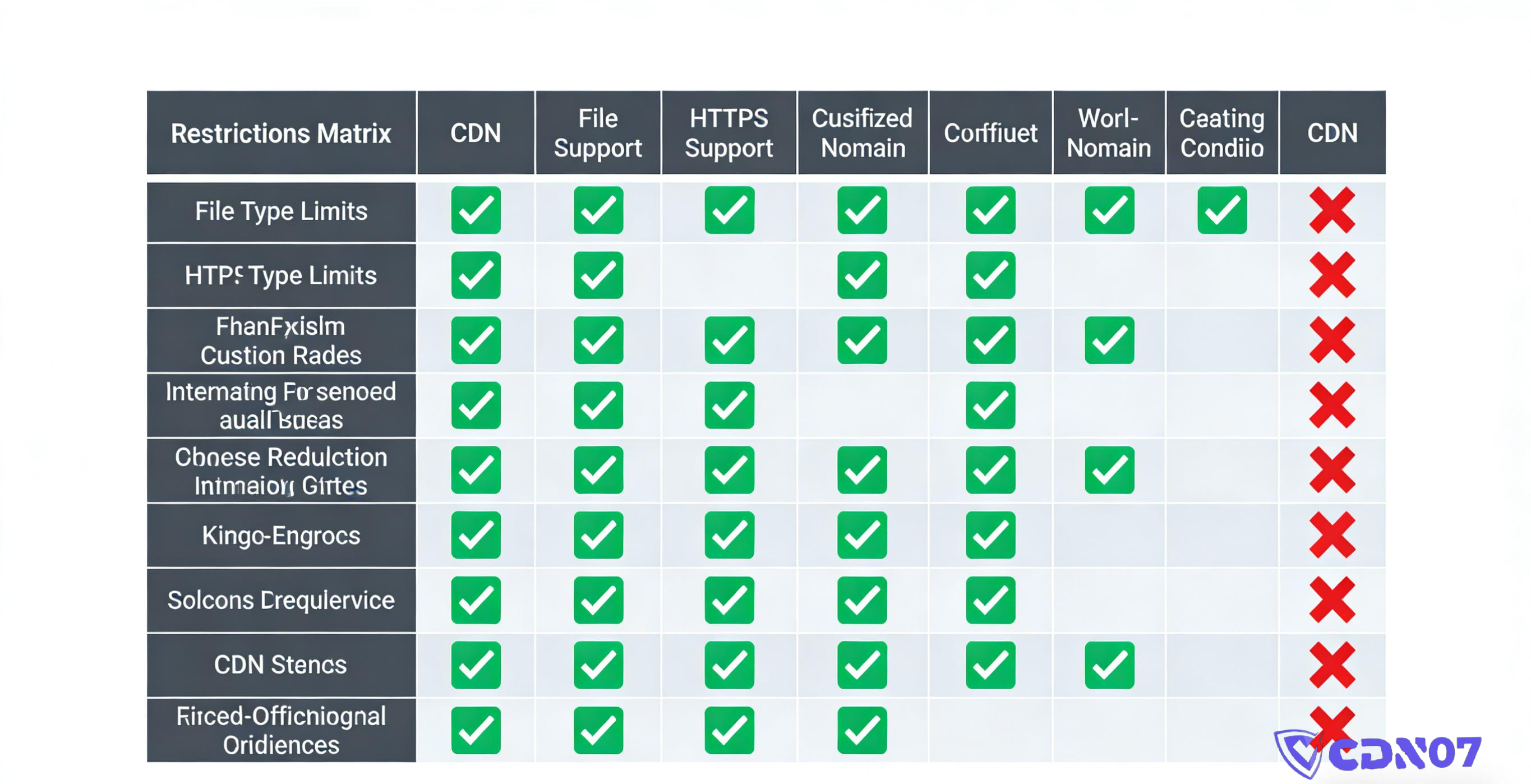
4) Bandwidth & Request Limits
For example:
- Gcore Free: only 1TB/month
- Fastly Free: capped monthly requests
- Bunny: free is just a trial
- Cloudflare Free: excessive traffic triggers manual review
Free does not mean unlimited.
5) Frequent Origin Pulls
Due to conservative caching policies:
- Low TTLs
- Dynamic pages not cached
- Certain file types excluded
- Cache easily purged on changes
Hence the common complaint: "Why is my site still slow with a CDN?"
6) Free CDNs Are Not Suitable for Users in Mainland China
This is crucial.
Overseas free CDN nodes generally do not use optimized routes into China.
Latency for Chinese users often exceeds 200-300ms.
If your target audience includes mainland China, free CDNs are not an option.
四、Is a Free CDN Right for Your Use Case?
As an engineer, here's my direct take:
① Cross-border E-commerce (Shopify, Independent Stores)
Usable, but not for long-term reliance.
Cloudflare Free is the natural choice, but once your traffic grows:
- Inflexible cache rules
- Inadequate WAF
- API rate limiting
- Performance dips during peak hours
You'll hit a bottleneck quickly.
② Content Sites / Blogs / Brochure Sites
Excellent fit.
Free CDNs offer great value here.
Especially for sites heavy on static content with little dynamic interaction.
Top recommendation: Cloudflare + QUIC.cloud (for WordPress).
③ Tool Sites / APIs / SaaS
Not a good fit.
Reasons:
- API calls easily get throttled
- Dynamic requests aren't cached
- Free tier often misidentifies bots
- High demand for low response times
④ Video / Download / Image-Heavy Sites
Completely unsuitable.
Free CDNs impose major limits on large-file traffic:
- Speed throttling
- Bandwidth caps
- Lower-tier nodes
- Frequent origin pulls
- Not allowed for high-traffic file delivery
Cloudflare explicitly prohibits heavy download traffic.
⑤ High-Risk Industries / Attack-Prone Businesses
Do not use.
Unless you don't mind getting knocked offline.
The protection on free plans is too limited.
五、If You Still Want a Free CDN, Here's How to Choose
This is your practical guide.
① If you want stability and basic features
Cloudflare Free
② If your audience is primarily in Europe/North America
Gcore Free
③ If you run a WordPress site
QUIC.cloud Free
④ If you're an engineer comfortable with VCL
Fastly Developer Tier
⑤ If you want to test performance before paying
Bunny Trial
六、When Free Isn't Enough: How to Upgrade (Neutral Advice)
I won't push any specific provider, but tell you what to look for.
Key factors when upgrading:
1) Stable BGP / Anycast Nodes
Free CDNs typically give you "shared nodes."
Paid plans offer dedicated, guaranteed-bandwidth nodes.
2) Real DDoS Mitigation (10G/50G/100G+ capacity)
Especially against HTTP Floods—not all CDNs can handle them.
3) Adequate WAF
A paid WAF is critical for dynamic sites.
4) Origin Routing, Cross-Border & China Access Optimization
Free CDNs barely touch this.
5) Technical Support
With free plans, you're on your own (and Google).
Paid plans give you actual support engineers.
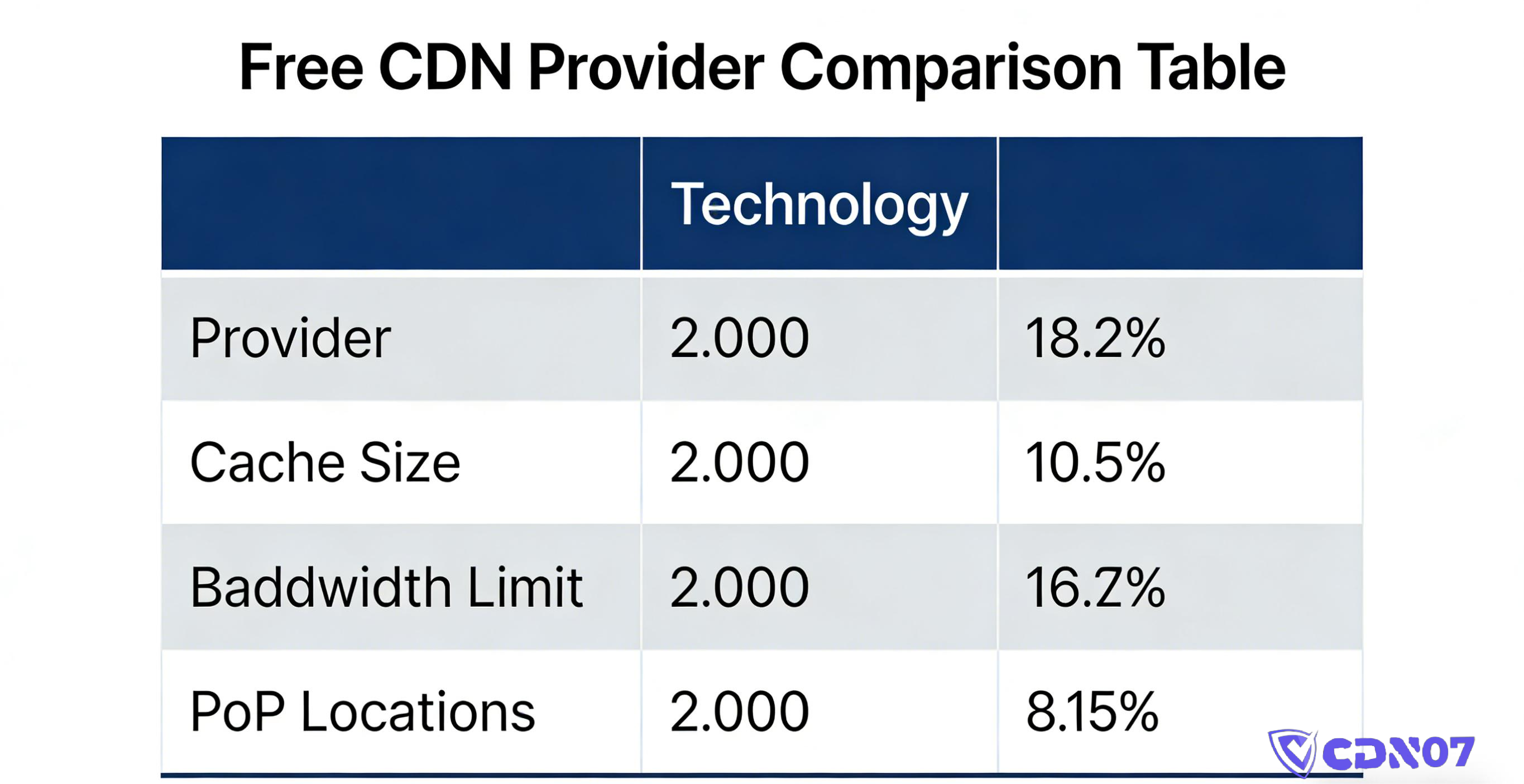
七、So, Which Overseas Free CDN is the Best?
Here's the one-sentence summary:
Cloudflare Free is the most stable "general-purpose solution," but it's not a silver bullet, not high-security, and not the final answer for all businesses.
If you:
- Run e-commerce: Free works, but only as a temporary solution.
- Run a content site: Free is great.
- Run a tool site/API: Free isn't enough.
- Run video/downloads: Free is completely inadequate.
- Are prone to attacks: You must go paid.
The biggest value of a free CDN: It gets you through the initial "zero-cost" phase.
But once your business gains traction, traffic, and revenue, you must consider:
- Dedicated nodes
- Cross-border optimization
- Real DDoS protection
- Enterprise-grade WAF
- Higher bandwidth
- Faster origin pull speeds
At that point, you'll know which CDN truly fits your needs.
FAQ|Overseas Free CDN Common Questions Answered
1. Can I Use a Free CDN Long-Term?
Yes, but only for "lightweight" projects.
If your site is mainly:
- A content site
- A personal blog
- A brochure-style business site
- An independent store with mostly static pages
A free CDN handles these just fine.
But if you run:
- High-frequency APIs
- E-commerce (with traffic spikes)
- Image/video-heavy sites
- Download services
- Businesses prone to attacks
Free CDNs aren't suitable long-term; you'll hit limits eventually.
2. Is There a Big Gap Between Cloudflare Free and Paid Plans?
Very.
The free plan is more like a "demo;" paid plans are where stable business operation begins.
Key differences:
- Number of WAF rules
- HTTP Flood protection effectiveness
- Rate limiting
- Edge cache flexibility
- API acceleration
- Worker limits
For e-commerce or SaaS, the free plan is "usable," not "sufficient."
3. Do Free CDNs Hurt Google SEO?
Normally no, but watch for two issues:
① Poor Caching Can Delay Indexing
Many free CDNs don't cache dynamic content well, causing frequent origin pulls or cache misses, slowing down search engine crawlers.
② Unstable IP Quality (Especially Shared Nodes)
You might encounter "bad neighbor effects"—if spam sites share your IP, it can affect Google's rating of that IP range.
If SEO is critical, I recommend:
- Enable "Cache Everything" (with proper rules)
- Set custom TTLs
- Avoid forcing all paths to origin
- Avoid frequent node changes in short periods
4. Do Free CDNs Protect Against DDoS?
Only "basic protection."
They mainly stop:
- Small-scale SYN floods
- Basic Layer 4 attacks
- Simple HTTP Floods
- Common parameter-less requests
But against:
- Large multi-vector attacks
- Cookie-based floods
- Randomized path attacks
- Custom UA spoofing
- High-frequency POST
Free CDNs are nearly powerless.
If your site has been attacked before, a free CDN shouldn't be your main defense.
5. Can a Free CDN Slow Down My Site?
Yes, it's possible.
If your visitors are mainly from mainland China or Southeast Asia, an overseas free CDN might slow things down due to:
- Non-optimized routing
- Traffic routed through the US or Europe
- Low cache hit rates causing slow origin pulls
- Free plans using shared bandwidth
Especially with Cloudflare Free, expect noticeably higher latency from China. This is normal.
6. Do Free CDNs Support HTTPS? Is SSL Free?
Most offer it for free:
- Cloudflare: Free SSL + auto-renewal
- Gcore: Free basic certificate
- QUIC.cloud: Free basic certificate
- Fastly: Free certificate (setup can be complex)
Note: Some CDNs charge for "custom certificates," but the free ones are enough for most sites.
7. Can Using a Free CDN Get My Site Blocked/Banned?
Two scenarios are possible:
① The Assigned IP Range is Blocked
If the edge node IP assigned to you is unreachable in certain regions, your site becomes inaccessible there.
② Origin Server Exposure Leading to Blacklisting
Many site owners don't realize:
If your CDN is misconfigured and exposes your origin server's domain/IP, it can easily get blacklisted.
Especially with Cloudflare—if you don't set up origin protection rules (like only allowing Cloudflare IPs), the risk is high.
For cross-border operations, always enable:
- Origin IP restrictions
- Anti-scanning rules
- Blocking of malicious overseas IPs
8. Are Free CDN Nodes Truly "Global Acceleration"?
No.
Free CDN nodes are allocated by priority:
- Paid users get high-quality nodes first
- Free users get shared or less-optimal nodes
So you'll notice:
❌ Not all countries are fast
❌ High latency in some regions
❌ Lag during peak hours
More nodes ≠ faster. Speed depends on routing quality + node tier strategy.
9. Are There Hidden Costs with Free CDNs?
Mostly no, if you stay within limits.
But you might encounter charges for:
- Exceeding traffic limits
- Going over monthly request quotas
- Accidentally enabling paid features
- Using Tiered Cache (often a paid add-on)
- Certain transfer protocols (e.g., with Fastly)
If cost is a concern, enable:
- Traffic alerts
- Daily request monitoring
- Disable auto-upgrade
10. Can I Use a Free CDN for Video/Delivery?
Absolutely not.
Reasons:
- Cloudflare explicitly prohibits large-file delivery
- Gcore Free has bandwidth/traffic limits
- Bunny's trial doesn't support large files
- Fastly's free bandwidth is too low
- QUIC.cloud is optimized for web, not large transfers
If you run:
- Image-heavy sites
- Video streaming
- APK downloads
- File storage
- Premium content sites
Skip free CDNs entirely.
11. Is Free CDN Security Enough?
Barely adequate, but prone to:
- Insufficient WAF capacity
- Lack of rules
- False positives or missed threats
- Imprecise anomaly detection
If your site has logins, payments, or API writes, you must:
- Set custom WAF rules
- Apply rate limits to critical paths
- Restrict access by region
- Filter by UA/Headers
Otherwise, the risk is high.
12. Can Free CDNs Pull from a Server in Mainland China?
Most support it, but performance suffers.
Overseas nodes pulling from China face:
- Congested international gateways
- Long round-trip routes
- 200-300ms+ origin RTT
Causing two issues:
- Site becomes very slow on cache misses
- Latency spikes when proxying dynamic requests
For cross-border sites, place your origin in:
- Hong Kong
- Singapore
- Japan
- US West Coast (for some use cases)
Origin pull experience will be much more stable.
13. Can I Use a Free CDN with Multiple Domains?
Most allow it, with limits:
- Cloudflare Free: Unlimited domains (strict account review)
- Gcore Free: Limited sites
- Bunny Trial: Limited
- Fastly Developer: Multiple services allowed
- QUIC.cloud: Limited sites
For many sites, Cloudflare is your best bet.
14. Do Free CDNs Throttle API Requests?
Almost all do.
Manifested as:
- Blocked bulk POST requests
- Frequent rate limit triggers
- "429 Too Many Requests" errors
- Bot detection falsely dropping API calls
If your site has admin panels, logins, or dynamic interactions, don't rely on a free CDN long-term.
15. Do Free CDNs Hide My Origin Server IP?
Yes, if configured correctly.
Most "origin exposure" happens because site owners:
- Use A records pointing directly to origin
- Leave origin ports 80/443 open
- Don't restrict traffic to Cloudflare's proxy IPs
- Leak real IP via DNS records
Origin protection fails more often due to human error than CDN flaws.
Share this post:
Related Posts

How to Choose a DDoS-Protected CDN for Mainland China: Speed and Security Guide
How can websites hosted overseas improve access from Mainland China without compromising DDoS protec...

What to Do When Your Website Is Slow: A Practical Guide to Troubleshooting DNS, TTFB, and Resource Loading
Why is your website slow to load? This guide walks through DNS resolution, connection setup, TTFB, i...

Why Online Card and Board Games Need an SDK-Based Game Shield for DDoS Protection
Online card and board games face persistent security risks, including DDoS attacks, HTTP floods, che...