

Which High-Protection CDN Is the Most Reliable for Websites Hosted on Overseas Servers?
More businesses are deploying their websites on overseas servers in locations like Hong Kong, Singapore, and the United States. However, many soon encounter issues such as inconsistent loading speeds, DDoS attacks, CC attacks, DNS hijacking, and poor global connectivity. In this guide, we'll explore how to choose the best high-protection CDN for overseas hosting by comparing network quality....

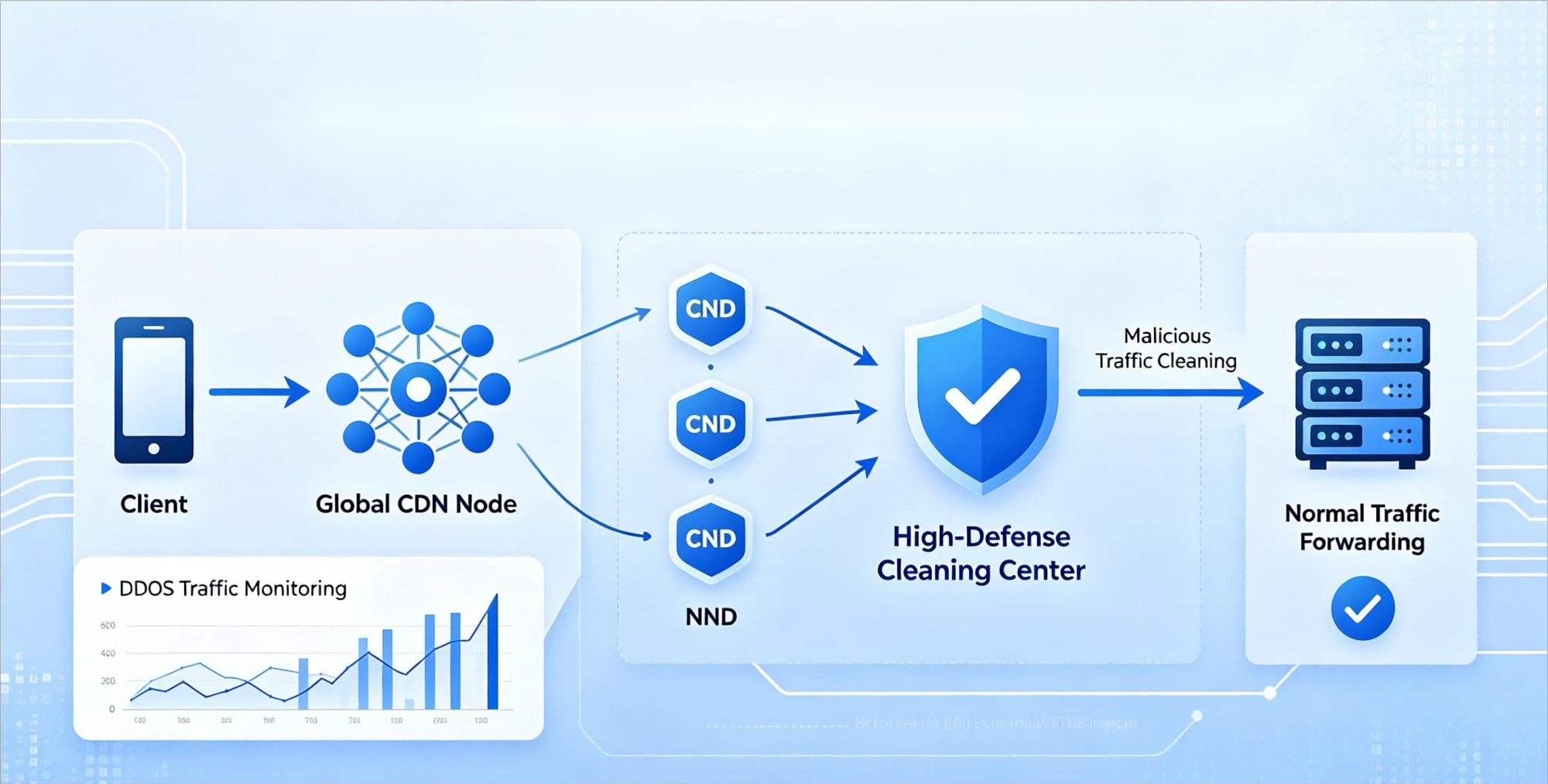
In recent years, more businesses than ever—including cross-border eCommerce stores, global mobile apps, and corporate websites—have chosen to host their services on overseas servers.
- Hong Kong servers
- Singapore servers
- United States servers
- Japan servers
These locations have become the standard choice for companies expanding into international markets. However, many businesses discover an unexpected challenge after launching. Their servers are online, and their services are live—
yet the user experience falls short of expectations. Website loading speeds fluctuate, users in certain regions experience connection issues, and despite investing heavily in advertising, visitors often abandon the site because pages take too long to load.
Even more concerning, as traffic grows, security threats begin to emerge.
- DDoS attacks
- CC attacks
- Malicious scanning
- DNS hijacking
- Origin server IP exposure
Simply upgrading your server hardware rarely solves these problems. That's why more organizations are turning to high-protection CDN solutions.
So the real question is: Which high-protection CDN offers the most reliable performance for websites hosted on overseas servers?
Let's take a practical look at the answer based on real-world business scenarios.
Why Should Overseas Servers Be Paired with a High-Protection CDN?
Many people assume that a powerful server with plenty of bandwidth eliminates the need for a CDN. In reality, that's far from the truth.
Your server is responsible for running your applications and services, while a high-protection CDN optimizes network delivery and shields your infrastructure from attacks.
Here's a simple example.
Without a high-protection CDN, traffic flows directly from users to your overseas server:
User → Overseas Server
Every request—whether legitimate or malicious—hits your origin server directly. Once you deploy a high-protection CDN, the traffic path becomes:
User → CDN Edge Node → Origin Server
This allows CDN edge nodes to absorb and process a large portion of incoming requests before they ever reach your server, dramatically reducing server load.
At the same time, you also benefit from:
- Global content acceleration
- DDoS protection
- CC attack mitigation
- DNS optimization
- Origin server IP masking
These capabilities make a high-protection CDN an essential part of any overseas hosting architecture—not just an optional add-on.
What Are the Biggest Challenges of Hosting on Overseas Servers?
Many businesses assume that cyberattacks are the biggest threat. In reality, that's only part of the picture. Based on real-world operations and maintenance experience, overseas servers typically face three major challenges.
1. Unstable Website Performance
This is especially common when users in mainland China access websites hosted overseas. International routing often affects connection quality, resulting in smooth performance during off-peak hours but noticeable slowdowns during busy periods. In some regions, users may even experience connection timeouts.
2. Increasing Cyberattacks
As soon as many international businesses begin attracting traffic, they also start becoming targets for malicious attacks.
Industries that are especially vulnerable include:
Online gaming platforms, eCommerce websites, financial platforms, and mobile application API services.
These industries are frequently targeted because service availability directly impacts revenue.
3. Origin Server IP Exposure
Many websites continue to suffer attacks even after deploying a CDN. The reason is simple—the real IP address of the origin server has already been exposed. Attackers simply bypass the CDN and launch attacks directly against the origin server, causing service interruptions and downtime.
What Makes a High-Protection CDN Truly Reliable?
Many CDN providers advertise features such as global coverage, massive mitigation capacity, and unlimited protection. However, the factors that actually determine business stability usually come down to the following.
Network Quality — The quality of the network determines website speed, especially for businesses serving users in mainland China while hosting overseas.
In many cases, network routing is far more important than simply having a large number of edge nodes. Common premium routing options include:
- CN2
- CN2 GIA
- Optimized BGP routing
- Dedicated international backbone lines
Without high-quality routing, even thousands of CDN nodes won't significantly improve the user experience.
Global Node Coverage: If your visitors come from multiple countries and regions, broader node distribution provides a significant advantage.
Key global locations typically include:
- Hong Kong
- Singapore
- Tokyo
- Los Angeles
- New York
- Frankfurt
These cities are considered critical edge locations for delivering fast, consistent global performance.
Intelligent Traffic Routing: A high-quality high-protection CDN doesn't direct every visitor to the same edge server.
Instead, routing decisions are automatically based on:
- Geographic location
- Internet service provider (ISP)
- Current network load
This intelligent routing system automatically connects each visitor to the optimal edge node, ensuring lower latency and a more consistent browsing experience.
Comprehensive Security Protection: Performance alone isn't enough.
A reliable high-protection CDN should also provide:
- DDoS protection
- CC attack mitigation
- Web Application Firewall (WAF)
- DNS security
- Origin server IP masking
Without these security layers, your business remains exposed to significant operational risks.
What Are the Leading High-Protection CDN Solutions Available Today?
Today's high-protection CDN market offers several mainstream solutions, each designed to meet different business requirements.
Cloudflare: Cloudflare is one of the world's most recognized CDN providers, trusted by millions of websites worldwide.
Key advantages include:
- Extensive global edge network
- Mature Anycast infrastructure
- Quick and easy deployment
Cloudflare delivers an excellent experience for international visitors. However, if a large percentage of your users are located in mainland China, it's important to thoroughly test connectivity and performance, as network quality can vary depending on regional routing.
Akamai: A leading enterprise-grade CDN provider.
Akamai is well known for its exceptional global coverage and long-term reliability. Many of the world's largest enterprises rely on its infrastructure. The downside is its relatively high cost, making it a better fit for large organizations with generous IT budgets.
Amazon CloudFront
As part of the AWS ecosystem, Amazon CloudFront integrates seamlessly with other Amazon cloud services. It offers solid stability and scalability, making it a strong choice for businesses already running workloads on AWS. However, optimizing connectivity for mainland China is not one of its primary strengths.
CDN07 High-Protection CDN
In recent years, CDN07 has become an increasingly popular choice among companies expanding into international markets. Its growing reputation isn't based solely on strong security protection—it also provides excellent performance optimization for overseas-hosted services.
It's particularly well suited for:
- Cross-border eCommerce platforms
- Corporate websites
- Online card and board game platforms
- Mobile gaming platforms
- Global mobile applications
In addition to providing DDoS mitigation, CC attack protection, and origin server IP masking, CDN07 also optimizes network routes for users in mainland China accessing overseas servers. Through its global edge network and intelligent traffic scheduling, users are automatically connected to the fastest and most reliable route available. For businesses serving both mainland China and international audiences, this architecture delivers an excellent balance of speed, stability, and security.
How Should Different Types of Businesses Choose a High-Protection CDN?
There is no universally "best" high-protection CDN. The right solution depends entirely on your business model and user base.
Corporate websites should prioritize:
- High availability and stability
- SEO-friendly performance
- Fast global page delivery
Cross-border eCommerce businesses should focus on:
- Fast page load speeds
- Broad global edge coverage
- Stable checkout and order processing
Online gaming platforms should prioritize:
- Low latency
- DDoS protection
- CC attack mitigation
Mobile App platforms should focus on:
- Fast API response times
- Intelligent traffic routing
- Origin server security
Final Thoughts
Hosting your website on an overseas server is only the first step. In many cases, the real factors that determine user experience and long-term business reliability lie in the network infrastructure behind your server.
A high-quality high-protection CDN should do far more than simply defend against cyberattacks. It should also ensure that users can access your website or application quickly and reliably from anywhere in the world, at any time.
Whether you're running a cross-border eCommerce business, a corporate website, an online gaming platform, or a global mobile app, choosing the right high-protection CDN shouldn't be based solely on mitigation capacity. Instead, pay close attention to network quality, global node coverage, intelligent traffic routing, and overall service reliability.
At the end of the day, your users don't care how expensive your servers are.
They care whether your website loads instantly, whether your games stay connected without interruptions, and whether your services remain available when they need them most.
And that's the true value of deploying a high-performance, high-protection CDN.
Share this post:
Related Posts

Origin IP Exposed? DDoS-Protected CDN vs. DDoS-Protected Server
Origin IP exposed behind a DDoS-protected CDN? Compare access controls, IP changes, upstream mitigat...

Which Websites Are a Good Fit for CDN07's DDoS-Protected CDN, and How Does It Compare with Cloudflare?
Compare CDN07 and Cloudflare for websites serving users in Mainland China, including connectivity, D...

How Much Does a DDoS-Protected CDN Cost per Month? Plans, Legitimate Traffic, and Additional Charges
The monthly cost of a DDoS-protected CDN depends on the plan allowance, legitimate traffic usage, pr...