

What’s the Real Difference Between Free CDN, Low-Cost CDN, and DDoS-Protected CDN?
Free CDN, low-cost CDN, or DDoS-protected CDN — what’s the difference? CDN07 editor KA breaks down the capabilities, ideal users, and upgrade timing for each type, so you choose wisely and avoid wasting money.

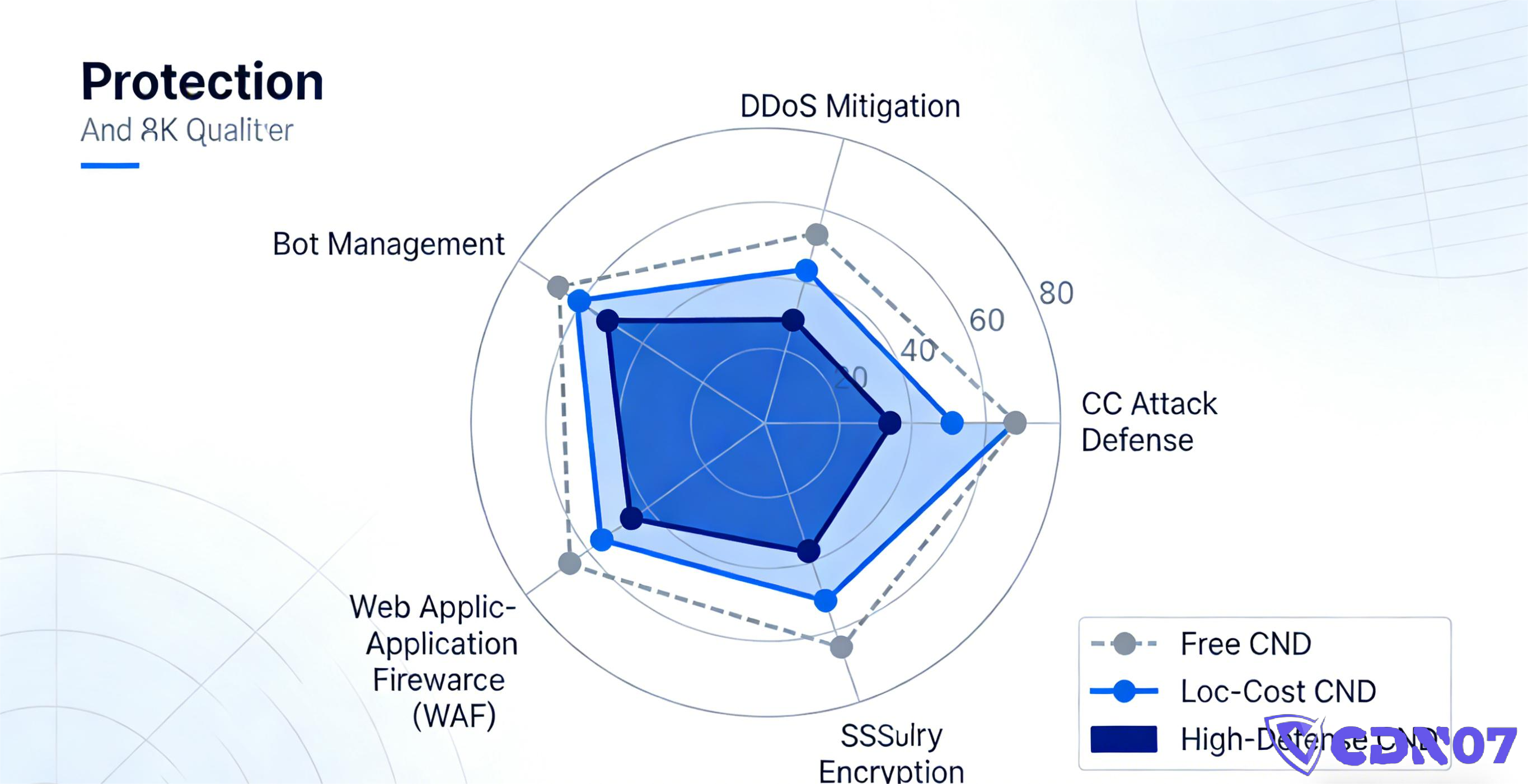
To be honest, these three terms have tripped up way too many site owners.
Free CDN, low-cost CDN, DDoS-protected CDN — they might seem like just “different price points,” but in reality, they solve completely different problems.
I’ve seen people use free CDN while complaining that CDN doesn’t work. I’ve also seen others splurge on a DDoS-protected plan, only to get a few hundred visits a day… basically throwing money away.
The problem isn’t CDN itself — it’s that you don’t actually know what each one is for.
In this guide, I won’t bore you with textbook definitions. I’ll explain everything in plain English.
First, here’s the big picture (save this)
You can start by remembering these three statements — everything else is just detail:
Free CDN: solves "Can people reach my site?"
Low-cost CDN: solves "Is it stable and fast?"
DDoS-protected CDN: solves "Will my site survive an attack?"
If your website’s needs don’t match these statements, you’ll feel like you got ripped off.
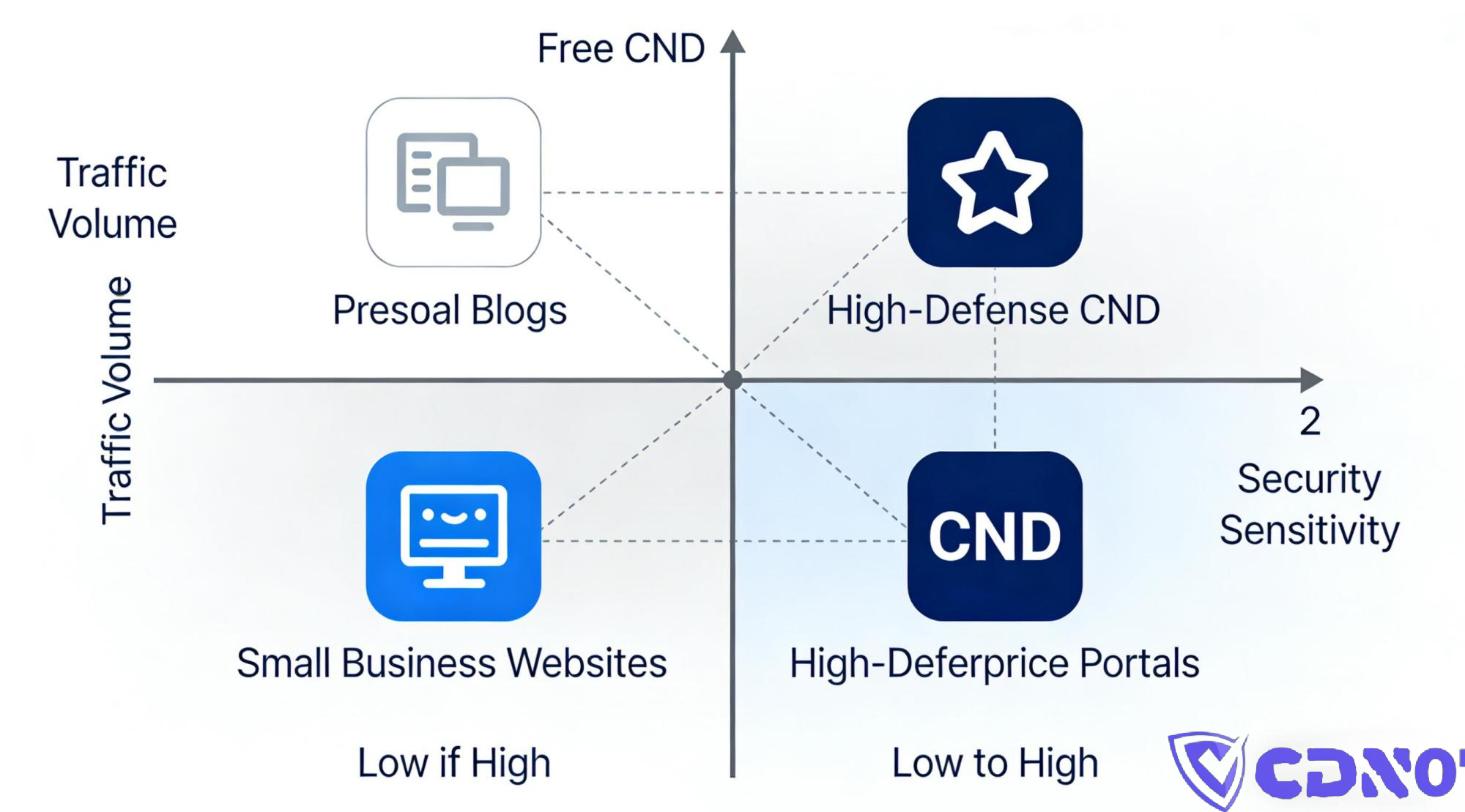
Free CDN: It’s not bad — it just has limits
Free CDN has one main advantage: it’s free.
But its suitable use cases are actually pretty limited.
What can free CDN usually do?
- Cache static resources
- Serve blogs, small sites, test sites
- Help launch new projects
- Good for learning, practice, or landing pages
In short: small sites that aren’t worried about speed, downtime, or attacks.
What’s the biggest issue with free CDN?
It’s not about speed — it’s about lack of control. When you use free CDN, you accept three things:
- You get lower priority during traffic spikes
- You’re last in line if something breaks
- You’re pretty much defenseless against attacks
That’s why you hear people say:
“I’m using CDN, but my site is still slow.”
“CDN can’t stop attacks at all.”
It’s not that CDN is useless — it’s that you’re asking a free tool to do a paid tool’s job.
Low-cost CDN: Where 90% of normal sites should end up
In my opinion, low-cost CDN is the most underrated option.
Many site owners either go straight for free CDN or jump to DDoS protection.
The middle tier often gets ignored.
What does low-cost CDN solve?
In one sentence: It keeps your site stable and smooth under normal conditions.
Here’s what it typically delivers:
- Noticeably faster load times
- High cache hit rates
- Reduced origin server load
- Some protection against small attacks or bot traffic
For most content sites, e-commerce stores, and small to medium businesses, this is plenty.
Why do so many think low-cost CDN isn’t worth it?
Because they don’t do the math.
- CDN might cost a few dozen dollars a month
- But you save on server upgrades
- Stability improves noticeably
- User experience gets much better
These “savings” are often worth more than the CDN itself.
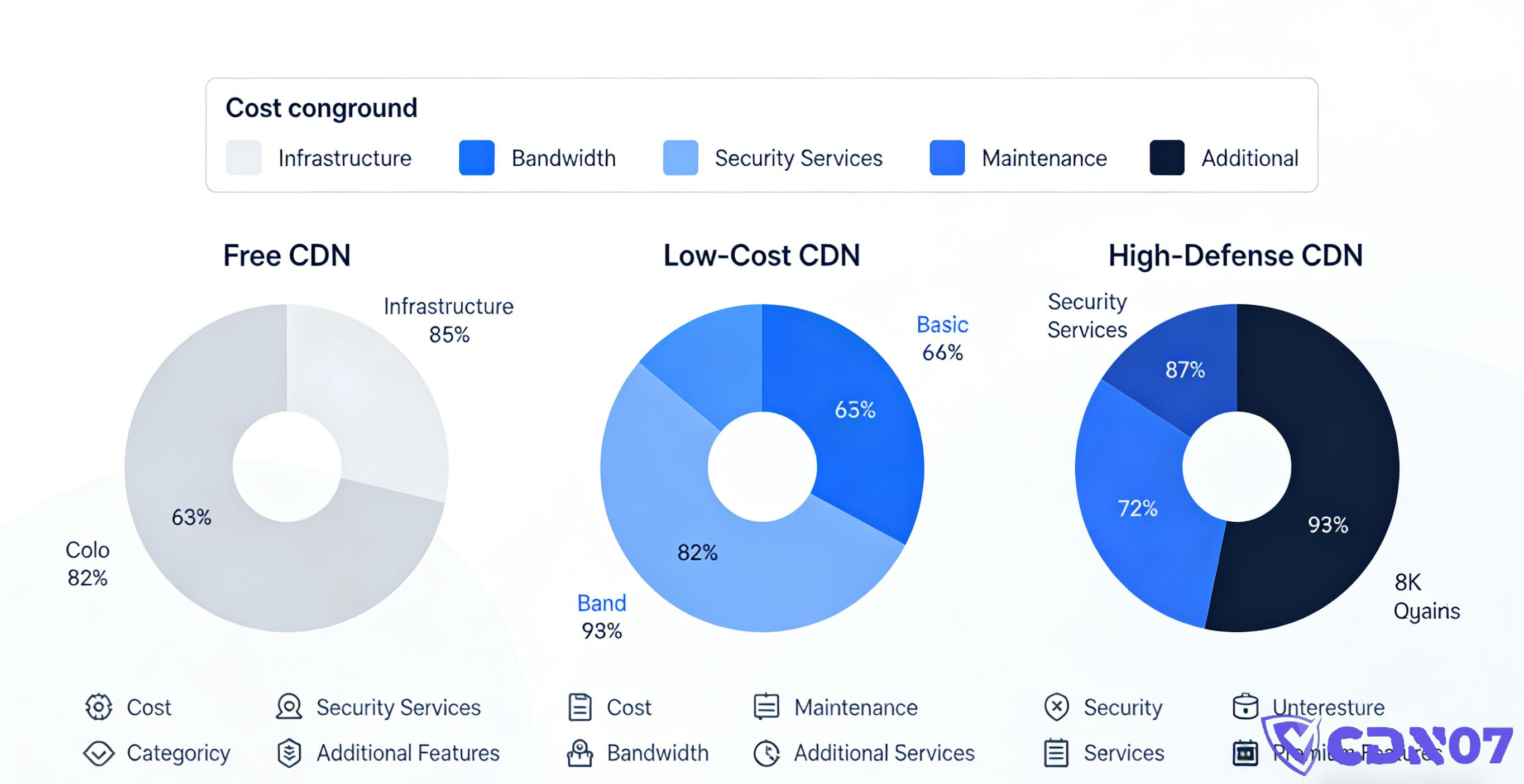
DDoS-protected CDN: Not meant for every website
The biggest issue with DDoS-protected CDN isn’t the price — it’s that people use it for the wrong reasons.
What’s DDoS-protected CDN for?
Plain and simple: It’s built to handle trouble.
It’s not focused on:
- How pretty your pages are
- Shaving 0.1 seconds off image load time
Instead, it focuses on:
- Staying up during attacks
- Hiding your origin server
- Not going down when traffic floods in
Which sites really need DDoS-protected CDN? Here’s a practical checklist:
- Running ads
- Processing transactions
- Having active competitors
- Already been targeted before
- Can’t afford any downtime
If you check even one box, DDoS-protected CDN isn’t a “luxury” — it’s insurance.
How do these three CDN types really compare?
Here’s a table you can drop right into your article — makes things clear at a glance.
📊 Free vs. Low-cost vs. DDoS-Protected CDN — Core Differences
| Feature | Free CDN | Low-cost CDN | DDoS-Protected CDN |
|---|---|---|---|
| Paid? | No | Yes, low cost | Yes, noticeable cost |
| Stability | Luck-based | Stable | Highly stable |
| Attack Protection | Barely any | Basic | Built for it |
| Setup Difficulty | Very low | Low | Moderate |
| Best For | Just starting out | Normal operation | High-risk phase |
| Biggest Risk | Sudden failure | Hitting limits | Cost |
Real advice from an experienced site owner
If you ask me: "Which one should I pick?"
Here’s my straightforward recommendation:
1️⃣ Use free CDN while you can
2️⃣ Switch to low-cost CDN once stability matters
3️⃣ Move to DDoS-protected CDN after your first attack
Don’t do the opposite.
The craziest case I’ve seen:
- Site with a few dozen daily visits
- Went straight to DDoS protection
- Shut it down after three months
That’s not a CDN issue — that’s spending money in the wrong place.
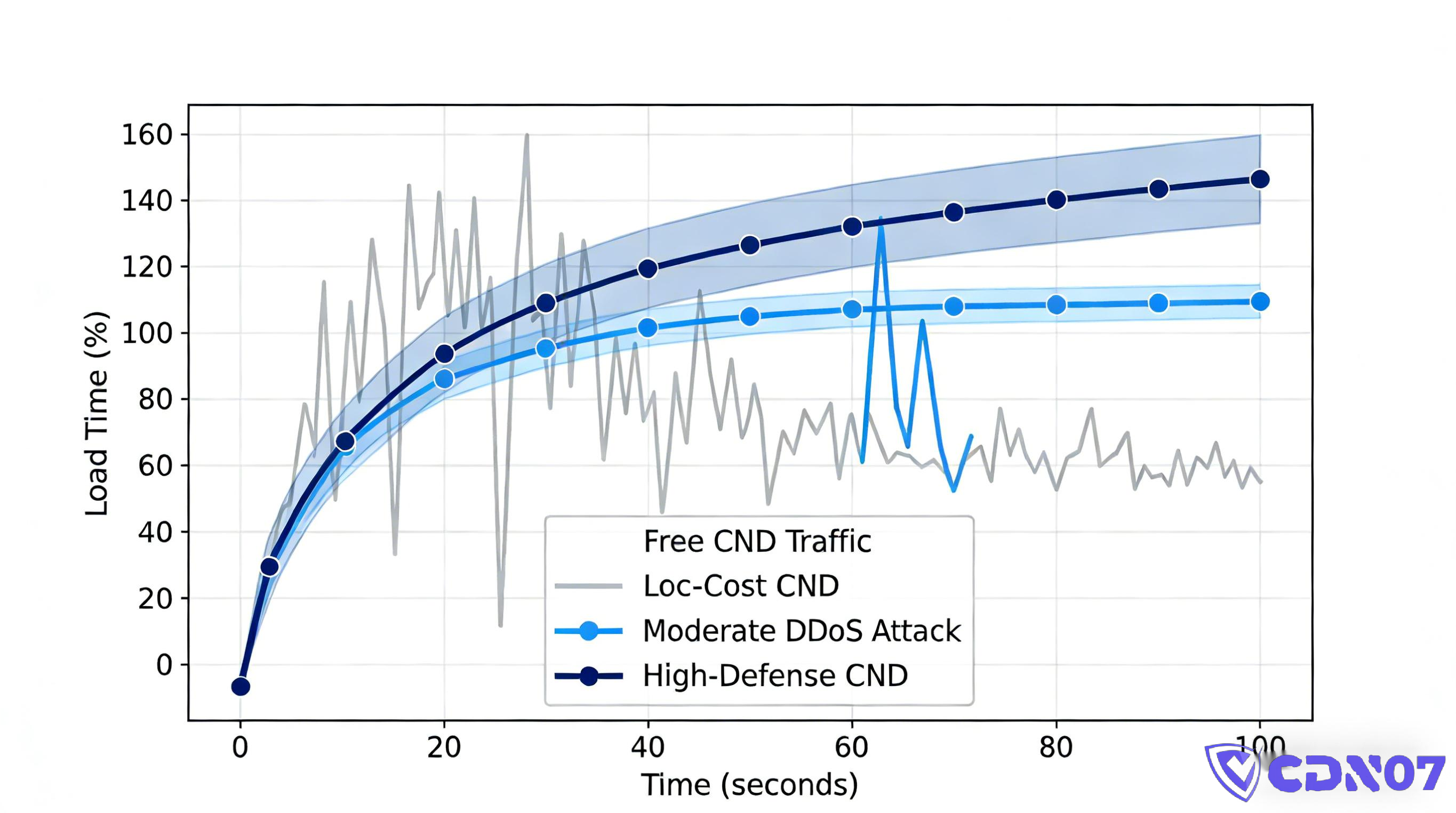
One last honest take
There’s no “better” or “worse” CDN — only right or wrong use cases.
Free CDN isn’t shameful. Low-cost CDN isn’t cheap. DDoS-protected CDN isn’t automatically “premium.”
A mature site owner doesn’t choose “the most expensive” — they choose the right tool for the right stage.
Frequently Asked Questions (FAQ)
1️⃣ Does free CDN really offer zero protection?
Not exactly zero.
Free CDN can usually handle:
- Occasional small requests
- Non-targeted scans
But against targeted attacks, free CDN acts more like a “buffer” than a “shield.”
2️⃣ Can low-cost CDN replace DDoS-protected CDN?
Not fully.
Think of low-cost CDN as your daily driver
And DDoS-protected CDN as a bulletproof vehicle
You don’t drive a bulletproof car every day, but when trouble hits, a regular car won’t cut it.
3️⃣ If my site’s never been attacked, do I need DDoS protection?
It depends — can you afford the “first time”?
Many sites get hit not because they’re huge, but because they’ve been noticed.
If your site:
- Makes money
- Has competitors
- Gets visibility
Don’t wait for that “first time.”
4️⃣ Why is there such a big price gap between CDN types?
You’re not just paying for bandwidth.
You’re also paying for:
- Node quality
- Traffic scrubbing capacity
- Attack mitigation
- Support response
These things are invisible — until something goes wrong.
5️⃣ Can free CDN slow down visits from certain countries?
Yes, and it’s unpredictable.
Especially with overseas free CDNs, visitors from other regions may experience:
- Routing delays
- Network congestion
- High latency during peak hours
That’s why people say “it’s fast sometimes, slow other times.”
6️⃣ Can I use free CDN and low-cost CDN together?
Yes — and it’s actually a common setup.
For example:
- Serve static assets via free CDN
- Route main site traffic through low-cost CDN
This saves money while keeping performance decent.
7️⃣ What signs indicate I should upgrade my CDN?
Watch for these signals:
- Site occasionally goes down
- Slows under high traffic
- More abnormal requests in logs
- Getting throttled or warned by your provider
One sign is enough to consider an upgrade.
8️⃣ Where does CDN07 fit in?
We’re closer to: "low-cost CDN with DDoS-ready features"
Ideal for site owners who:
- Have outgrown free CDN
- Aren’t ready for full enterprise DDoS protection
- Want solid performance without overcomplicating things
Share this post:
Related Posts

How to Choose a DDoS-Protected CDN for Mainland China: Speed and Security Guide
How can websites hosted overseas improve access from Mainland China without compromising DDoS protec...

What to Do When Your Website Is Slow: A Practical Guide to Troubleshooting DNS, TTFB, and Resource Loading
Why is your website slow to load? This guide walks through DNS resolution, connection setup, TTFB, i...

Why Online Card and Board Games Need an SDK-Based Game Shield for DDoS Protection
Online card and board games face persistent security risks, including DDoS attacks, HTTP floods, che...