

How to Choose an Anti-Censorship CDN? A Complete Guide to Node Strategy, Blocking Prevention, and Real-World Performance
Many businesses operating internationally encounter issues such as website inaccessibility, unstable network routes, or regional restrictions. An anti-censorship CDN helps improve global availability and connection reliability. This guide explains node deployment strategies, IP rotation, Anycast architecture, routing optimization, anti-blocking capabilities, and real-world performance to help busi

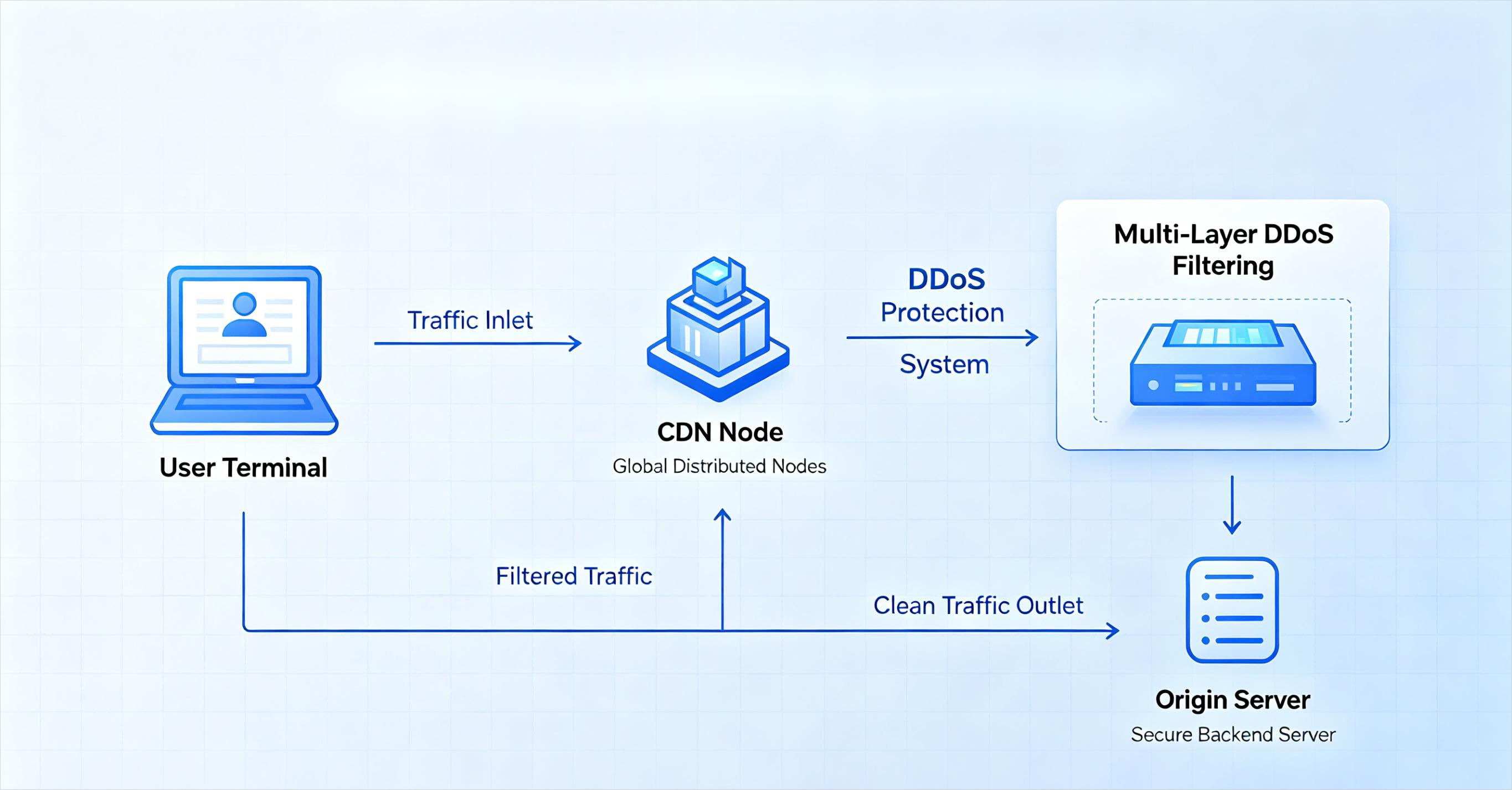
For many companies expanding into international markets, one challenge quickly becomes impossible to ignore: the website may be online, but users still can't access it. Everything might work perfectly in one region, while visitors from another location experience timeouts or failed connections. Some ISPs allow access without issues, while others block traffic entirely. In many cases, users in different cities within the same country can have completely different browsing experiences.
As a result, one term has become increasingly common: Anti-Censorship CDN.
The problem is that almost every CDN provider claims to offer "anti-blocking," "anti-censorship," or "highly reliable" services.
On the surface, they all sound similar. In reality, however, the performance differences can be significant. Some platforms remain consistently stable, while others experience frequent fluctuations. Some perform well during off-peak hours but become nearly unusable in the evening. So instead of marketing claims, let's focus on what truly matters.
There's only one question worth answering: How do you actually choose the right Anti-Censorship CDN?
1. What Is an Anti-Censorship CDN?
Many people misunderstand what an Anti-Censorship CDN actually does. Its primary purpose is not to "bypass restrictions."
Instead, it uses multiple network optimization technologies to improve connection stability while minimizing the risk of regional accessibility issues.
A high-quality Anti-Censorship CDN typically includes the following capabilities:
- Global node distribution
- Dynamic IP switching
- Route optimization
- Anycast architecture
- Multi-carrier network connectivity
In simple terms, the goal isn't to "fight against restrictions"—it's to intelligently distribute network risk and maximize global availability.
2. Why Do Websites Become Inaccessible or Appear to Be Blocked?
Before choosing an Anti-Censorship CDN, it's important to understand the most common causes behind these accessibility issues.
1. Network Routing Problems
Not every connection failure is caused by censorship. In many cases, inefficient routing, congested international gateways, or unstable network paths are the real reason.
The result is simple: the website technically works, but pages load extremely slowly or eventually time out.
2. DNS Resolution Issues
DNS results can vary depending on geographic location. Users in one region may resolve your domain successfully, while users elsewhere receive failed or incorrect DNS responses, leading to inconsistent accessibility.
3. IP Restrictions or Interference
Certain IP ranges may experience bandwidth throttling, temporary restrictions, or network interference—especially when using heavily shared IP resources.
4. Poor CDN Node Quality
Many low-cost CDN providers rely on unstable edge nodes, limited bandwidth capacity, and congested infrastructure during peak hours. These issues often create intermittent outages that users mistakenly interpret as website blocking.
3. What Are the Core Capabilities of an Anti-Censorship CDN?
When evaluating an Anti-Censorship CDN, don't focus on marketing slogans. Focus on the underlying network architecture.
There are four critical factors that truly determine performance:
1. Node Deployment Strategy (The Most Important Factor)
Your node deployment strategy determines how users enter your global network.
A premium Anti-Censorship CDN typically provides geographically distributed edge nodes, multi-carrier connectivity, intelligent node selection, and automatic failover capabilities.
For example, when someone visits your website from Shanghai, the system may automatically route traffic through Hong Kong, Japan, or Singapore based on real-time network conditions instead of relying on a single fixed entry point.
2. Anycast Architecture or Intelligent Traffic Routing
The core advantage of an Anycast architecture is that multiple global edge nodes share the same IP address.
Users are automatically routed to the nearest and most efficient node based on real-time network conditions.
The benefits include lower latency, improved reliability, elimination of single points of failure, and a more consistent user experience.
This architecture has become the industry standard among leading global CDN providers.
3. Large IP Pools and Intelligent IP Rotation
High-quality Anti-Censorship CDN providers typically maintain large-scale IP pools combined with intelligent IP rotation and multiple outbound routing strategies.
The objective is straightforward: reduce the likelihood of any single IP address being restricted or flagged while improving long-term service availability.
4. Advanced Route Optimization
Having a large number of edge nodes isn't enough—the quality of the network routes connecting those nodes is equally important.
Technologies such as CN2 optimized routes, multi-line BGP routing, and dedicated international backbone networks can dramatically improve overall connection quality.
Without efficient routing, even the largest global node network cannot deliver consistent performance.
4. Common Problems Found with Low-Quality Anti-Censorship CDNs
Many businesses end up choosing the wrong CDN because of several common issues:
1. Inflated Node Counts
Some providers advertise "500+ global nodes," but in reality, fewer than half of those locations are actually available or capable of handling production traffic.
2. Severe Slowdowns During Peak Hours
Oversold bandwidth and congested edge nodes often result in dramatic performance degradation during periods of high traffic.
3. High IP Reuse Rates
Frequently reused IP addresses are more likely to encounter restrictions, filtering, or reduced accessibility across different networks.
4. No Intelligent Traffic Scheduling
When every user is forced through the same network path, a failure at one node can affect every visitor, significantly reducing overall service reliability.
5. What Makes an Anti-Censorship CDN Truly Reliable?
Based on extensive real-world experience across international and cross-border businesses, a dependable Anti-Censorship CDN generally offers the following characteristics:
✔ A well-planned global network—not simply more nodes, but strategically deployed, high-quality infrastructure.
✔ Intelligent automatic failover that instantly redirects traffic whenever a node becomes unavailable, keeping websites online without interrupting visitors.
✔ Consistent latency. The lowest latency isn't always the goal—stable performance with minimal fluctuations delivers a far better user experience.
✔ Strong DDoS mitigation capabilities, since many so-called "blocking" incidents are actually caused by malicious traffic rather than network restrictions.
6. What's the Difference Between an Anti-Censorship CDN and a DDoS-Protected CDN?
Many people confuse these two services, but their primary objectives are different:
| Type | Primary Purpose |
|---|---|
| Anti-Censorship CDN | Maximize website accessibility and global availability |
| DDoS-Protected CDN | Mitigate and absorb malicious attack traffic |
Today, however, many enterprise-grade CDN platforms combine these capabilities into a single solution, integrating anti-censorship technology, DDoS protection, and global acceleration.
Leading global CDN providers often include DDoS mitigation, intelligent node scheduling, route optimization, and large-scale IP pool management within one unified platform.
7. CDN07's Approach to Anti-Censorship CDN Deployment
Using CDN07 as an example, modern enterprise-grade CDN platforms typically focus on the following architecture:
- Global intelligent node scheduling
- Multi-carrier network integration
- Smart route selection
- Advanced DDoS mitigation infrastructure
For international businesses, the objective isn't to bypass restrictions—it's to improve global accessibility while minimizing connection failures.
These solutions are particularly well suited for cross-border eCommerce, international gaming platforms, mobile application APIs, and enterprise websites serving users worldwide.
8. How to Choose the Right Anti-Censorship CDN for Different Business Types
1. eCommerce Websites
Key priorities: reliable uptime, fast page loading, and consistent access for customers across different countries and regions.
2. Online Gaming Platforms
Key priorities: ultra-low latency, strong DDoS protection, and intelligent global traffic routing to deliver a smooth gaming experience.
3. Corporate Websites
Key priorities: SEO-friendly accessibility, worldwide reach, and consistently fast page delivery for visitors around the globe.
4. API Services
Key priorities: stable request handling, minimal packet loss, optimized routing, and reliable performance for mission-critical applications.
9. Final Thoughts
An Anti-Censorship CDN is not a "magic solution." Instead, it's the result of a comprehensive network architecture that combines intelligent node deployment, advanced routing optimization, automated traffic scheduling, and a globally distributed infrastructure.
When evaluating a CDN provider, don't focus solely on whether it claims to offer anti-censorship capabilities. Ask the questions that truly impact your business:
Is it consistently stable?
Can it deliver reliable long-term performance?
Is it truly accessible worldwide?
Does it provide strong protection against cyberattacks?
Can it maintain low and consistent latency?
Because what ultimately determines business success isn't a provider's marketing claims.
It's whether your customers can actually reach your website, complete their purchases without interruption, and access your services smoothly from anywhere in the world.
That's the real value an enterprise-grade Anti-Censorship CDN is designed to deliver.
Share this post:
Related Posts
Which Websites Are a Good Fit for CDN07's DDoS-Protected CDN, and How Does It Compare with Cloudflare?
Compare CDN07 and Cloudflare for websites serving users in Mainland China, including connectivity, D...
How Much Does a DDoS-Protected CDN Cost per Month? Plans, Legitimate Traffic, and Additional Charges
The monthly cost of a DDoS-protected CDN depends on the plan allowance, legitimate traffic usage, pr...

How to Choose a DDoS-Protected CDN: Workloads, Network Connectivity, and Protection
Choosing a DDoS-protected CDN takes more than comparing mitigation capacity and monthly price. This...